



Zenbook
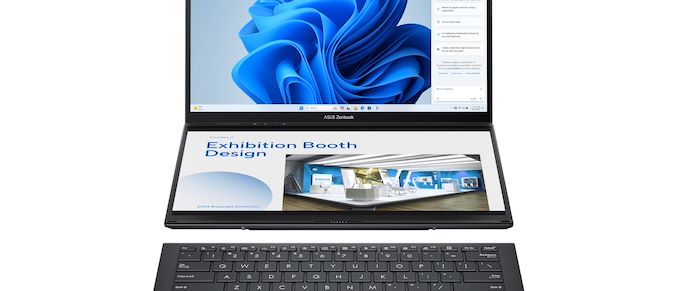
Modern higher-end 14 and 16-inch-class notebooks offer performance that is enough for the vast majority of productivity and even content creation workloads. As a result, the main limitation of notebook's capabilities in many cases is their insufficient screen real estate. Over the past few years, several leading PC makers have made numerous attempts to fix this (e.g., Lenovo's Yoga Book 9i, Razer's Valerie, and Apple's Sidecar). Now, it is time for Asus to demonstrate its vision. The Asus Zenbook Duo (UX8406) is a dual-screen 14-inch-class laptop with a detachable keyboard that works as a classic notebook with one display, a machine with two touchscreens, a laptop with two monitors, or a desktop mode. The notebook takes some pages from Lenovo's Yoga Book 9i, but Asus...
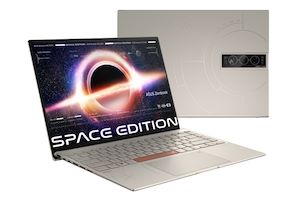
CES 2022: ASUS Announces Zenbook 14X OLED Space Edition
During CES 2022, ASUS unveiled its Zenbook 14X OLED Space Edition notebook. Built around the Zenbook 14 OLED series of compact yet high-performance laptops, the Zenbook 14X OLED Space...
11 by Gavin Bonshor on 1/6/2022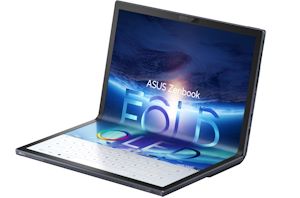
CES 2022: ASUS Zenbook 17 Fold OLED, 17 Inch Foldable With Thunderbolt 4
At CES 2020, Intel showcased its Tiger Lake hardware with an interesting 'Horseshoe Bend' 17-inch foldable laptop. Fast forward two years and ASUS has taken the concept and run...
3 by Gavin Bonshor on 1/5/2022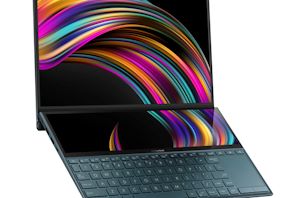
CES 2020: ASUS Unveils Dual-Screen ZenBook Duo UX481 Notebook
Last year ASUS introduced its exclusive ZenBook Pro Duo laptops with a secondary display aimed at creative professionals with performance-hungry color critical workloads. At CES 2020, the company revealed...
13 by Anton Shilov on 1/14/2020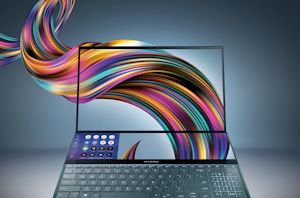
ASUS ZenBook Pro Duo UX58: A Dual Screen Laptop with 100% DCI-P3 OLED
Modern notebooks can offer performance and feature set comparable to those of desktop PCs. One thing that laptops cannot offer is the screen real estate: desktops can be equipped...
19 by Anton Shilov on 8/30/2019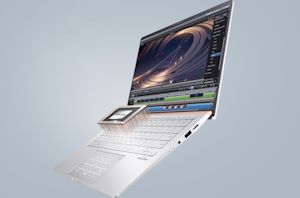
ASUS Launches AMD Ryzen-Based ZenBooks: Two Laptops & a Convertible
ASUS has quietly added three ZenBooks based on AMD’s Ryzen Mobile 3000-series APUs to its lineup. One of the machines is a convertible ZenBook Flip 14, the other two...
31 by Anton Shilov on 8/22/2019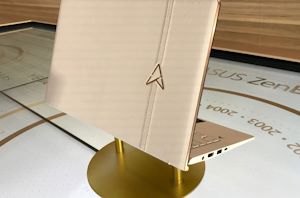
ASUS Unveils ZenBook Edition 30 Laptop: 13.3-Inch Dual Screen with GPU
Being one of the world’s largest suppliers of premium laptops, ASUS is no stranger to exotic materials as well as high-performance ultra-portable notebooks. To celebrate its 30th anniversary, ASUS...
14 by Anton Shilov on 6/7/2019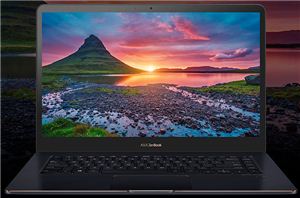
ASUS ZenBook Pro 15 UX550GE Laptop with Core i7 & 4K LCD Is Now Available
ASUS has started selling its 15-inch ZenBook Pro 15 UX550GE ultra-thin laptop featuring Intel’s six-core processor, NVIDIA’s discrete GPU as well as a factory-calibrated 15.6-inch display with a 4K...
13 by Anton Shilov on 8/7/2018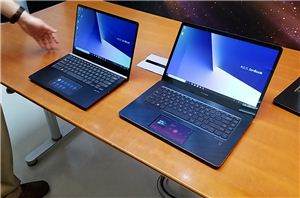
Asus ZenBook Pro 15 (UX580): A 5.5-inch Screen in the Touchpad
Asus’s new ZenBook Pros, announced at Computex in Taipei, each have two screens: the big laptop display you expect, and then a new 5.5-inch display built into the touchpad...
11 by Ian Cutress on 6/5/2018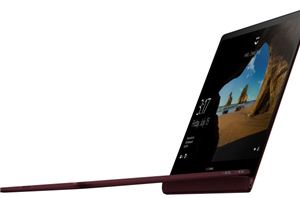
Asus ZenBook S (UX391): ZenBook Gets a Lift
At their press conference at Computex in Taipei, Asus has announced the ZenBook S (UX391), a new clamshell laptop with an ergonomic design and a variety of colors. The...
4 by Ryan Smith on 6/5/2018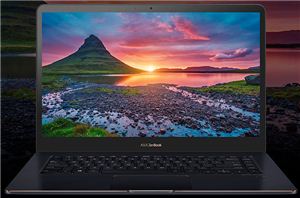
ASUS Unveils Ultra-Thin ZenBook Pro 15 with Six-Core Core i9, GTX 1050, Calibrated 4K LCD
ASUS has introduced a new version of its ultra-thin 15.6-inch ZenBook Po 15 laptop that offers higher performance than predecessors while retaining a very thin z-height as well as...
23 by Anton Shilov on 5/18/2018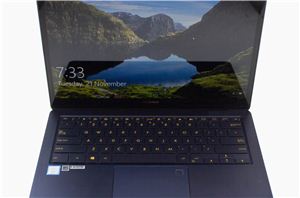
The ASUS ZenBook 3 Review: A Convincing Case for Quad Core Thin & Light Laptops
ASUS is a company that doesn’t shy away from the latest technology, and with the new ZenBook 3 UX490UA, they’ve updated one of their thinnest and lightest machines to...
55 by Brett Howse on 11/22/2017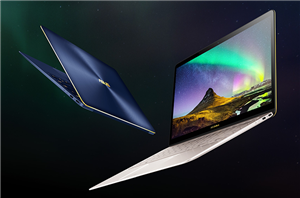
ASUS ZenBook 3 Deluxe UX490UA: Kaby Lake, 16 GB RAM, 1 TB SSD, TB3, 14" FHD, 2.4 lbs
ASUS has now launched the latest addition to its ZenBook family of ultra-thin laptops with 14” displays. The new ZenBook 3 Deluxe UX490UA boasts with Intel’s latest Kaby Lake-U...
42 by Anton Shilov on 1/18/2017
Launch Update: ASUS ZenFone 3, Zenbook 3, ZenWatch 3, ZenPad 3S 10
ASUS has introduced a number of new products this summer, but never released their official recommended prices and availability timeframes for the US market. In the recent weeks, the...
21 by Anton Shilov on 10/10/2016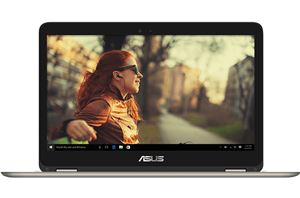
ASUS Unveils ZenBook Flip UX360CA: Ultra-Thin Convertible Laptop for $699
This week ASUS has introduced its ZenBook Flip UX360CA convertible notebooks, the company’s first ZenBook with 360° hinge based on the Skylake-based Intel Core M processor. The system sports...
29 by Anton Shilov on 7/8/2016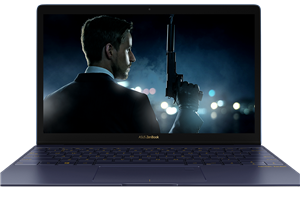
ASUS Announces the Zenbook 3: A Macbook Competitor with Core i7, 16GB DRAM and 1TB SSD
Computex is already a whirlwind of announcements even for day zero. At the ASUS Zenvolution press event today, the lid was lifted on the next generation of premium ASUS...
34 by Ian Cutress on 5/30/2016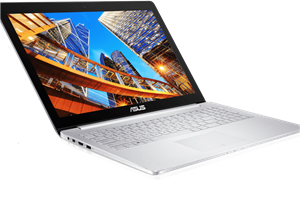
ASUS Announces the ZenBook Pro UX501
Today Asus announced their new ZenBook Pro UX501. The ZenBook Pro UX501 sits above all the other ZenBooks as a flagship laptop for people who need serious processing power...
36 by Brandon Chester on 4/27/2015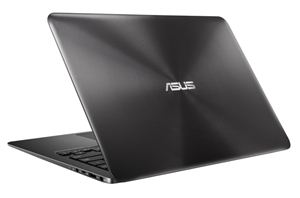
The ASUS Zenbook UX305 Review
It was way back in 2011 that ASUS launched the Zenbook series. The original UX21E and UX31E were the first of the thin and light Ultrabooks from ASUS to...
164 by Brett Howse on 3/25/2015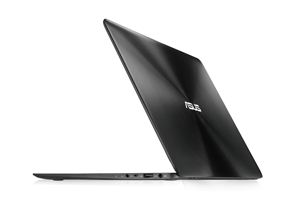
ASUS' Zenbook UX305: Core M and QHD+
Today at IFA ASUS announced a couple of new laptops. The first continues the refinement of the Zenbook line with an update geared around Intel's Core M line of...
15 by Jarred Walton on 9/3/2014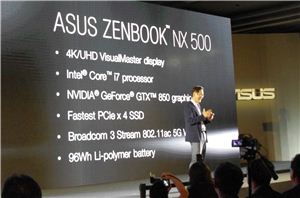
Computex 2014: The ASUS Zenbook NX500, a 4K/UHD 15.6” Ultrabook
Last year at Computex we were excited by all the news revolving around 4K/UHD monitors coming to market. At that time I believe we were discussing 32” panels...
15 by Ian Cutress on 6/2/2014
 Facebook
 Twitter
 RSS
RSS


