



Bulldozer

AMD this month has agreed to pay compensation that totals $12.1 million to users who purchased FX-8000/9000 CPUs via its website or in the state of California. The case comes down to AMD advertising these processors as having 8 cores, and the claim that a shared FPU unit within a 'dual core' module does not constitute an actual core of performance similar to a separate core/FPU unit. Users who qualify for the compensation are estimated to recieve in the region on $35, depending on the exact uptake, and no one person can claim more than $7500. AMD’s Bulldozer microarchitecture used 'dual-core modules' containing two independent ALUs and a shared FPU. AMD believed that such design allowed it to call its FX-8000 and FX-9000 series processors...
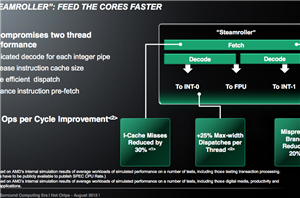
AMD's Steamroller Detailed: 3rd Generation Bulldozer Core
Today at the annual Hot Chips conference, AMD’s new CTO Mark Papermaster unveiled the first details about the Steamroller x86 CPU core. Steamroller is the third instantiation of AMD’s Bulldozer...
126 by Anand Lal Shimpi on 8/28/2012_carousel.PNG)
The Bulldozer Aftermath: Delving Even Deeper
It has been months since AMD's Bulldozer architecture surprised the hardware enthusiast community with performance all over the place. The opinions vary wildly from “server benchmarks are here, and...
84 by Johan De Gelas on 5/30/2012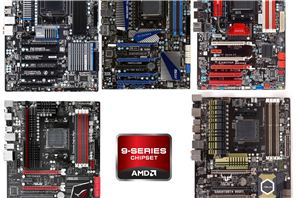
990FX Motherboard Roundup with Thuban and Bulldozer – A Second Wind for ASUS, Gigabyte, MSI and Biostar
Ever since the launch of the Bulldozer range and 9-series motherboards, the initial reviews of the processors were not encouraging to say the least. Since then, AMD has...
57 by Ian Cutress on 4/5/2012AMD Releases FX-6200 and FX-4170 Processors; FX-8120 Gets a Price Cut
AMD sent word this morning that they’re doing some shuffling of their Bulldozer based FX processor lineup. Altogether in the near future AMD will be releasing a new CPU...
23 by Ryan Smith on 2/27/2012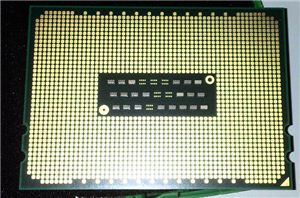
The Opteron 6276: a closer look
When we first looked at the Opteron 6276, our time was limited and we were only able to run our virtualization, compression, encryption, and rendering benchmarks. Most servers capable...
52 by Johan De Gelas on 2/9/2012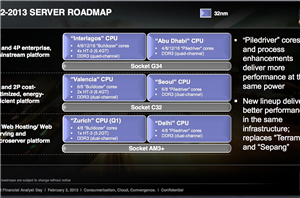
AMD's 2012 - 2013 Server Roadmap: Abu Dhabi, Seoul & Delhi CPUs
We've got a server roadmap update from AMD courtesy of its Financial Analyst Day here in Santa Clara, California. The changes to the 2012 - 2013 roadmap aren't all...
10 by Anand Lal Shimpi on 2/2/2012
The AMD FX (Bulldozer) Scheduling Hotfixes Tested
The basic building block of Bulldozer is the dual-core module, pictured below. AMD wanted better performance than simple SMT (ala Hyper Threading) would allow but without resorting to full...
90 by Anand Lal Shimpi on 1/27/2012
Microsoft Releases Hotfix to Improve Bulldozer Performance UPDATE: Pulled
The launch of Bulldozer in October wasn't exactly a success for AMD. In our review, Anand ended up recommending the Intel i5-2500K over AMD FX-8150. One of the reasons...
76 by Kristian Vättö on 12/16/2011
AMD Revises Bulldozer Transistor Count: 1.2B, not 2B
This is a bit unusual. I got an email from AMD PR this week asking me to correct the Bulldozer transistor count in our Sandy Bridge E review...
43 by Anand Lal Shimpi on 12/2/2011
AMD Releases Opteron 4200 "Valencia" and 6200 "Interlagos" Series
AMD launched Bulldozer about a month ago, but the initial CPUs were only for desktops. As a follow up, AMD has today released the server variants of Bulldozer. There...
22 by Kristian Vättö on 11/14/2011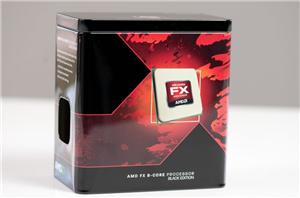
Bulldozer Does It Again: Overclocked to 8.58GHz
Last week, we reported that Andre Yang had managed to overclock AMD's FX-8150 CPU to 8.46GHz, breaking the former record set by AMD. Andre Yang has now been able...
45 by Kristian Vättö on 11/3/2011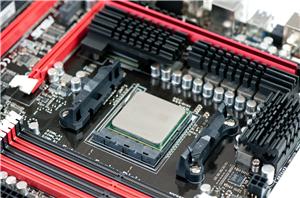
Bulldozer Breaks Frequency Record Again: Overclocked to 8.46GHz
Just before the launch of Bulldozer, AMD demonstrated it at 8.43GHz, which was the world record back then. Now an overclocker named Andre Yang has achieved an overclock of...
60 by Kristian Vättö on 10/29/2011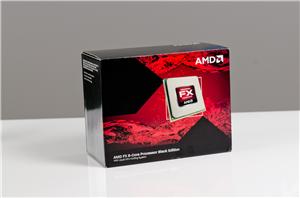
AMD Working on Bulldozer B3 Stepping
AMD released their highly anticipated Bulldozer CPUs last week (our review). The reception was not very warm, and a common thought was that Bulldozer didn't perform as well as...
60 by Kristian Vättö on 10/20/2011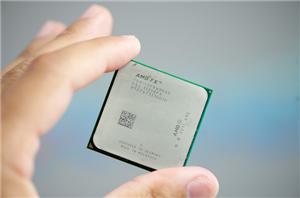
The Bulldozer Review: AMD FX-8150 Tested
AMD has been trailing Intel in the x86 performance space for years now. Ever since the introduction of the first Core 2 processors in 2006, AMD hasn't been able...
430 by Anand Lal Shimpi on 10/12/2011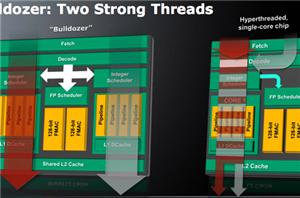
AMD Confirms 32nm Yield Issues at Global Foundries
AMD just announced revised revenue projections for Q3. Revenue is up compared to Q2 by 4 - 6%, but AMD had originally expected an increase of 10%. The reason...
38 by Anand Lal Shimpi on 9/28/2011
Look Out Bulldozer, Here Comes Trinity: AMD's 2012 Demo on Video at IDF
AMD's Bulldozer CPU is on the verge of being released. Sever markets will see the CPU soon, while desktop customers will have to wait until Q4 (which is only...
33 by Anand Lal Shimpi on 9/14/2011
AMD Sets World Overclocking Record with 8.429GHz Bulldozer Processor
Before every major architecture launch from AMD or NVIDIA, the companies typically hold an editor's or tech day. These events usually last about a day (sometimes two) and involve...
43 by Anand Lal Shimpi on 9/13/2011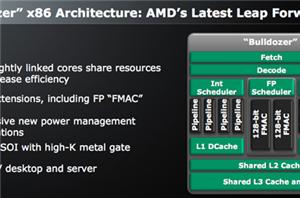
Pricing Revealed for First AMD Bulldozer FX Chips
Though AMD began shipping Bulldozer-based sever CPUs last week, we're still waiting until Q4 for the new architecture to hit the desktop. In the meantime, however, pre-order pricing for...
58 by Andrew Cunningham on 9/12/2011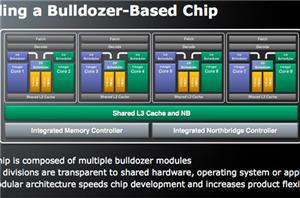
AMD Ships Bulldozer for Servers, Desktops to Follow in Q4
Yesterday AMD announced that it had begun revenue shipments of the first Bulldozer processors for servers. More specifically AMD is referring to its Interlagos CPU which features two Bulldozer...
22 by Anand Lal Shimpi on 9/8/2011
 Facebook
 Twitter
 RSS
RSS


