



SLI
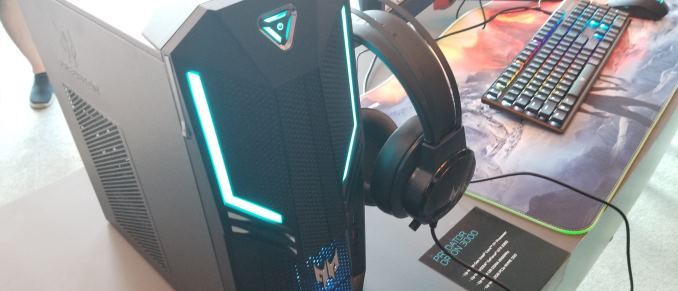
As part of their pre-Computex Global Press Conference, Acer today has unveiled a pair of new SKUs for their Orion Series of Gaming Desktops, filling out the series with the new 3000 and 5000 series machines. The 5000 series Acer says is designed for gamers who require superior performance and an adaptable chassis for future expansion. Meanwhile the mid-range 3000 series sports the same design and slightly different hardware inside. Acer’s goal was to provide a “…full lineup of gaming desktops able to cater to a wide range of needs.” The new Predator Orion 5000 series gaming desktops will use up to an 8th Gen Intel Core i7+ 8700K processor riding on an Intel Z370 chipset based board as well as supporting up to...
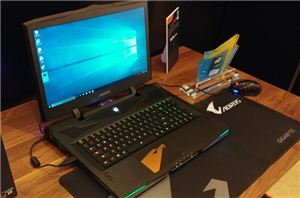
GIGABYTE at CES 2018: Aero 15x and AORUS X9 Gaming Laptops
Among some of the other announcements GIGABYTE made this year at CES 2018, it also displayed some of their existing gaming laptops in the Aero 15X (now available in...
11 by Joe Shields on 1/19/2018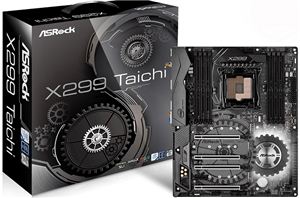
The ASRock X299 Taichi Motherboard Review
Next up on the test bench is the X299 Taichi, sitting in the middle of the range. ASRock is looking to touch more of the market with the Taichi...
18 by Joe Shields on 10/31/2017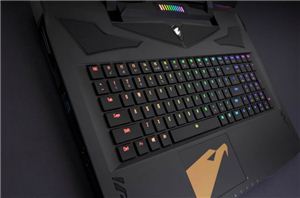
GIGABYTE Launches the AORUS X9 Gaming Laptop: GTX 1070 SLI and i7-7820HK
GIGABYTE has announced a powerful all-new extreme gaming laptop in the AORUS X9. The X9 comes with a 7th generation Intel i7-7820HK overclockable processor, two GTX 1070s in SLI...
30 by Joe Shields on 10/19/2017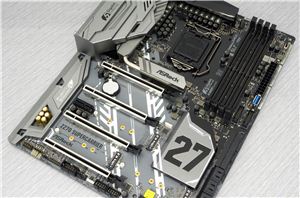
The ASRock Z270 Supercarrier Motherboard Review: 4-way SLI and 5 Gigabit Ethernet on Kaby Lake
In this review we are having a close look at ASRock’s Z270 Supercarrier, an apical motherboard that is targeting design professionals and hardcore gamers. The motherboard is bristling with...
51 by E. Fylladitakis on 9/29/2017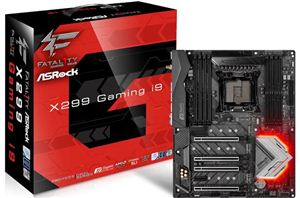
The ASRock Fatal1ty X299 Professional Gaming i9 Motherboard Review
All of the main motherboard vendors have launched a long list of X299 motherboards, aiming from budget to premium users. ASRock has been involved in the melee, with all...
24 by Joe Shields on 9/26/2017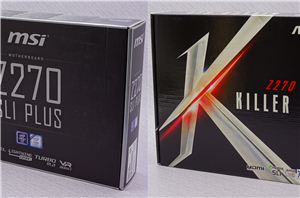
Kaby Lake Motherboards at $140: MSI Z270 SLI Plus vs. ASRock Z270 Killer SLI
In this review, we are having a look at two cost-effective Z270 motherboards that have been designed with gamers in mind - the MSI Z270 SLI Plus and the...
20 by E. Fylladitakis on 5/1/2017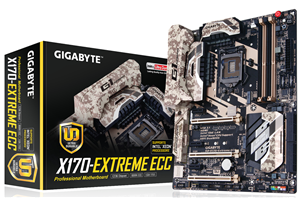
The GIGABYTE X170-Extreme ECC Motherboard Review: For When Skylake Xeons need SLI and Thunderbolt 3
When we reviewed the GIGABYTE MW31-SP0, I stated at the time that due to the design of many of the Xeon focused motherboards, only two or three were actually...
31 by Ian Cutress on 10/17/2016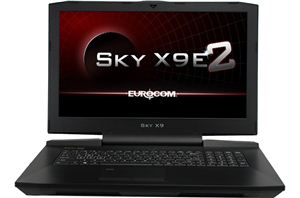
Eurocom Sky E9E2 Laptop: Intel Core i7, Two NVIDIA GeForce GTX 1080/1070 GPUs in SLI, Optional 120 Hz Display Panel
Eurocom has released one of the world’s first laptops featuring two NVIDIA’s GeForce GTX 1080/1070 GPUs, along with one of Intel’s latest Core i7 CPUs for good measure. The...
80 by Anton Shilov on 8/26/2016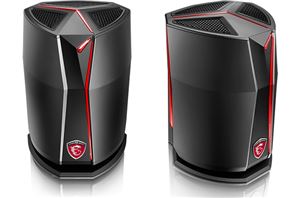
MSI Releases Vortex: A Mac Pro-Like SLI PC for Gamers and VR, from $2199
We originally laid eyes on the final design back at CES, but now MSI has begun to sell its Vortex gaming desktops in the US. The 6.5-liter systems resembles...
31 by Anton Shilov on 3/17/2016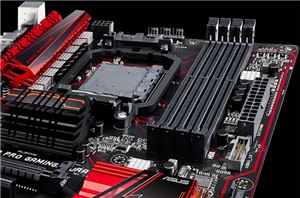
ASUS Launches 970 Pro Gaming/Aura Motherboard: USB 3.1 and M.2 to AMD FX Platform
ASUS has introduced its latest motherboard for AMD FX microprocessors that brings up-to-date features to the platform. The ASUS 970 Pro Gaming/Aura belongs to a new class of AMD...
25 by Anton Shilov on 2/2/2016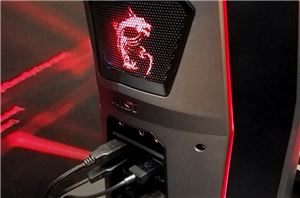
CES 2016: MSI’s Vortex Gaming PC on Display and It Looks Almost Like a Mac Pro
One of the most interesting PC designs to come out in recent years was that of the Mac Pro. Sure, it looked like a cylinder into which one might...
28 by Ian Cutress on 1/14/2016
The MSI GT80 Titan Review: The Broadwell Gaming Laptop Your Desktop Envies
I was lucky enough to be on-hand when MSI launched the GT80 Titan at CES. It was a big event for them, and all of the MSI people were...
103 by Brett Howse on 6/26/2015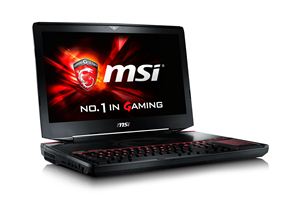
MSI GT80 Titan: Full Specs Revealed
Last year, MSI teased us with some images of their upcoming GT80 Titan notebook, an 18.4” gaming behemoth with support for SLI GPUs and a full Cherry MX mechanical...
23 by Jarred Walton on 1/4/2015
NVIDIA Announces SLI LED Bridges
For those that just can't get enough bling in their cases, NVIDIA today announced the availability of SLI LED bridges, available for the time being exclusively through the NVIDIA...
41 by Jarred Walton on 9/23/2014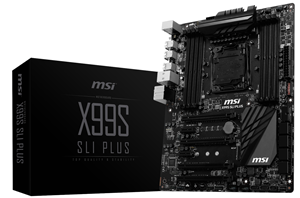
MSI Teases All Black X99S SLI PLUS
With every generation, motherboard manufacturers are increasingly using social media to provide teasers about their upcoming products. MSI had already shown one of its X99 motherboards, or at least...
10 by Ian Cutress on 8/4/2014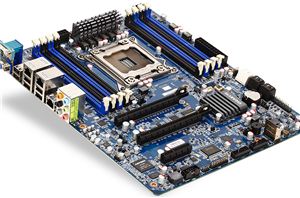
GIGABYTE GA-6PXSV3 Review
Server motherboards, unlike consumer motherboards, are never bought for looks. It is all about function, and the GIGABYTE GA-6PXSV3 we are reviewing today is aiming to supply enough at...
12 by Ian Cutress on 3/31/2014_carousel.JPG)
Gigabyte’s New AORUS SLI Gaming Notebook
Gigabyte had all of their current generation notebooks on display, which you can see in the images below, but while many of them are interesting in their own right...
24 by Jarred Walton on 1/7/2014_carousel.jpg)
Alienware 18 Gaming Notebook Review
Alienware's deluxe model benefits the most from the refresh.
61 by Dustin Sklavos on 9/16/2013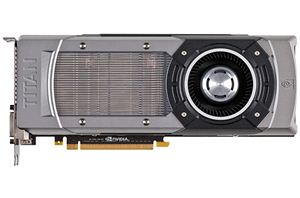
GeForce GTX Titan Two-Way SLI Scaling: PCIe 2 vs. PCIe 3
Back when I had Origin’s tri-Titan equipped Genesis in house, I received a few requests for benchmarks with PCIe 3 enabled. Because we tested the system with its default...
21 by Ryan Smith on 6/21/2013
 Facebook
 Twitter
 RSS
RSS


