



Radeon

AMD's FidelityFX Super Resolution 3 technology package introduced a plethora of enhancements to the FSR technology on Radeon RX 6000 and 7000-series graphics cards last September. But perfection has no limits, so this week, the company is rolling out its FSR 3.1 technology, which improves upscaling quality, decouples frame generation from AMD's upscaling, and makes it easier for developers to work with FSR. Arguably, AMD's FSR 3.1's primary enhancement is its improved temporal upscaling image quality: compared to FSR 2.2, the image flickers less at rest and no longer ghosts when in movement. This is a significant improvement, as flickering and ghosting artifacts are particularly annoying. Meanwhile, FSR 3.1 has to be implemented by the game developer itself, and the first title to support this...
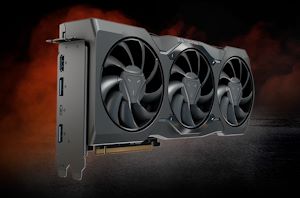
AMD Rolls Out Radeon RX 7900 XT Promo Pricing Opposite GeForce RTX 40 Super Launch
In response to the launch of NVIDIA's new GeForce RTX 40 Super video cards, AMD has announced that they are instituting new promotional pricing on a handful of their...
11 by Anton Shilov on 1/17/2024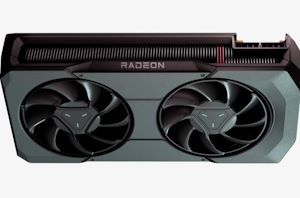
AMD Adds Radeon RX 7600 XT To Product Stack, 1080p Gaming Card Gets 16GB For $329
Kicking things off for the GPU space at this year’s CES, AMD is at the show to announce that they’re bringing an additional Radeon RX 7000 series card to...
10 by Ryan Smith on 1/8/2024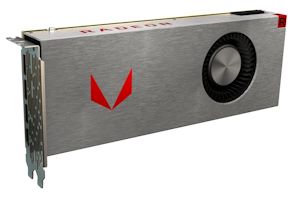
AMD Begins Polaris and Vega GPU Retirement Process, Reduces Ongoing Driver Support
As AMD is now well into their third generation of RDNA architecture GPUs, the sun has been slowly setting on AMD’s remaining Graphics Core Next (GCN) designs, better known...
32 by Ryan Smith on 11/8/2023
AMD Teases FSR 3 and Hypr-RX: Updated Radeon Performance Technologies Available in September
Alongside this morning’s announcement of the new Radeon RX 7800 XT and RX 7700 XT video cards, AMD is also using their Gamescom launch event to deliver an update...
43 by Ryan Smith on 8/25/2023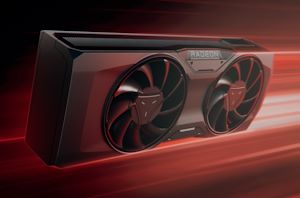
AMD Announces Radeon RX 7800 XT & Radeon RX 7700 XT: Enthusiast-Class RDNA3 For 1440p Gaming
With the Gamescom convention taking place in Germany this week, AMD is using Europe’s largest video game trade show as the venue for their latest Radeon video card announcements...
38 by Ryan Smith on 8/25/2023
AMD to Unveil 'Major' New Radeon Products Next Week at Gamescom
Earlier this month, AMD said that it would refresh its lineup of Radeon RX graphics cards for gamers this quarter, and apparently, the new products are set to be...
27 by Anton Shilov on 8/17/2023
AMD to Introduce New Enthusiast-Class Graphics Cards This Quarter
As part of their quarterly earnings call this week, AMD revealed that the company is getting ready to launch new enthusiast-class Radeon RX 7000-series graphics cards in the coming...
30 by Anton Shilov on 8/3/2023
Samsung and AMD Renew GPU Architecture Licensing Agreement: More RDNA Exynos Chips to Come
In a joint press release released this evening, AMD and Samsung have announced that the two companies are renewing their GPU architecture licensing agreement for Samsung’s Exynos SoCs. The...
3 by Ryan Smith on 4/6/2023
AMD Announces The Last of Us Part 1 Game Bundle For Radeon RX 6000 & 7000 Video Cards
The Last of Us Part 1, a remaster of the original Playstation-hit, is making its way to the PC on March 28. To celebrate the feat or to let...
7 by Zhiye Liu on 3/8/2023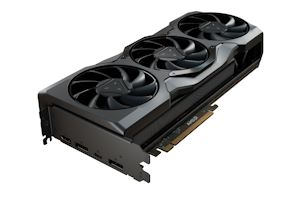
AMD Reveals Radeon RX 7900 XTX and 7900 XT: First RDNA 3 Parts To Hit Shelves in December
With AMD’s first-wave of Zen 4 CPUs now in the books with the Ryzen 7000 series, the consumer arm of AMD is now shifting its attention over to its...
197 by Ryan Smith on 11/3/2022
AMD RDNA 3 GPU Unveil "together we advance_gaming” Live Blog (1pm PT/20:00 UTC)
Following hot on the heels of AMD’s major CPU launch of the year – the Zen 4 architecture and Ryzen 7000 family – today AMD will be giving their...
16 by Ryan Smith & Gavin Bonshor on 11/3/2022
AMD Announces Radeon RDNA 3 GPU Livestream Event for November 3rd
Following on the heels of AMD’s CPU-centric event back in August, AMD today has sent out a press release announcing that they will be holding a similar event in...
18 by Ryan Smith on 10/20/2022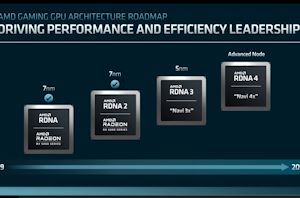
AMD’s 2022-2024 Client GPU Roadmap: RDNA 3 This Year, RDNA 4 Lands in 2024
Among the slew of announcements from AMD today around their 2022 Financial Analyst Day, the company offering an update to their client GPU (RDNA) roadmap. Like the company’s Zen...
21 by Ryan Smith on 6/9/2022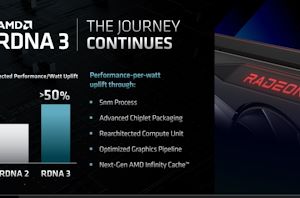
AMD RDNA 3/Navi 3X GPU Update: 50% Better Perf-Per-Watt, Using Chiplets For First Time
Continuing our coverage of AMD's 2022 Financial Analyst day, we have the matter of AMD's forthcoming RDNA 3 GPU architecture and the Navi 3X GPUs that will be built...
11 by Ryan Smith on 6/9/2022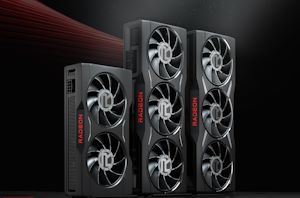
AMD Releases Radeon RX 6950 XT, 6750 XT, and 6650 XT: A Bit More Speed For Spring
AMD this morning is taking the wraps off a trio of new Radeon RX 6000 series video cards to round out its product stack. Aimed at everything from the...
33 by Ryan Smith on 5/10/2022
AMD Teases FSR 2.0: Temporal Upscaling Tech for Games Coming in Q2
Alongside their spring driver update, AMD this morning is also unveiling the first nugget of information about the next generation of their FidelityFX Super Resolution (FSR) technology. Dubbed FSR...
46 by Ryan Smith on 3/17/2022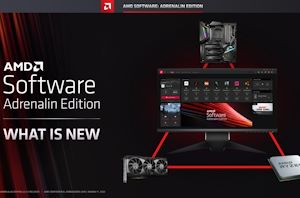
AMD Releases Adrenalin Software Spring 2022 Update: Adds RSR Upscaling and More
AMD this morning is releasing the awaited spring update to their AMD Software Adrenalin Edition suite for their GPUs. First unveiled back in January as part of AMD’s keynote...
12 by Ryan Smith on 3/17/2022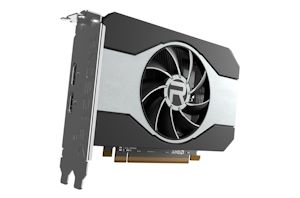
Launching Today: AMD's Radeon RX 6500 XT, Starring Navi 24
Following its announcement back at CES, today AMD is formally launching the entry-level member of its Radeon RX 6000 series of video cards: the Radeon RX 6500 XT. Based...
101 by Ryan Smith on 1/19/2022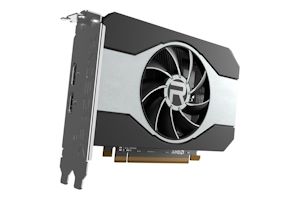
AMD Reveals Radeon RX 6500 XT: Navi 24 Lands for Low-End Desktops on January 19th
Alongside AMD’s smorgasbord of mobile graphics offerings that were announced during today’s CES 2022 keynote, the company also has some new desktop video cards to speak about for the...
22 by Ryan Smith on 1/4/2022
 Facebook
 Twitter
 RSS
RSS


