



News

Back in September 2012, a $2.4 million Kickstarter campaign finished to help develop the next wave of immersive gaming in Oculus Rift. The premise behind Oculus Rift is a virtual reality headset that puts you deeper into the game than any other headset has ever done before. Since that Kickstarter campaign news about Oculus has penetrated all of technical media in terms of the development, the nature of the device and what sort of games are going to be able to use it. I remember a few images of Brian and Anand trying the Crystal Cove prototype at CES this year. The news today comes as a shock (to me at least) – Facebook has announced today that it has reached a...
_B_carousel.jpg)
The Samsung Galaxy S III Revealed: 4.8" HD SuperAMOLED, Exynos 4 Quad, Available 5/29 in Europe
Apple is a bit infamous for its tight control over new products, particularly iPhones. Development mules are often updated internals stuffed into nondescript previous generation designs. And talk of...
57 by Jason Inofuentes on 5/3/2012
Thailand's flooding and our HDD needs
This holiday season might be a big one for SSD manufacturers. Like most tropical regions, Thailand experiences dry and rainy seasons, which are somewhat predicable, with the rainy season...
10 by Jason Inofuentes on 11/18/2011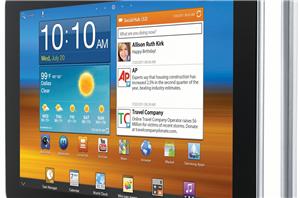
Hands-on With The Galaxy Tab 8.9
First revealed at CTIA, alongside it’s big brother the Tab 10.1, the Samsung Galaxy Tab 8.9 has been a long time coming. At today’s launch event Samsung gave the...
33 by Jason Inofuentes on 9/27/2011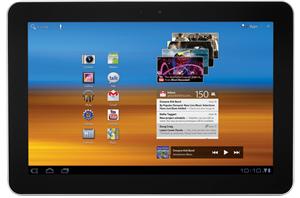
Verizon Bringing 4G to Galaxy Tab 10.1, HP DM1 and Radio Shack
Verizon PR was working overtime today. Big Red had two product announcements and a partnership with Radio Shack that brings America's #1 Wireless Network, and the iPhone and Android...
19 by Jason Inofuentes on 7/26/2011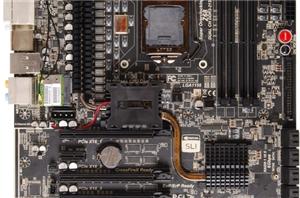
Zotac, and a Z68 E-ATX with almost everything?
The Zotac "Crown Edition-ZT-Z68 U1DU3" is a Z68 motherboard in the Extended ATX (E-ATX, 330x305 mm) format. At that size, you know from the start that it will...
23 by Ian Cutress on 7/16/2011
Motorola Xoom Gets Honeycomb 3.2 And Hints Of LTE
Two bits of news broke today regarding Honeycomb's first flagship device, the Motorola Xoom. The FCC has gotten their hands on the LTE module bound for Verizon customers' Xooms...
11 by Jason Inofuentes on 7/12/2011
Google TV 2.0 Coming to Logitech Revue This Summer
For many, the deal breaker for the Logitech Revue and other Google TV products was two words: IR blaster. Opting to act as a supplement to your current home...
15 by Jason Inofuentes on 6/22/2011
Update: AMD Resigns from BAPCo Over SYSmark 2012 Concerns; NVIDIA & VIA Also Leave, BAPCo Responds
What’s in a Benchmark? This is a pertinent question that all users need to ask themselves, because if you don’t know what a benchmark actually tests and how that...
122 by Jarred Walton on 6/21/2011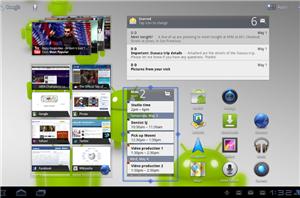
Google I/O 2011 Keynote: Updates for Phone, Tablet, TV and Accessories
Google’s I/O 2011 keynote may have suffered from a few choice leaks, namely the new Music service and Ice Cream Sandwich announcement, but Google still managed to include some...
22 by Nirdhar Khazanie & Jason Inofuentes on 5/10/2011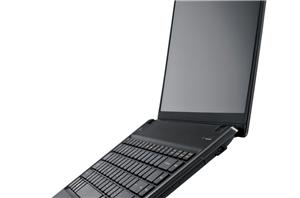
LG P430 and P530 Blade Announced: LG Slims Down
Announced today, LG joins in the race for thin with its latest P series notebooks, now dubbed the Blade series. Available in late May across Europe, South America, Asia...
24 by Jason Inofuentes on 5/6/2011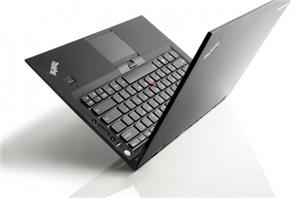
Lenovo X1 Leaked: Sandy Bridge Gets Thin
Lenovo is taking another swing at the MacBook Air. Having discontinued their X300 ultraportable line, Lenovo seemed content to compete at the 11" and 12" form factor, without sitting...
47 by Jason Inofuentes on 4/25/2011
LG Optimus 2X coming to USA as T-Mobile G2x
When we reviewed the LG Optimus 2X a while ago, we weren't quite sure what carrier it would wind up on when it came stateside. T-Mobile seemed the most...
14 by Brian Klug on 3/22/2011
Sprint and Google Announce Nexus S 4G and Native Google Voice
Today kicked off the start CTIA 2011, and Anand is already over in Orlando, Florida covering the event. I'm missing out this time, instead working on a couple of...
16 by Brian Klug on 3/21/2011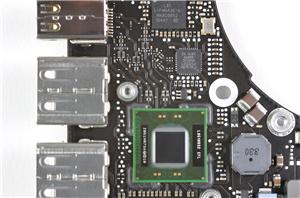
Intel's Codename Light Peak Launches as Thunderbolt
Back at IDF 2010, we wrote about Intel Light Peak nearing its eventual launch in 2011. Back then, the story was a 10 Gbps or faster physical link tunneling...
108 by Brian Klug on 2/25/2011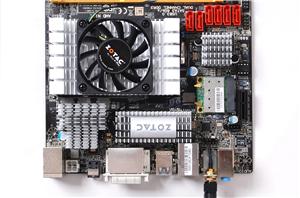
Zotac Announce two 880G AMD Mini-ITX Motherboards
The mini-ITX market is gathering pace, and seemingly every motherboard company wants a piece of the action. Some get it almost right, such as the Gigabyte H55N-USB which...
26 by Ian Cutress on 12/3/2010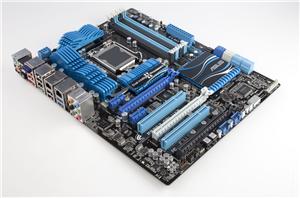
A brief look at upcoming ASUS P67 Motherboards
With the launch of Sandy Bridge on the horizon, the larger motherboard manufacturers are putting the final touches to their products. ASUS, Gigabyte, EVGA, MSI, Foxconn, and others...
53 by Ian Cutress on 11/14/2010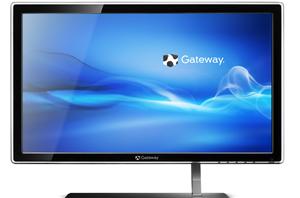
Gateway Launches Three LED-backlit Displays
Gateway has launched three new ultra-slim LED-backlit displays. The new displays are part of two new lines - the FHX series which will be available in 21.5” and 24&rdquo...
98 by Balraj Sandhu on 10/5/2010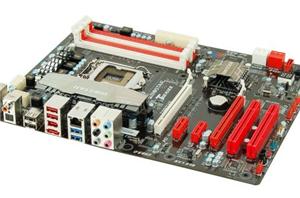
A Quick Glimpse of the Biostar TP67XE and TH67XE
With Intel’s new socket 1155 and Sandy Bridge archtecture nearly upon us, it was only a matter of time before motherboard vendors started to release promotional shots of their...
27 by Ian Cutress on 9/29/2010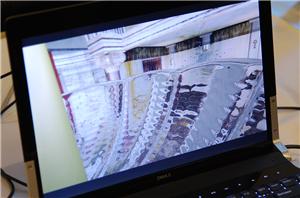
Intel Demos Many Integrated Core (MIC) Cloud Raytracer
Intel is no stranger to raytracing - we've seen demonstrations such as Quake IV ported to an Intel-designed raytracer along with a number of other demos in the past...
28 by Brian Klug on 9/13/2010
 Facebook
 Twitter
 RSS
RSS


