



Fermi
This week, NVIDIA has announced that they are ending mainstream graphics driver support for Fermi-based GeForce GPUs. Effective as of this month (i.e. immediately), all Fermi products are being moved to legacy support status, meaning they will no longer receive Game Ready driver enhancements, performance optimizations, and bugfixes. Instead, they will only receive critical bugfixes through the end of the legacy support phase in January 2019. While the announcement mentions ‘Fermi series GeForce GPUs,’ the actual support plan specifies that mainstream driver support is limited to Kepler, Maxwell, and Pascal GPUs. So presumably all Fermi products are affected. In the same vein, also effective this month is NVIDIA dropping mainstream driver support for 32-bit operating systems, as announced in December 2017. Like Fermi, 32-bit operating systems...
Windows 10 Launch Day GPU Support Summary
With Windows 10 launching today, the first half of the path to DirectX 12 has at last been laid down. The GPUs have been here for some time, and...
68 by Ryan Smith on 7/29/2015
Dell Updates XPS 14 and 15 with New Chassis, New Hardware
If you couldn't tell already, it's definitely refresh season around here and Dell has been sure to keep news about their comprehensive refreshes coming through in a steady trickle...
53 by Dustin Sklavos on 6/26/2012
NVIDIA’s GeForce GTX 590: Duking It Out For The Single Card King
Back on Tuesday NVIDIA put out a quick teaser about a new video card that would be launching today. As virtually all of you correctly guessed, it was the...
123 by Ryan Smith on 3/24/2011
NVIDIA's GeForce GTX 550 Ti: Coming Up Short At $150
Throughout the lifetime of the 400 series, NVIDIA launched 4 GPUs: GF100, GF104, GF106, and GF108. Launched in that respective order, they became the GTX 480, GTX 460, GTS...
79 by Ryan Smith on 3/15/2011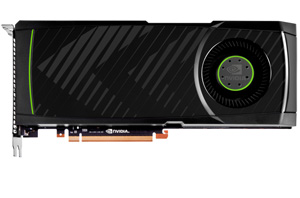
NVIDIA's GeForce GTX 580: Fermi Refined
There's little doubt in our minds that the GF100/GTX 480 launch wasn't quite what NVIDIA was hoping for. It did end up being the fastest single GPU card on...
160 by Ryan Smith on 11/9/2010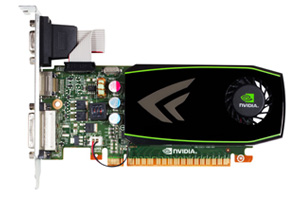
NVIDIA's GeForce GT 430: The Next HTPC King?
It’s been 7 months since the launch of the first Fermi cards, and at long last we’re here: we’ve reached the end of the road on the Fermi launch...
121 by Ryan Smith & Ganesh T S on 10/11/2010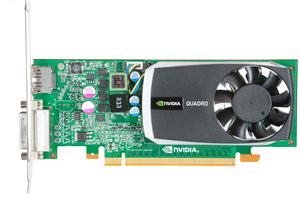
NVIDIA Launches Quadro 2000 & Quadro 600
This morning NVIDIA is announcing the rest of its Fermi-based Quadro family: the Quadro 2000 and the Quadro 600. Based on the GF106 and GF108 GPUs respectively, the 2000...
18 by Ryan Smith on 10/4/2010
GTC 2010 Day 1: NVIDIA Announces Future GPU Families for 2011 And 2013
We’re currently down in San Jose, California covering NVIDIA’s annual GPU Technology Conference. While we're only covering the final 2 days of the conference, on Tuesday NVIDIA's CEO Jen-Hsun...
82 by Ryan Smith on 9/22/2010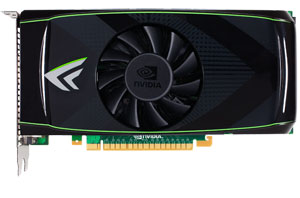
NVIDIA’s GeForce GTS 450: Pushing Fermi In To The Mainstream
After the drawn out launch of GF100 and the GTX 400 series earlier this year, NVIDIA has been firing on all cylinders when it comes to the launch of...
69 by Ryan Smith on 9/13/2010_carousel.jpg)
Gainward announces a 2GB GTX 460
If you’re on the lookout for a GTX460, you had two choices – the 768MB versions, or the 1GB variants. From our recent review, the 1GB versions, due...
37 by Ian Cutress on 7/31/2010
 Facebook
 Twitter
 RSS
RSS


