Latest Posts
Sony VAIO SE: An IPS Laptop for Under a Grand
by Jarred Walton on 4/3/2012

Yes, folks, we finally managed to get someone to send us a mainstream laptop with an IPS display. Not that there are many choices; besides the Sony SE reviewed here, the only other options for anywhere close to a grand are the Lenovo X220 (which starts at around $1250, give or take) and the HP Envy 15 (which costs $1250 with the same 1080p panel as the VAIO SE). Sony’s VAIO SE costs less for the basic model, always comes with a 1080p display, and it has plenty of other cool features as well. But are there other areas where the SE falls short, or does the sum of the parts create something awesome?

Sony shipped us a higher spec unit for this review, but outside of the CPU most of the changes are pretty tame. The short summary is that if you’re after a decent mainstream laptop with a good display that won’t break the bank, it’s very difficult to come up with better options. Everything isn’t perfect, unfortunately, but there are very few laptops that don’t have one or two glaring flaws. Read on to find out the good and the bad (or merely okay) with the Sony VAIO SE, and find out if this might be worthy of your next laptop purchase.

Sony Vaio Z2: Everything is Peripheral
by Dustin Sklavos on 2/13/2012

Users who want everything out of their notebook, no matter how ridiculous the demands, are probably more than at least a little curious about Sony's VAIO Z2. There's good reason to be: this 13.1" ultrabook features a stunning 1080p screen, a secondary battery slice that nearly doubles running time off the mains, and an external dock box that features an optical drive, additional connectivity, and a dedicated GPU that can actually be used to power the notebook's internal screen.

The VAIO Z2 has a lot going for it, but is it worth the heavy price tag? Outside of the specs on paper—which admittedly look quite good—what's the build quality like on the Z2, how does it fare in day to day use, and are there any concerns or benefits that might not immediately stand out? We'll cover that and more as we put this laptop to the test.

Alienware's M18x, Part 2: AMD's Radeon HD 6990M in CrossFire
by Dustin Sklavos on 10/14/2011

In our first run with the Alienware M18x, we sat down and took a look at the notebook itself along with NVIDIA's current top shelf mobile graphics part, the GeForce GTX 580M. We came away from the experience with mixed impressions of the M18x itself, a notebook that is by all means incredibly powerful but also seems to lose a lot of the balance that made the M17x R3 so desirable. On the other hand, the GeForce GTX 580M wound up being the fastest mobile GPU we'd yet tested, made only more formidable through the SLI configuration the M18x enables.

Today, Alienware has graciously provided us with the second half of the current top shelf performance equation in the form of a near-identically configured M18x, this time with two AMD Radeon HD 6990Ms in CrossFire. We'll also take a look at the Intel Core i7-2920XM's stock performance and compare it against the overclocked settings Alienware allows you to configure it with.

Sony VAIO S Series: All Day Consumer Computing
by Dustin Sklavos on 9/9/2011

You asked for it, you got it: in house, a review of Sony's longstanding 13.3" road warrior S series. It's light, has a matte screen, switchable graphics, a mainstream Sandy Bridge processor, and the potential to last all day (and then some) on the battery. From the outside, at least, the Sony VAIO S looks like a winner at nearly any level. But did Sony cut any corners to get the VAIO S' price down, or should it be on any traveller's short list?

AMD Raises the Mobile Performance Bar with Radeon HD 6990M news
by Jarred Walton on 7/12/2011

AMD’s last update to their mobile GPU lineup is now over six months old, which means we’re about due for another new part. Right on cue, and not long after NVIDIA’s GTX 580M speed bump, AMD briefed us on their latest update. Prior to agreeing to the NDA, all we ...

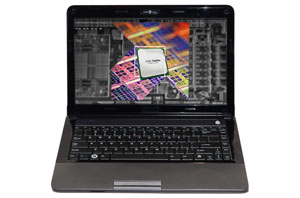
The AMD Llano Notebook Review: Competing in the Mobile Market

Today has been a long time in coming; we first heard about Llano way back in 2008, but even then the target date was 2011. Even so, AMD has been hurting for a compelling mobile platform since… well, since ever. Even in the glory days of the K8 platforms, AMD never had a great mobile strategy, a fact that Intel capitalized on with the launch of Banias and the original Pentium M Centrino platform in 2003. Presumably the goal of most laptops is to actually work well as mobile computing platforms, and prior to 2011 the best AMD could do was compete on performance and price, with battery life (e.g. actual mobility) never quite keeping pace with the times.

Earlier this year, AMD launched Brazos, their low-power alternative to Intel’s Atom ecosystem. It boasted better performance and much better graphics than Atom, with battery life that checked in at a respectable 8+ hours for a moderate 56Wh battery. Of course, there are Intel laptops that can provide battery life that’s very close to Brazos with general performance that’s 3x faster, so Brazos isn’t a panacea.

Enter Llano, the mainstream alternative to the low-power Brazos that brings AMD’s APU A-series to market with a much faster CPU and GPU. Llano is also AMD’s (GlobalFoundries’) first 32nm CPU, which brings AMD back to parity with Intel in terms of process technology. The process shrink should bring lower power requirements, smaller die sizes, and better performance. Add in power gating, Turbo Core, and expected pricing starting at $600 for quad-core laptops and the A-series starts to sound quite compelling.  So just how good is Llano, and can AMD finally start to steal more of the mobile market from Intel? Let’s find out.

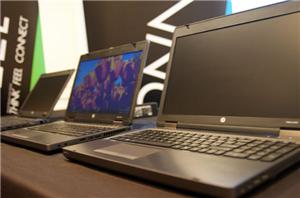
HP's Business Notebook Hat Trick
by Dustin Sklavos on 2/23/2011

It's fair to say the refreshes HP announced for their consumer computers earlier this month seemed fairly lackluster. While nobody can complain about improved notebook speakers and the triumphant return of dedicated mouse buttons, there wasn't anything else remarkably fresh or exciting about their spring line. When we got a chance to meet with HP representatives in San Francisco to see their new business lineup, however, we saw very nearly the complete opposite.

AMD and GlobalFoundries, CES 2011
by Jarred Walton on 1/7/2011

The entities formerly known as AMD—namely, AMD and GlobalFoundries—are both here in Vegas for CES, and we had an opportunity to stop by and discuss their current and future technologies. 2011 is set to be a major year for both companies, with new process nodes, new CPUs, and new GPUs targeting all segments of the computing spectrum. Judging by the amount of AMD laptops scattered around the various booths, this could be something of a comeback for the “little” guys. Why the excitement, and what’s coming this year?

Latest from AnandTech