



The Tesla Model S Controversy: Understanding the Effects of Temperature on Electric Vehicle Efficiency and Range
by Vivek Gowri on February 18, 2013 4:22 PM EST- Posted in
- Auto
- Electric Vehicles
- Tesla Model S
- Nissan Leaf
Thermal Effects on Energy Consumption and Range
Looking at energy consumption, right off the bat, we can see that cold weather has a significant impact on EC - nearly double in urban driving, 40% more in the highway cycle, and 25% on the US06. It’s worth noting here: the Leaf has an 80 kW electric motor, a 24 kWh battery, and a 5 kW resistive heating element.
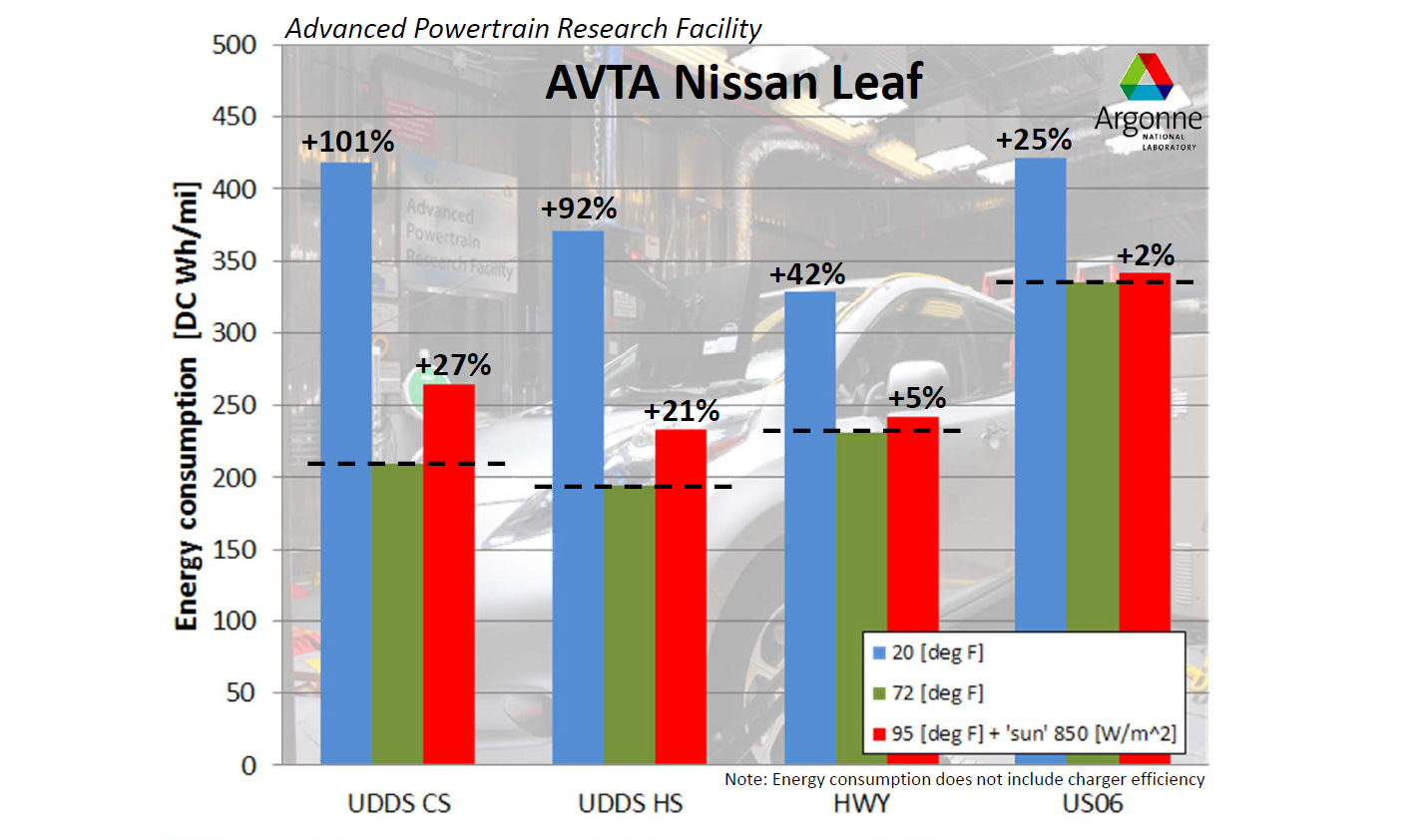
When broken down further, into a base load case (driving cycle EC at 72F), the amount of extra energy needed to drive the cycle at 20F (listed as EC cold), and then the heater load required to maintain a cabin temperature of 72F, we can see that a significant portion of the additional energy consumption is down to the heater. As with most gasoline cars, driving in sub-freezing temperatures only makes the car about 10% less efficient before heater loads are considered. The mechanically-driven heating elements in conventional vehicles add another 5% or so in terms of mechanical efficiency loss, while obviously the electric heater in the EV is far more costly from an energy consumption standpoint even though it doesn’t increase mechanical losses at all.

(Note: graphs were created by ANL using the raw 10Hz data instead of the filtered 1Hz data available on D3. Available as part of APRF's AVTA Nissan Leaf testing analysis and summary, as presented by Dr. Henning Lohse-Busch. Full presentation available here.)
And while energy consumption is a big deal, range is the be-all, end-all concern for most consumers. With the heater on, that’s a decrease in range by anywhere from 20-50% depending on your drive cycle. That’s a lot. And you can just look at the APRF’s full charge tests at 20F and 72F to see what I mean:
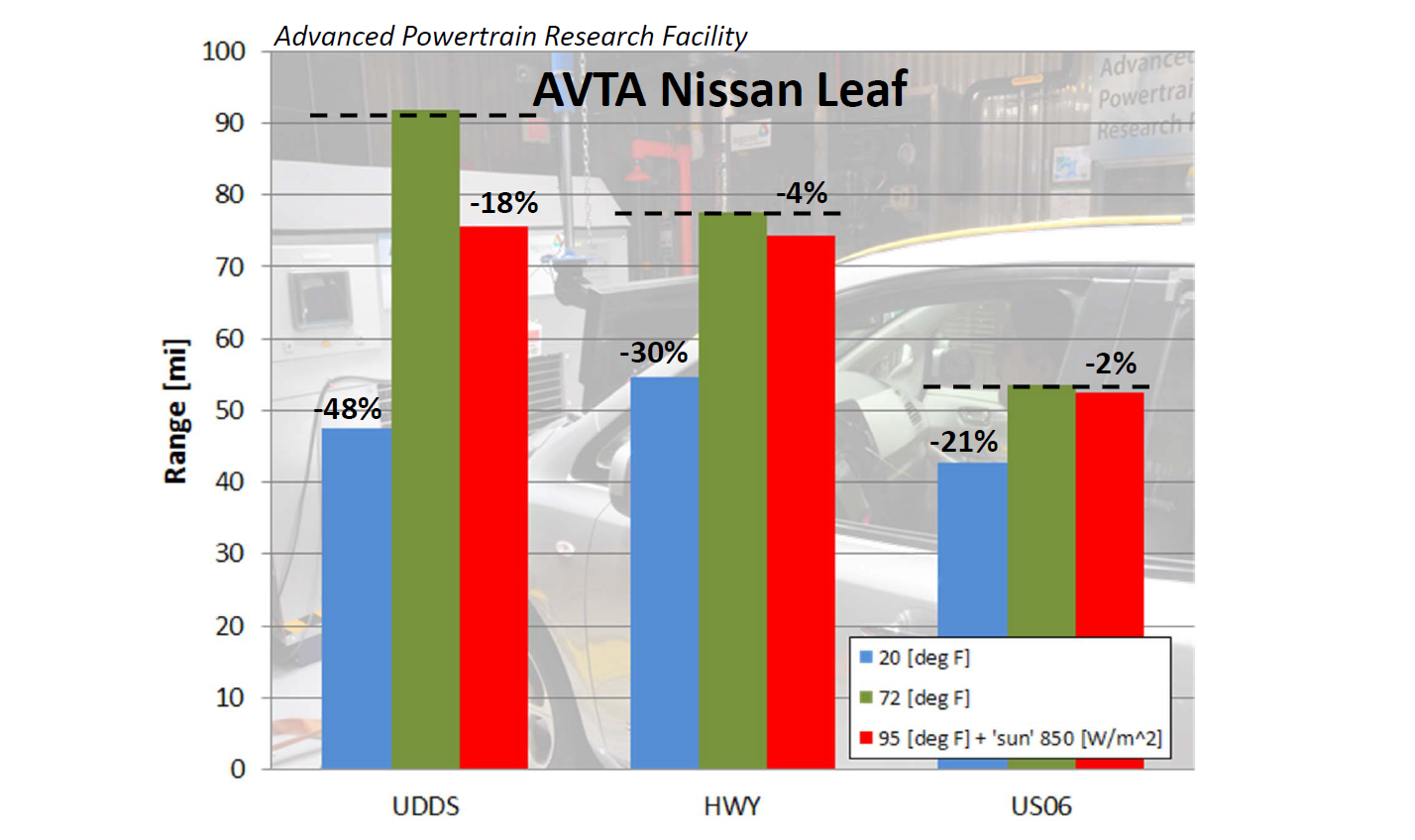 Think about that - this is a car that, at launch, Nissan claimed had a 100 mile range. My own real-world driving suggests 80-85 a decent estimate. EPA says that number is closer to 73. The APRF’s instrumented testing backs that up (74.1 mile range at 72F), but the same instrumented testing, in 20F weather? 46 miles. That’s it.


 Facebook
 Twitter
 RSS
RSS


102 Comments
View All Comments
jonup - Tuesday, February 19, 2013 - link
Fan-boy? How did you come up with that? I have had a limited interaction with both vehicles (which I would assume is more than both of you have had combined). I do not own either one and I do seek to acquire neither. My opinion about looks and refinement are result of my personal experience and not from reading the targeted manufacturers response to the NYT test.And as far as looks go, Compare the front end of 10+ year old Maserati 3200GT and Model S and try to find the differences. Photohunt at its best!
Spunjji - Tuesday, February 19, 2013 - link
It's not about Pr. It's about how the reporter made claims that were not factually substantiated and then failed to explain the discrepancies. Note that I am not including bits like the "he drove around in circles" claim by Tesla which he more than adequately explained. I'm talking about why he didn't charge his damn car properly.steven75 - Tuesday, February 19, 2013 - link
You know what they say...Beauty is in the eye of the beholder.I just saw the Fisker at the Chicago Auto Show on Sunday and thought it was one of the ugliest cars there.
Heathmoor - Monday, June 10, 2013 - link
The Fisker Karma and the Tesla Model S aren't of the same category. The Karma has only 4 seats and a small boot whereas the Model S has 5(+2) roomy seats and a very large trunk. The only clear advantage of the Karma is that can recharge its batteries with an IC engine while moving.Aikouka - Monday, February 18, 2013 - link
A sham on whose side?shokunin - Monday, February 18, 2013 - link
Sham by Top Gear, they had scripted all the events before they got the car. Jeremy running out of juice, pushing the car into the garage because it was dead, were all scripted.The result of the lawsuit was Top Gear isn't a car review show, it's entertainment and not journalism.
jonup - Monday, February 18, 2013 - link
This:http://transmission.blogs.topgear.com/2011/04/02/t...
ricardoduarte - Monday, February 18, 2013 - link
I think Elon Musk is a bit of tantrum queen, he likes to blow things out of proportions a bit, Even with the whole thing scripted, top gear had a point and the whole would actually happen, and thats a reality of the electrical cars, specially when throwing them around a track, what interests me is if the financial advantages and if the car performance can be as exciting as a petrol ones, are good enough to live with range anxiety (at the beginning at least).Azethoth - Monday, February 18, 2013 - link
No, perceptions matter. If I had an electric car company I would take my lumps on extreme weather performance and charging times. These are the facts of life for current battery tech.However, I would not sit still for hatchet jobs. Neither by Top Gear nor the NYT.
Failing to charge your EV is not a limitation of the EV. Its a limitation of common sense. The NYT failed at that.
As for top gear, ok, if I run a vehicle out of gas / charge then it will need a tow. Omg! Wow this is ground breaking entertainment. I like Top Gear but feel uncomfortable about what they did.
jonup - Tuesday, February 19, 2013 - link
This is sensible piece of advice.If you do not have common sense do not buy Model S, you will fail to charge it. On the other hand, if you have common sense, don't waste you money and get a better car.
... and on that bombshell...