



Memory Performance: 16GB DDR3-1333 to DDR3-2400 on Ivy Bridge IGP with G.Skill
by Ian Cutress on October 18, 2012 12:00 PM EST- Posted in
- Memory
- G.Skill
- Ivy Bridge
- DDR3
One of the most important kits in this review is the DDR3-1600 kit for which G.Skill has supplied one of their RipjawsX range. This kit is of importance due to the close price differential to the DDR3-1333 kit ($5 difference), but also as generations of processors go forward we get an ever increasing suggested memory speed of those processors. Take the most recent AMD Trinity processor release for desktops – all but the low end processor supports 1866 MHz memory as the standard out of the box. Now we can be assured that almost all of the processors will do 2133 MHz, but as manufacturers raise that ‘minimum’ compliance barrier in their testing on their IMCs, the ‘standard’ memory kit has to be faster and come down in price also.
Visual Inspection
The RipjawsX kit we have uses a large heatsink design, with the top of the heatsink protruding 9.5mm above the module itself. As mentioned with the Ares DDR3-1333 kit, there are multiple reasons for why heatsinks are used, and pretty low on that list is for cooling. More likely these are placed initially for protecting which ICs are used in the kit from the competition (using a screwdriver and a heatgun to remove them usually breaks an IC on board), then also for aesthetics.
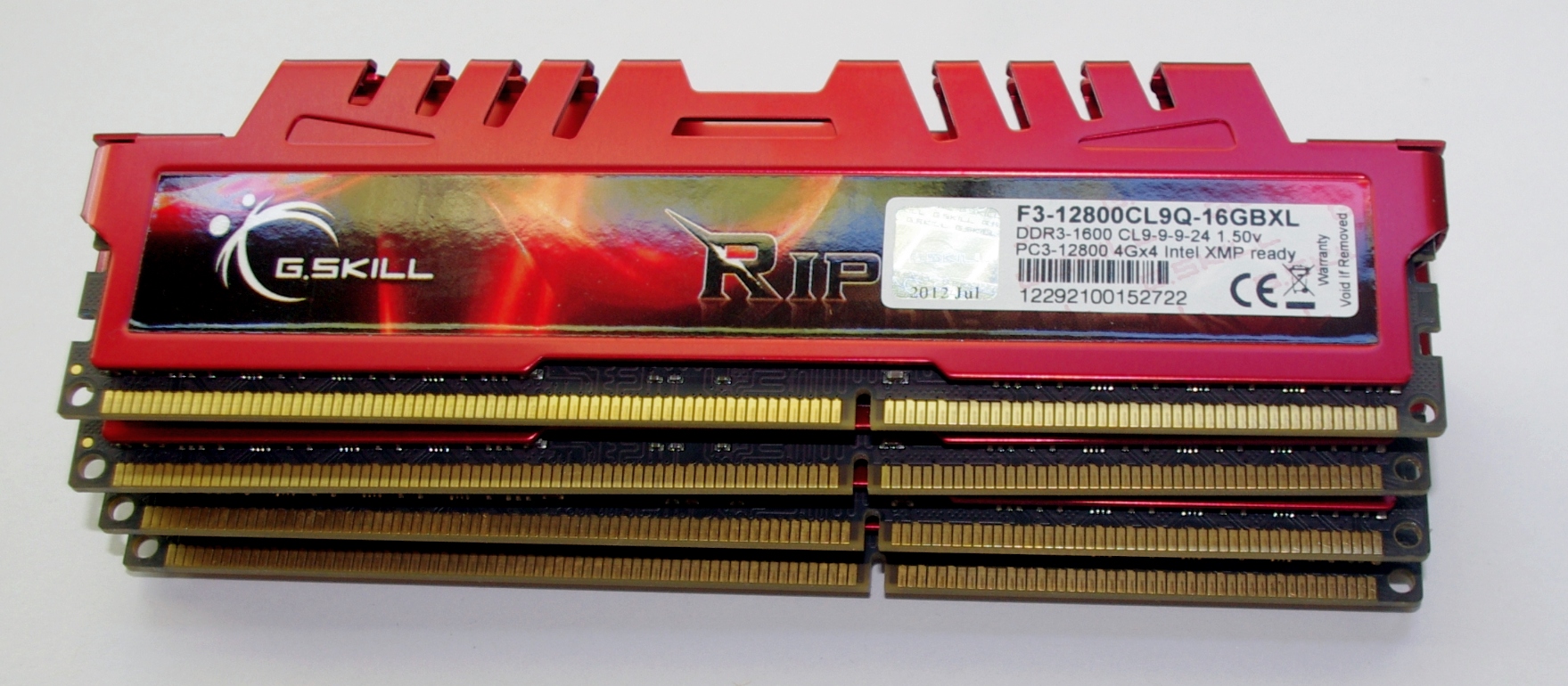
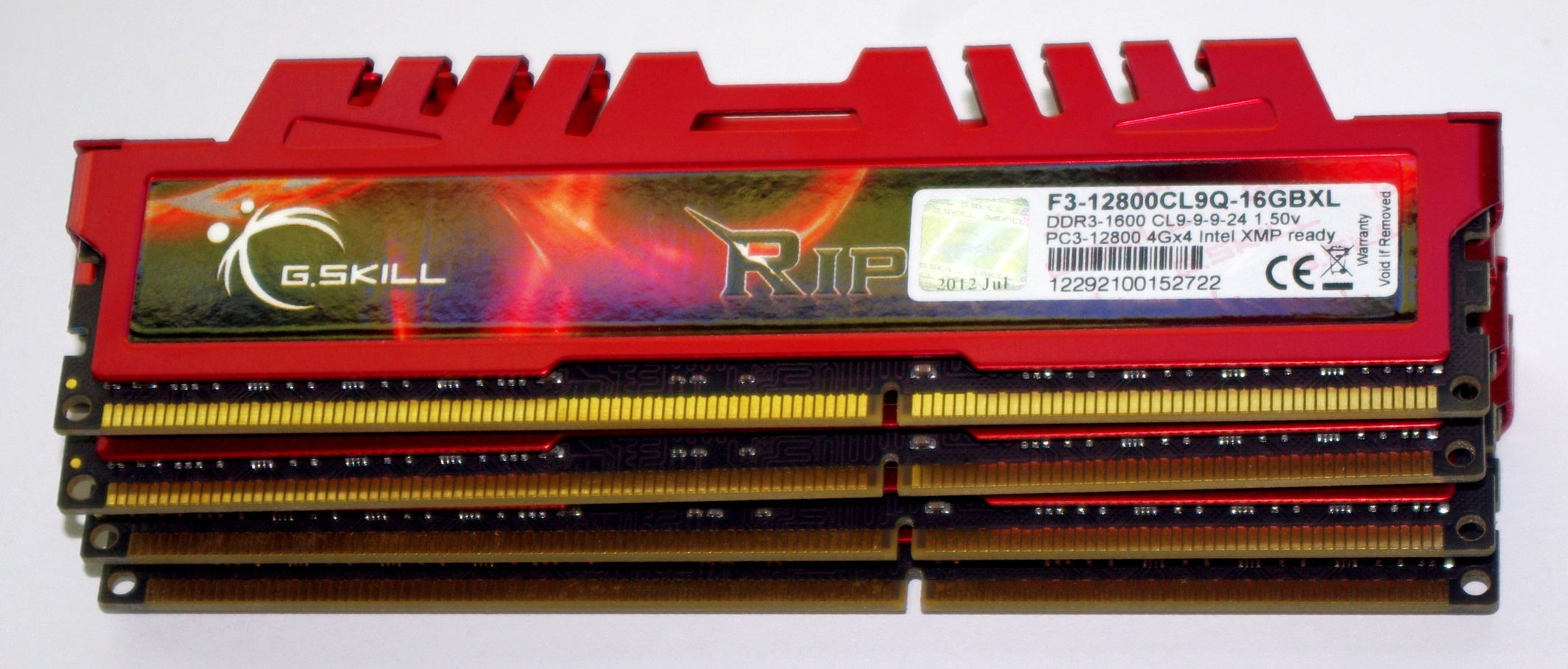
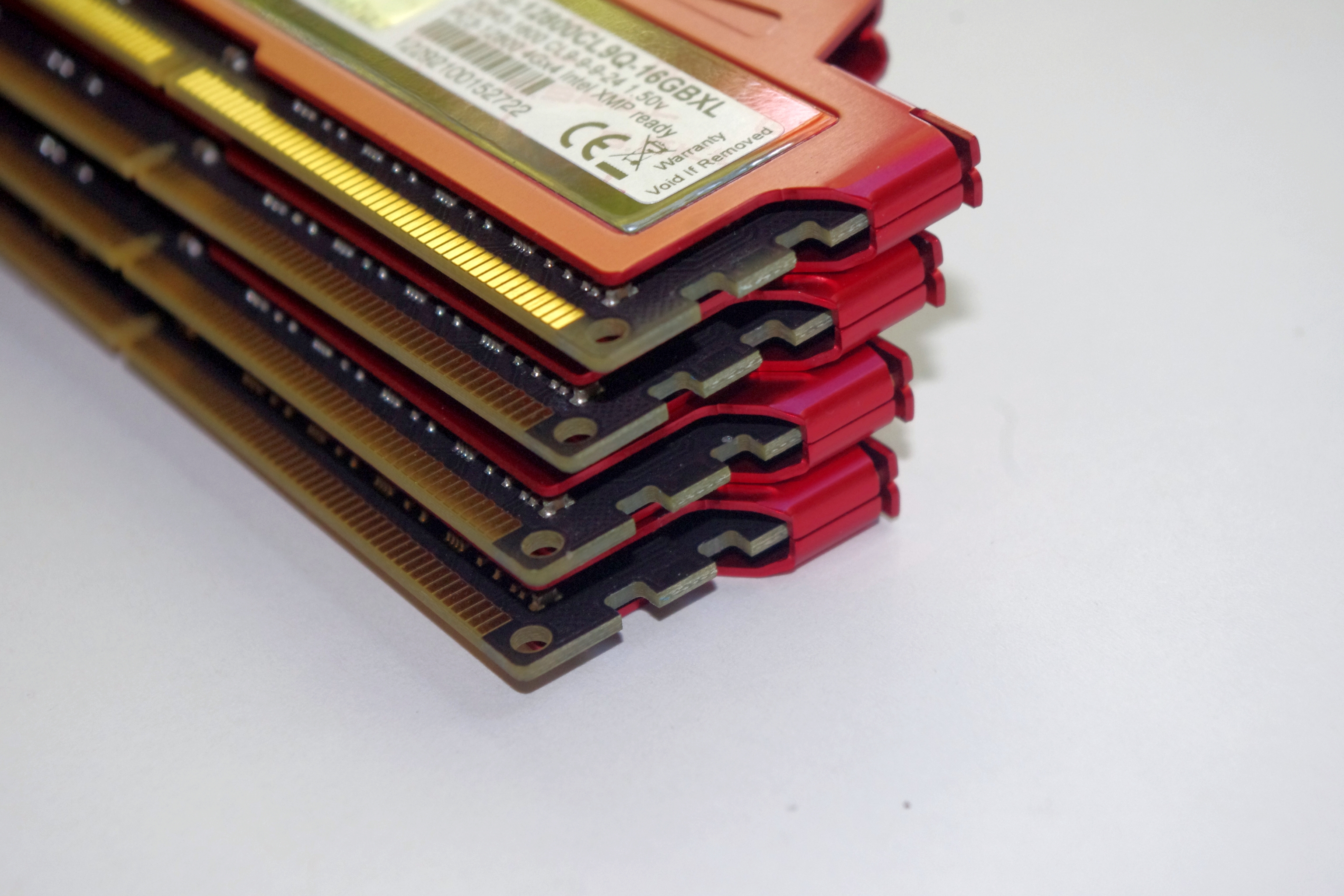
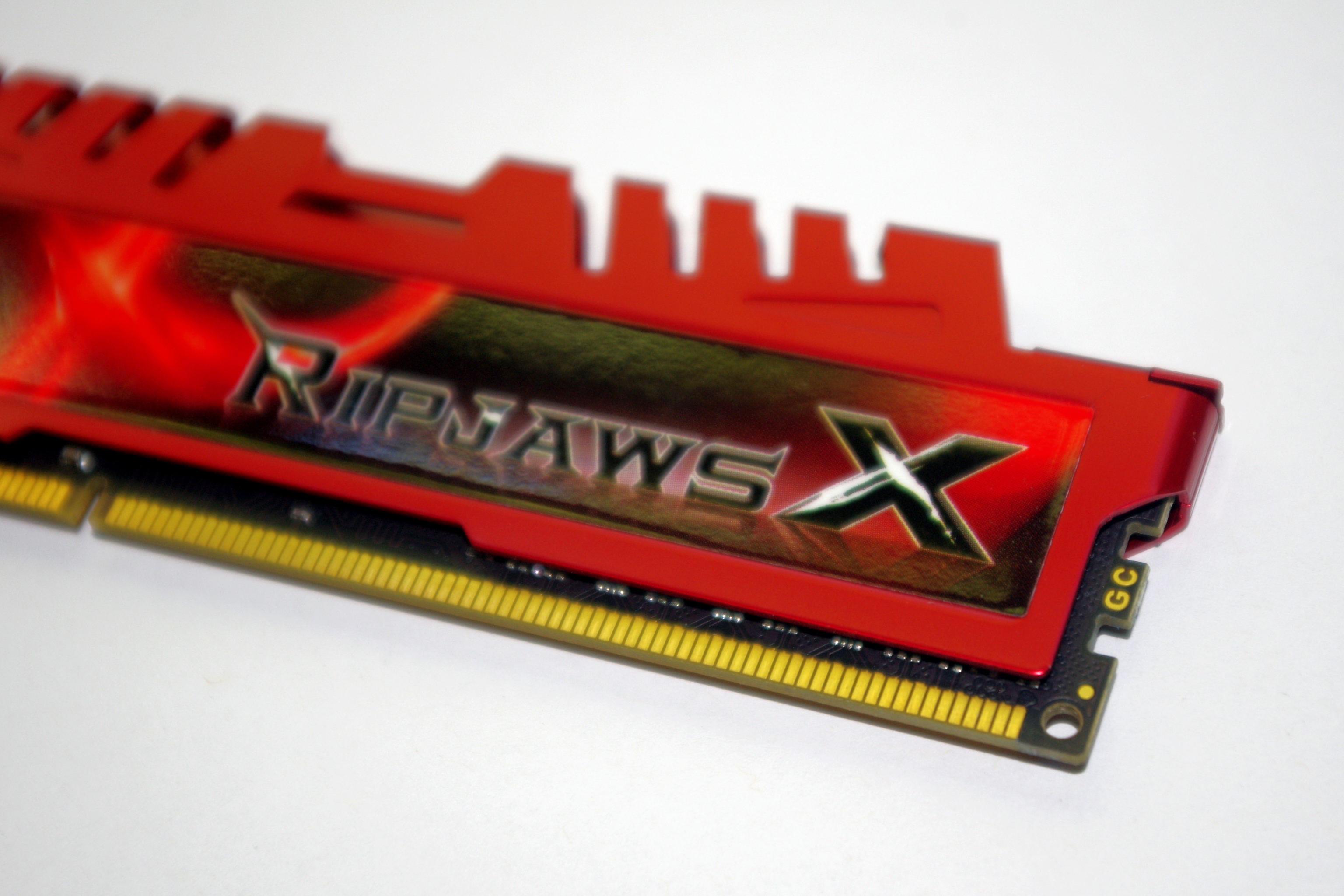
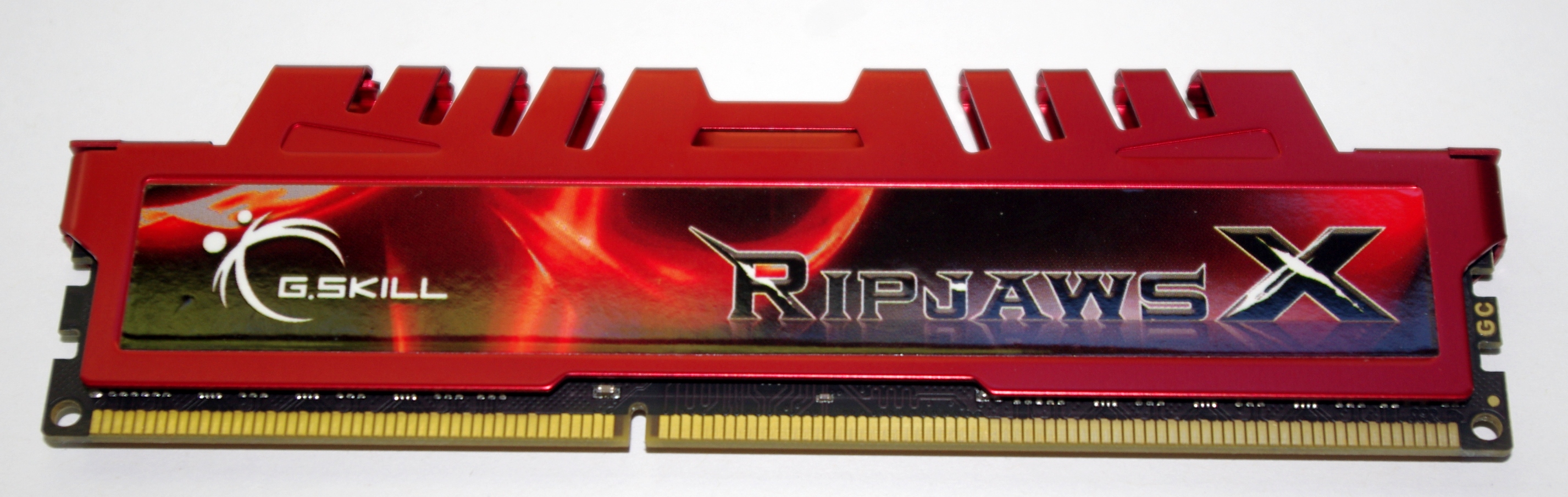
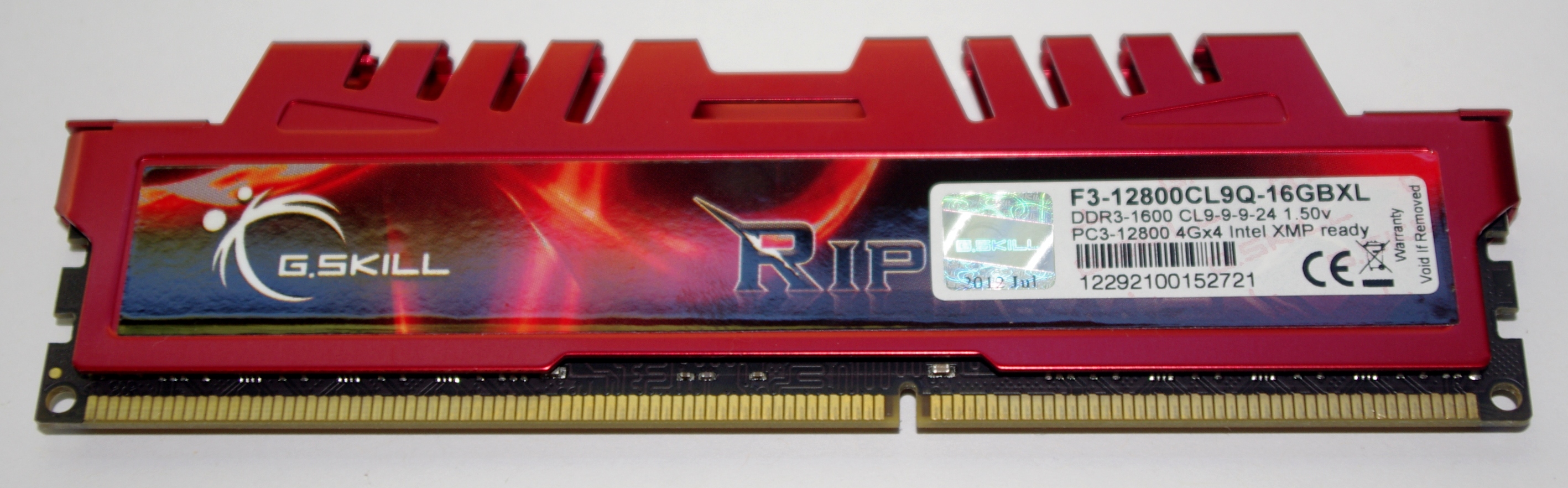
The heatsink for RipjawsX uses a series of straight lines as part of the look, which may or may not be beneficial when putting them into a system with a large air cooler. Here I put one module into a miniITX board, the Gigabyte H77N-WiFi, with a stupidly large and heavy air cooler, the TRUE Copper:
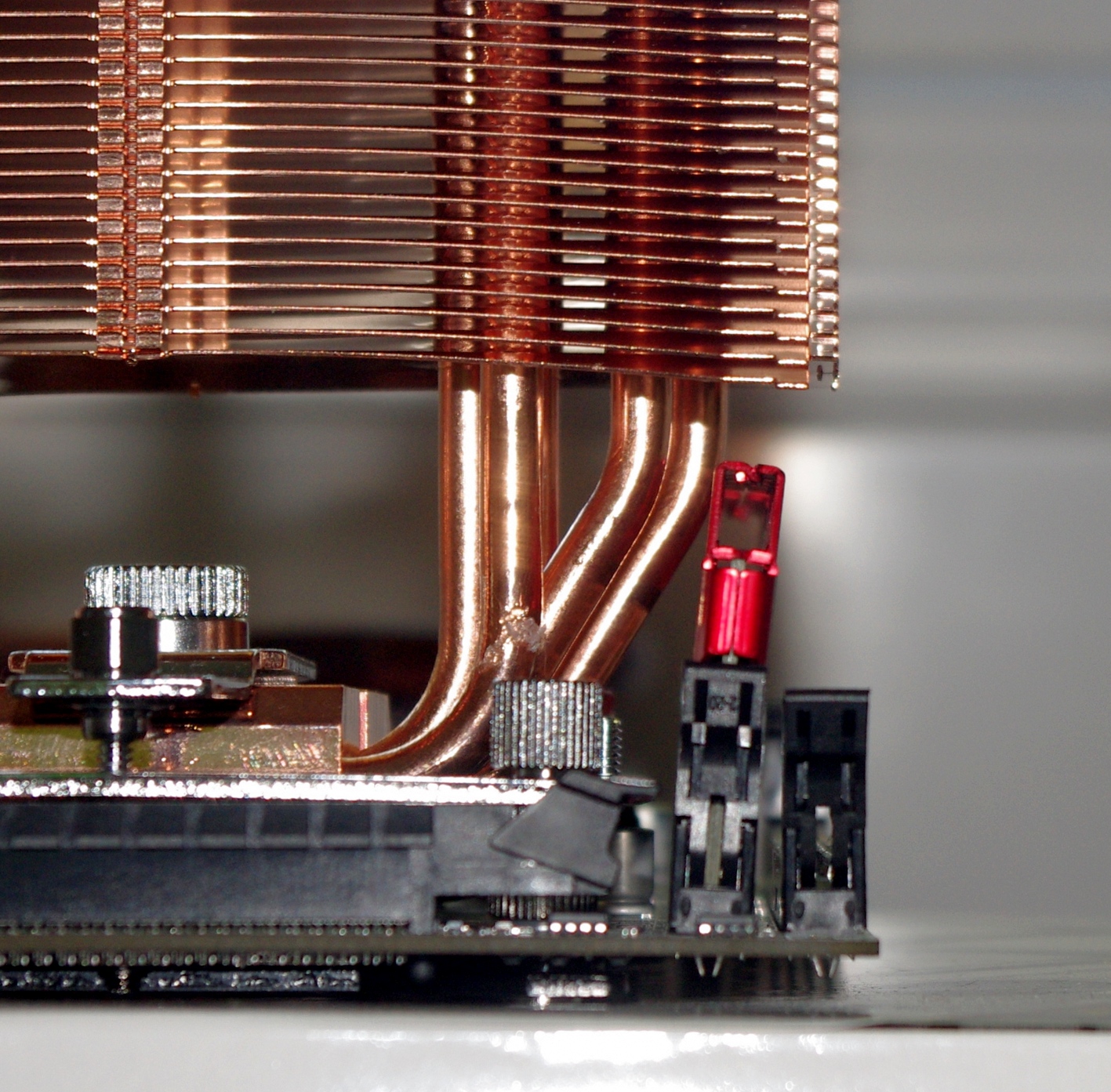
As we can see, the cooler would be great with the Ares kit, but not so much with the RipjawsX. The kit will still work in the memory slot like this, though for piece of mind I would prefer it to be vertical. As we will see with the TridentX (the 2400 MHz kit), sometimes having a removable top end heatsink helps.


JEDEC + XMP Settings
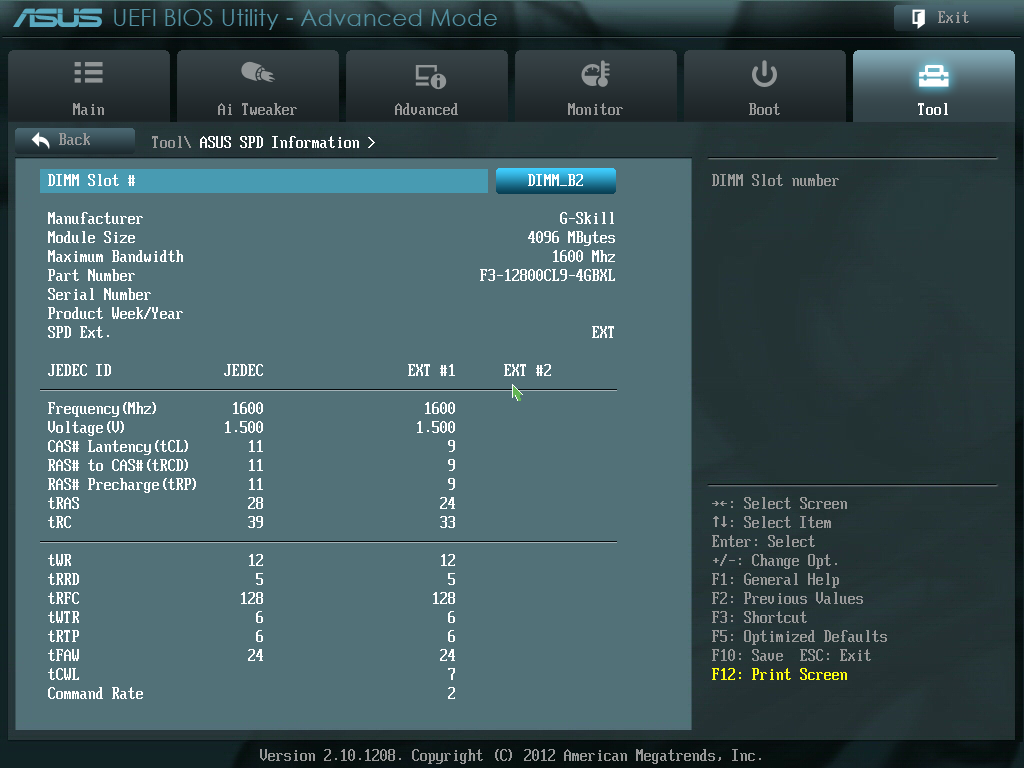
| G.Skill | |||||
| Kit Speed | 1333 | 1600 | 1866 | 2133 | 2400 |
| Subtimings | 9-9-9-24 2T | 9-9-9-24 2T | 9-10-9-28 2T | 9-11-10-28 2T | 10-12-12-31 2T |
| Price | $75 | $80 | $95 | $130 | $145 |
| XMP | No | Yes | Yes | Yes | Yes |
| Size | 4 x 4 GB | 4 x 4 GB | 4 x 4 GB | 4 x 4 GB | 4 x 4 GB |
|
|
|||||
| MHz | 1333 | 1600 | 1867 | 2134 | 2401 |
| Voltage | 1.500 | 1.500 | 1.500 | 1.650 | 1.650 |
| tCL | 9 | 9 | 9 | 9 | 10 |
| tRCD | 9 | 9 | 10 | 11 | 12 |
| tRP | 9 | 9 | 9 | 10 | 12 |
| tRAS | 24 | 24 | 28 | 28 | 31 |
| tRC | 33 | 33 | 37 | 38 | 43 |
| tWR | 10 | 12 | 14 | 16 | 16 |
| tRRD | 4 | 5 | 5 | 6 | 7/6 |
| tRFC | 107 | 128 | 150 | 171 | 313 |
| tWTR | 5 | 6 | 8/7 | 9/8 | 10/9 |
| tRTP | 5 | 6 | 8/7 | 9/8 | 10/9 |
| tFAW | 20 | 24 | 24 | 25 | 26 |
| tCWL | - | 7 | 7 | 7 | 7 |
| CR | - | 2 | 2 | 2 | 2 |


 Facebook
 Twitter
 RSS
RSS


114 Comments
View All Comments
just4U - Saturday, October 20, 2012 - link
Peaunut we are not talking 300-500 bucks here.. this is a 20-30 dollar premium which is nothing in comparison to what ram used to cost and how much more premium ram was as well.If your on a tight budget get 8Gigs of regular ram which is twice the amount of ram you likely need anyway.
Tech-Curious - Monday, November 5, 2012 - link
Thing is, these tests are for integrated graphics, unless I'm misreading something (AFAICT, the discrete card was only used for PhysX support; if I misread there then I apologize).Off the top of my head, there are basically three scenarios in which you're likely to want an IGP:
1) You're building an HTPC, in which case you prioritize (lack of) noise and (lack of) heat over graphics' power. If all you want to run are movies, then the IGP should be adequate regardless of the speed of your memory -- and if you want to play games, no amount of memory is going to turn an Intel IGP into an adequate performer on your average TV set these days. (Better to grab an AMD APU or just give up the ghost and grab a moderate-performance GPU.)
2) You're looking to run a laptop. But the memory reviewed in this article doesn't apply to laptops anyway.
3) You're on a tight budget.
So at best, we're talking about a fraction of a sliver of a tiny niche in the market, when we discuss the people who might be interested in wringing every last ounce of performance out of an IGP by installing high-priced desktop memory. Sure, the difference in absolute cost between the cheapest and the most expensive RAM here isn't going to make or break most people -- but people generally don't like to incur unnecessary costs either.
And people who are on a budget? They can save $80, just based on the numbers in the article, without making any significant performance sacrifice. That's real money, computer-component-wise.
tynopik - Thursday, October 18, 2012 - link
"I remember buying my first memory kit ever. It was a 4GB kit"makes you feel old
my first was 8MB
DanNeely - Thursday, October 18, 2012 - link
My first computer only had 16k.Mitch101 - Thursday, October 18, 2012 - link
VIC-203583 bytes free
jamyryals - Thursday, October 18, 2012 - link
wow :)just4U - Saturday, October 20, 2012 - link
The first computer i bough was a tandy 1000. I got them to put in 4 megs of ram.. at 50 bucks per meg.GotThumbs - Thursday, October 18, 2012 - link
Same here.I had purchased a used AT Intel 486DX 33Mhz powered system and upgraded it to 16mb around 1989. Overclocking it was done using jumpers on the motherboard. Heck, in HS I was a student assistant my senior year and recorded everyone's grades on a cassette tape drive using a Tandy (TS-80 I believe). It blows my mind thinking about how things have changed. There's more power/ram in a Raspberry PI than my first computer.
Best wishes for computing in the next ~30 years.
andrewaggb - Thursday, October 18, 2012 - link
Agreed, my first computer I owned personally was a 486 slc 33 (cyrix....) and I had a couple 1mb memory sticks, can't remember if those were called sims or something else. We had an apple 2+, trs 80, commodore 64, and ibm pc jr in the early-mid 80's but those were my dads :-), and some 286 that I can't remember the brand of.Just thinking about the e6400 as a first pc amuses me :-), that's still usable, and actually is when most of the computer fun started to die in my books. My current pc's are running phenom II 965, i5 2500k, i7 620m, i5 750, i7 720qm and I just have little motivation to upgrade anything ever.
Haswell is the first chip in a long time that I'm excited about. Everything else has been meh. And AMD... I had an amd 486-120,K6-200,K6-2 300,athlon xp 1800,2500, athlon 64 3200, athlon 64 x2 4800, 5600, phenom II 945,phenom x3, and my current 965 and a c-50 e netbook. man hard to believe all the computers I've had :-) Anyways, amd has nothing I want anymore, except cheap multicore cpus for running x264 all day.
IanCutress - Thursday, October 18, 2012 - link
E6400 wasn't the first PC... just the first processor I actually bought memory for. The rest were pre-built or hand-me-downs. :) I actually just took the same motherboard/chip out of my brother's computer (he has had it for a few years, with that memory) and bumped him up to Sandy Bridge. I'm still 27, and the E6400 system was new for me when I was around 21 or so. Since then I've got a Masters and a PhD - time flies when you're having fun!Ian