



Memory Performance: 16GB DDR3-1333 to DDR3-2400 on Ivy Bridge IGP with G.Skill
by Ian Cutress on October 18, 2012 12:00 PM EST- Posted in
- Memory
- G.Skill
- Ivy Bridge
- DDR3
One of the most important kits in this review is the DDR3-1600 kit for which G.Skill has supplied one of their RipjawsX range. This kit is of importance due to the close price differential to the DDR3-1333 kit ($5 difference), but also as generations of processors go forward we get an ever increasing suggested memory speed of those processors. Take the most recent AMD Trinity processor release for desktops – all but the low end processor supports 1866 MHz memory as the standard out of the box. Now we can be assured that almost all of the processors will do 2133 MHz, but as manufacturers raise that ‘minimum’ compliance barrier in their testing on their IMCs, the ‘standard’ memory kit has to be faster and come down in price also.
Visual Inspection
The RipjawsX kit we have uses a large heatsink design, with the top of the heatsink protruding 9.5mm above the module itself. As mentioned with the Ares DDR3-1333 kit, there are multiple reasons for why heatsinks are used, and pretty low on that list is for cooling. More likely these are placed initially for protecting which ICs are used in the kit from the competition (using a screwdriver and a heatgun to remove them usually breaks an IC on board), then also for aesthetics.
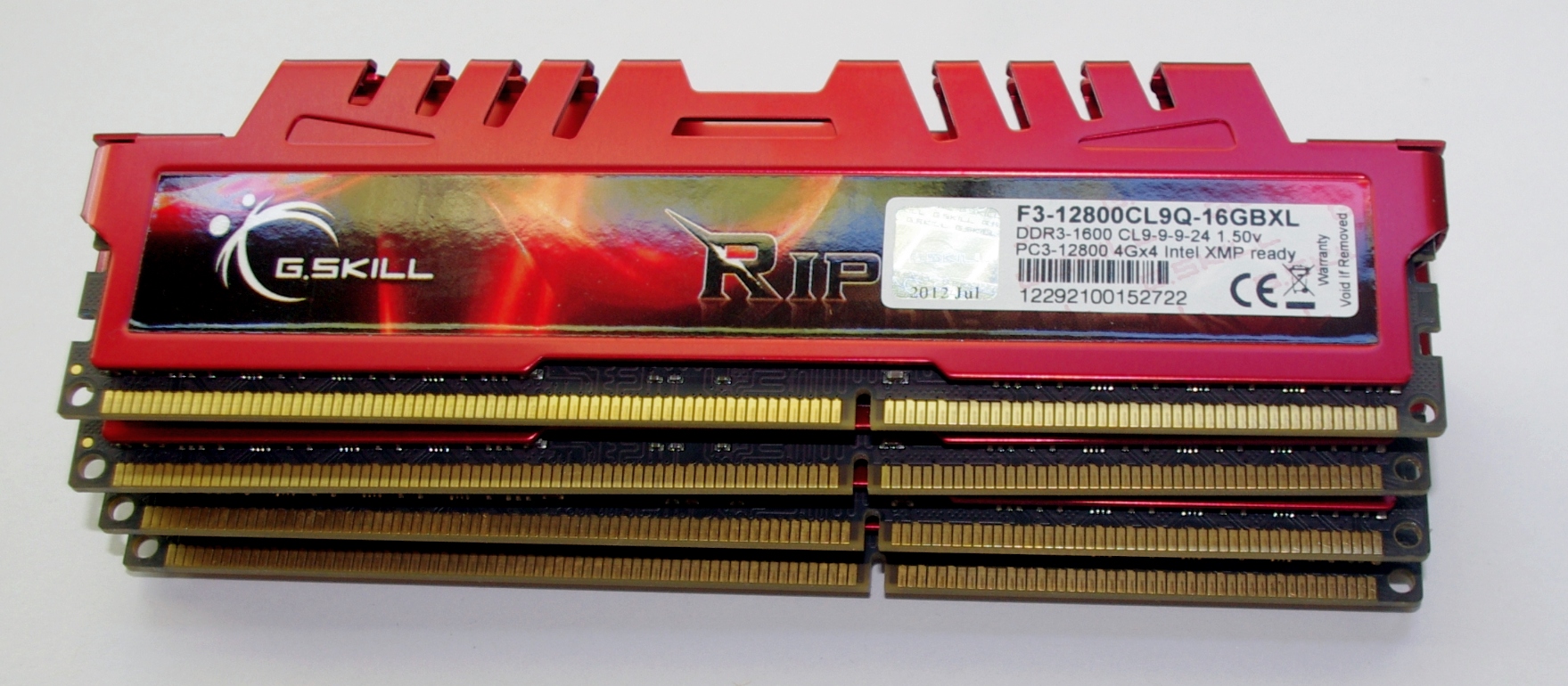
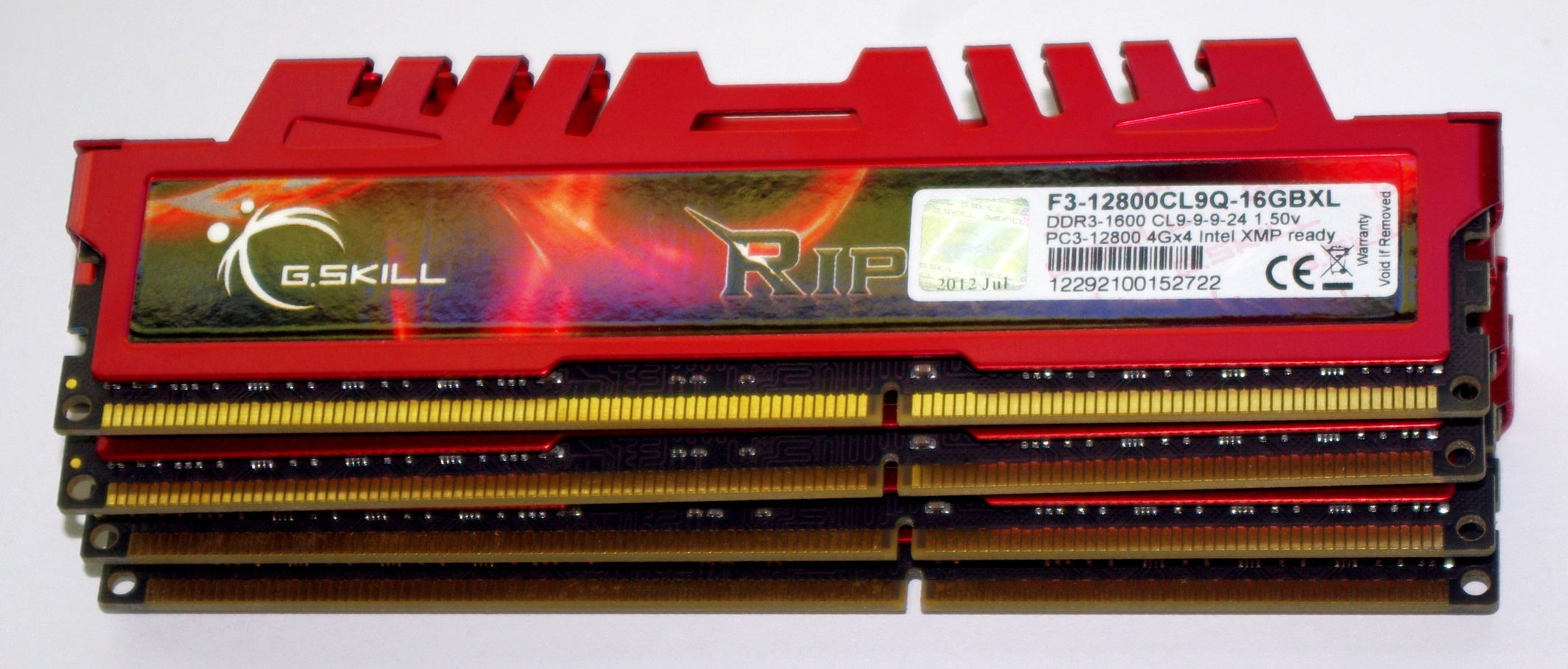
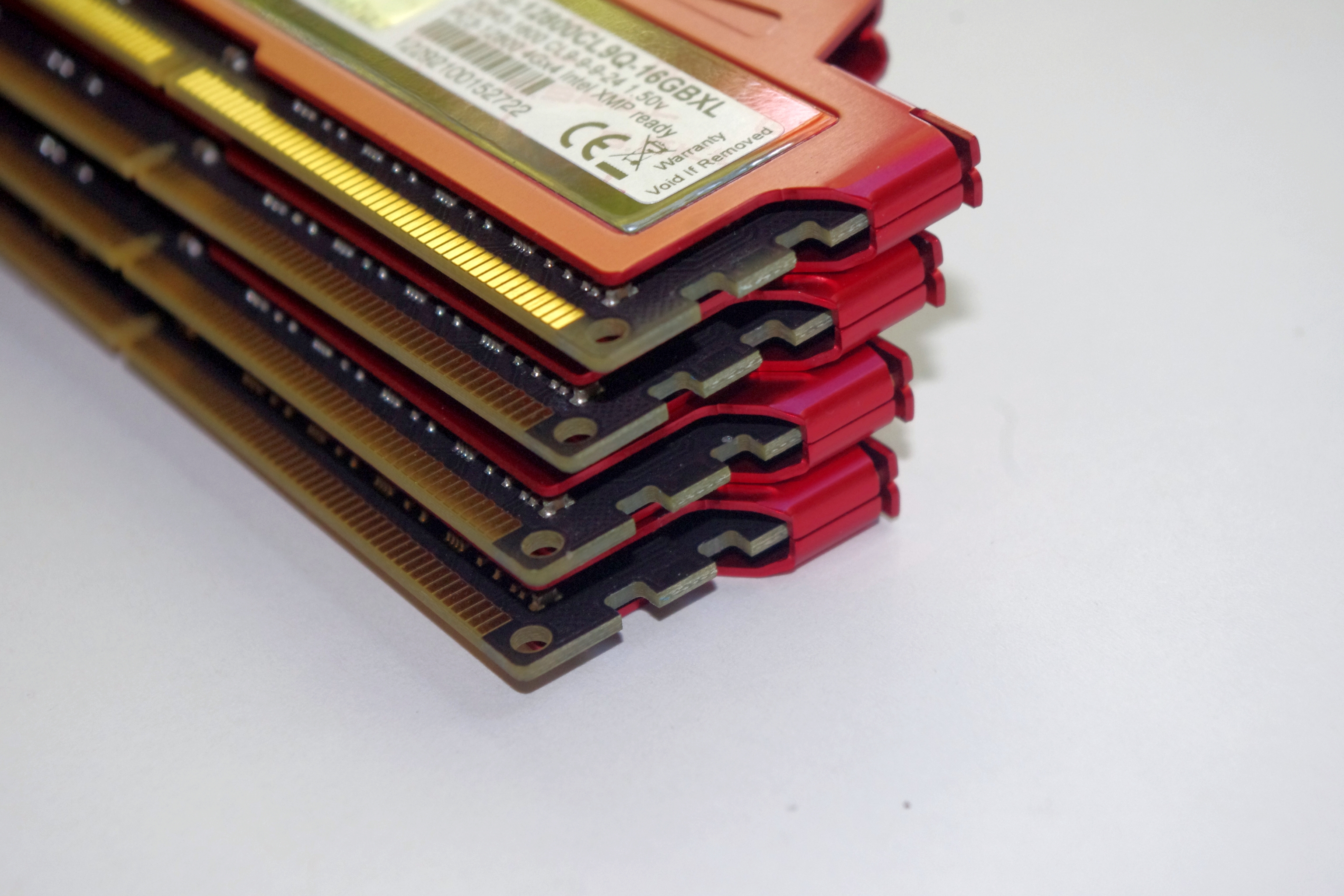
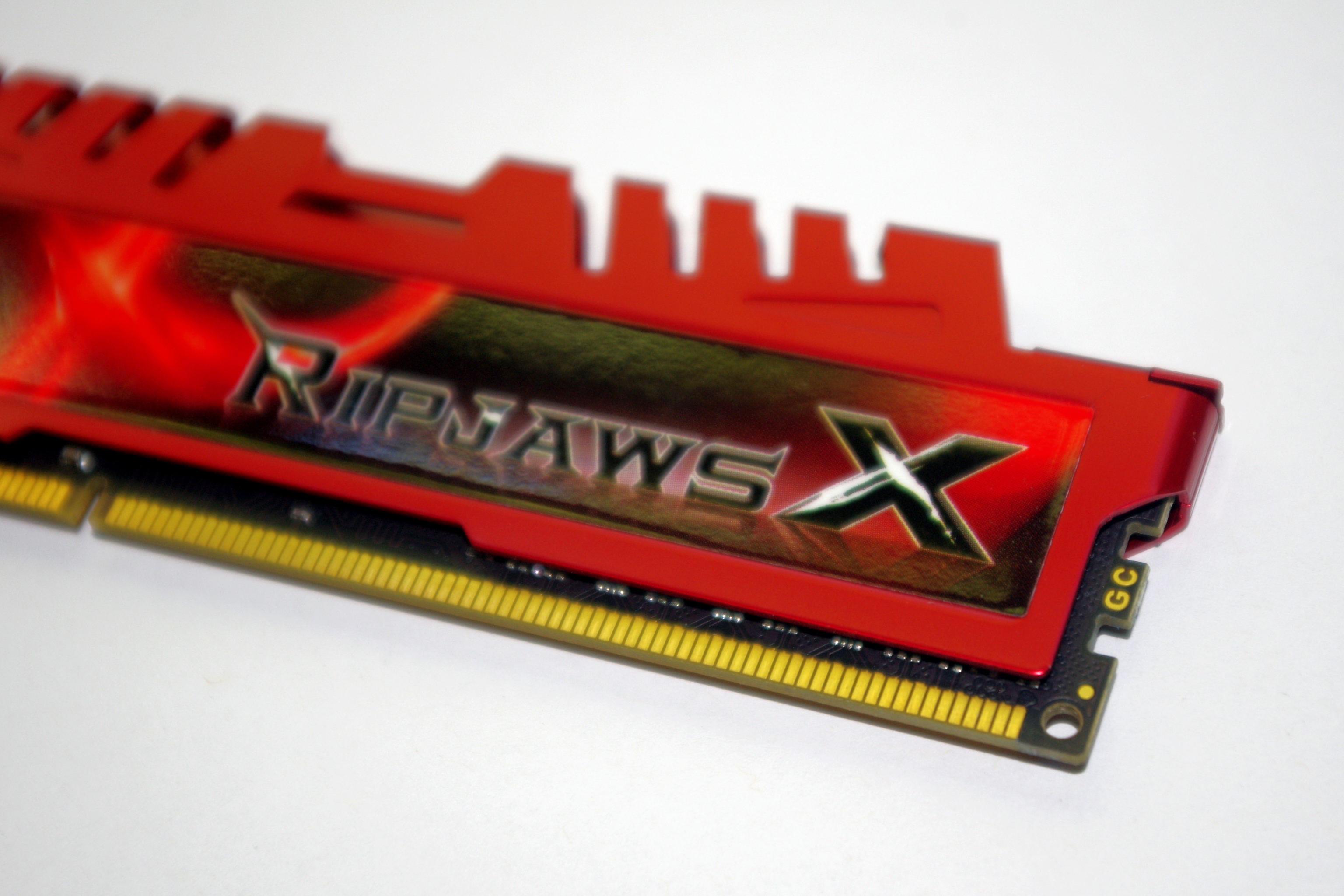
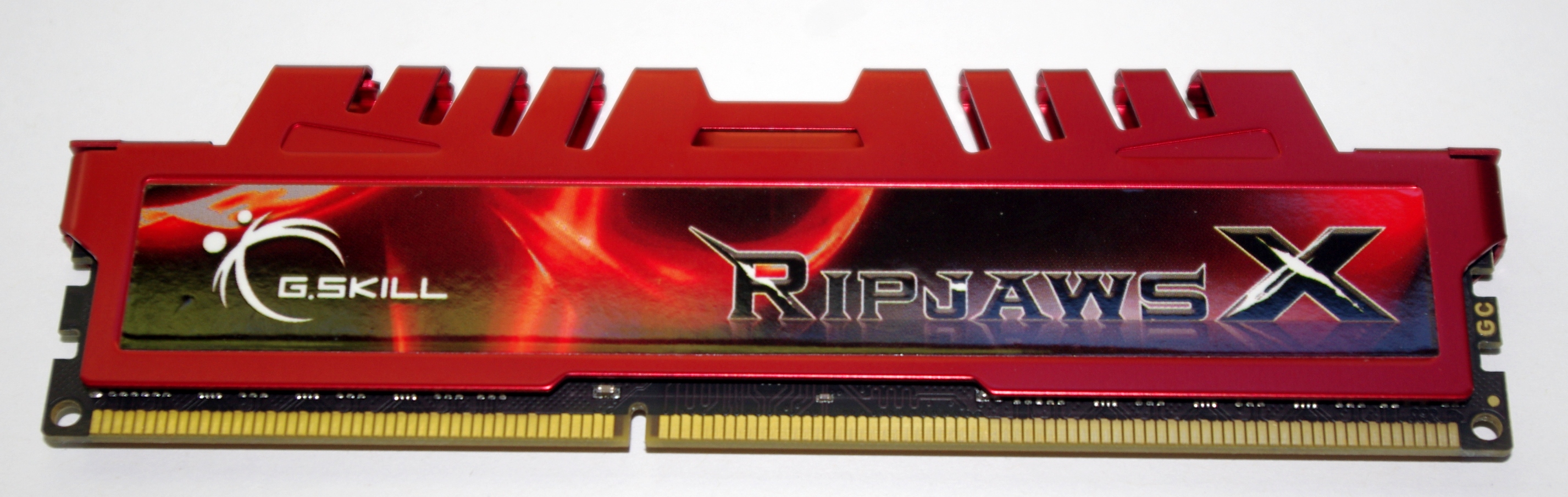
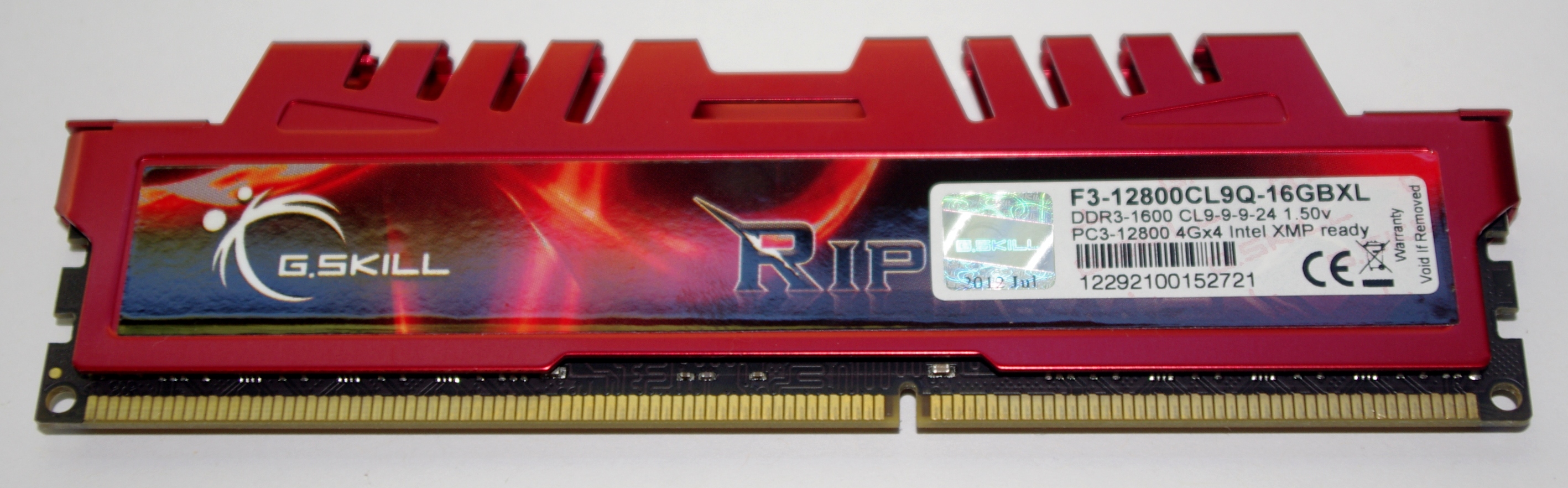
The heatsink for RipjawsX uses a series of straight lines as part of the look, which may or may not be beneficial when putting them into a system with a large air cooler. Here I put one module into a miniITX board, the Gigabyte H77N-WiFi, with a stupidly large and heavy air cooler, the TRUE Copper:
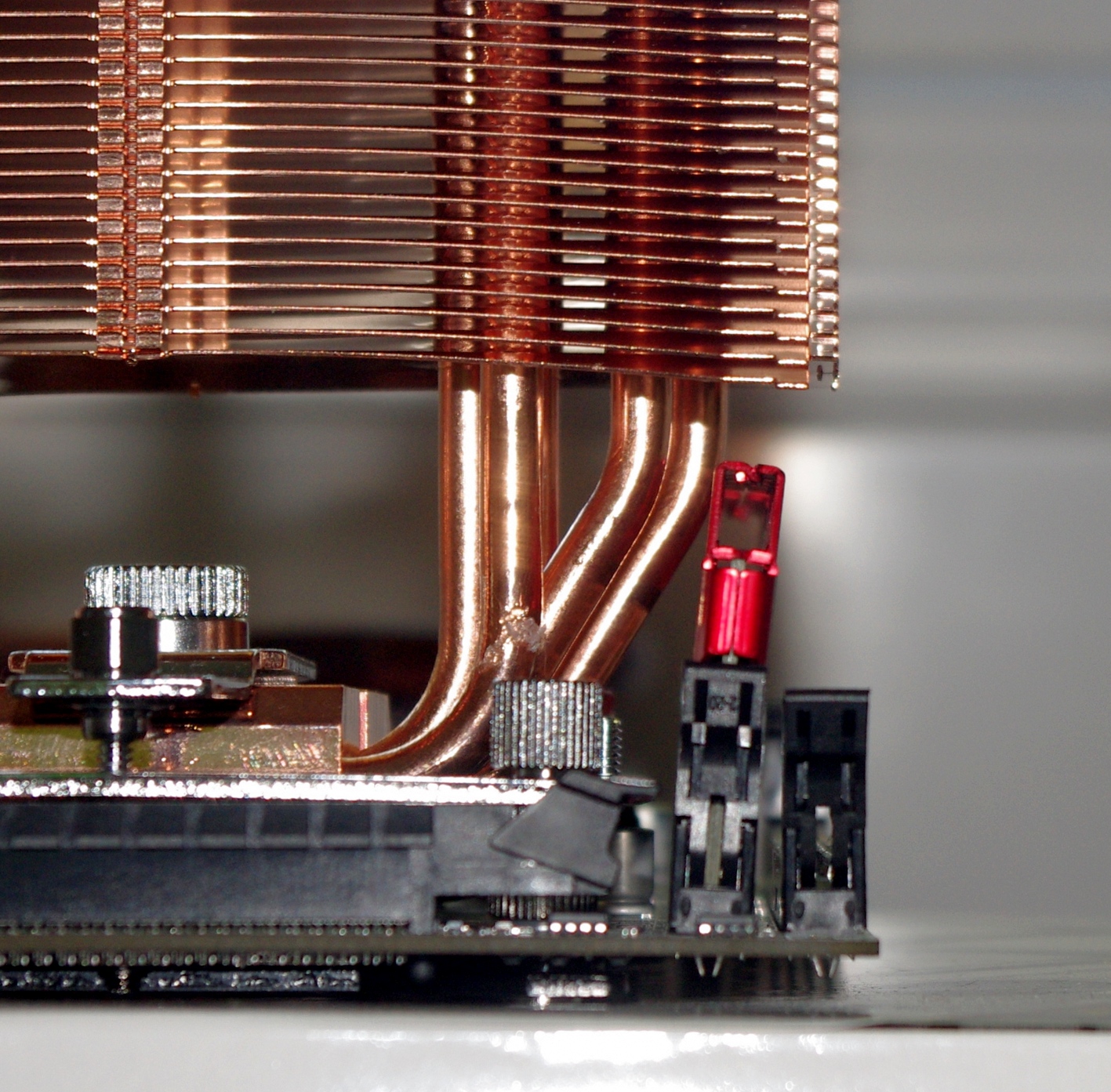
As we can see, the cooler would be great with the Ares kit, but not so much with the RipjawsX. The kit will still work in the memory slot like this, though for piece of mind I would prefer it to be vertical. As we will see with the TridentX (the 2400 MHz kit), sometimes having a removable top end heatsink helps.


JEDEC + XMP Settings
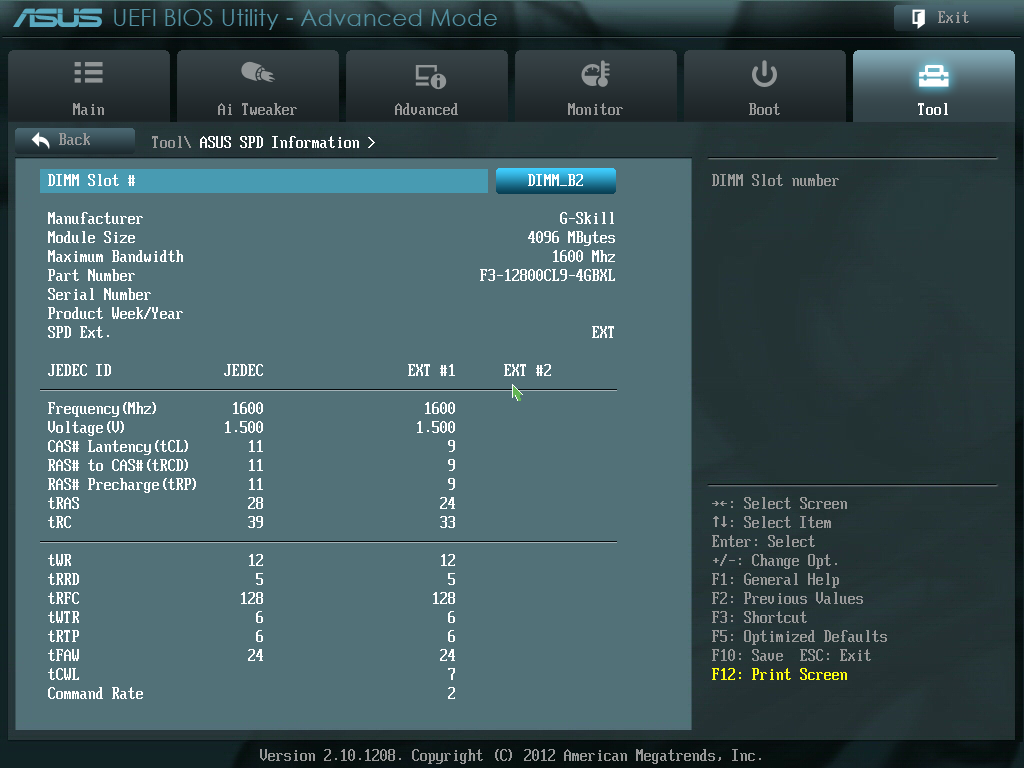
| G.Skill | |||||
| Kit Speed | 1333 | 1600 | 1866 | 2133 | 2400 |
| Subtimings | 9-9-9-24 2T | 9-9-9-24 2T | 9-10-9-28 2T | 9-11-10-28 2T | 10-12-12-31 2T |
| Price | $75 | $80 | $95 | $130 | $145 |
| XMP | No | Yes | Yes | Yes | Yes |
| Size | 4 x 4 GB | 4 x 4 GB | 4 x 4 GB | 4 x 4 GB | 4 x 4 GB |
|
|
|||||
| MHz | 1333 | 1600 | 1867 | 2134 | 2401 |
| Voltage | 1.500 | 1.500 | 1.500 | 1.650 | 1.650 |
| tCL | 9 | 9 | 9 | 9 | 10 |
| tRCD | 9 | 9 | 10 | 11 | 12 |
| tRP | 9 | 9 | 9 | 10 | 12 |
| tRAS | 24 | 24 | 28 | 28 | 31 |
| tRC | 33 | 33 | 37 | 38 | 43 |
| tWR | 10 | 12 | 14 | 16 | 16 |
| tRRD | 4 | 5 | 5 | 6 | 7/6 |
| tRFC | 107 | 128 | 150 | 171 | 313 |
| tWTR | 5 | 6 | 8/7 | 9/8 | 10/9 |
| tRTP | 5 | 6 | 8/7 | 9/8 | 10/9 |
| tFAW | 20 | 24 | 24 | 25 | 26 |
| tCWL | - | 7 | 7 | 7 | 7 |
| CR | - | 2 | 2 | 2 | 2 |


 Facebook
 Twitter
 RSS
RSS


114 Comments
View All Comments
RayvinAzn - Friday, October 19, 2012 - link
You got a Core 2 Duo E6400 back in '05? That's rather impressive.Typo aside, good article, gives me quite a bit to think about as I plan to migrate to IB after a solid 6-year run on my P965/Q6600 setup. I'll definitely be sticking with a DDR3 1600 C9 kit after seeing these results, as anything faster doesn't really seem to affect most of the things I do.
mapesdhs - Saturday, October 20, 2012 - link
I just bought 64GB of DDR3/2400 more to make it easier to achieve the desired 2133 target
speed with a CPU oc rather than any expected performance gain from using 2400. Although
CL10 at 2400, it should be CL9 at 2300 (GSkill TridentX). It's for a system running After Effects,
3930K, ASUS P9X79 WS. Quadro 4000, RAID, SSDs, etc. Plus, the price was basically identical
to 2133 kits, so I figured what the heck, why not.
Ian.
Senti - Saturday, October 20, 2012 - link
From the beginning it looked like great article, but then it become less and less meaningful.First of all, who in sane mind will get 4x4 for dual channel 1155 cpu when there are 8x2 kits available? If you want to test 4x4 so badly – use 4 channel 2011 cpu (but there is no igp there, duh).
Second major problem is overclocking tests. Even if we put aside that Linpack is no memory stability test (for example Prime95 is far better for this), rising frequency without adjusting timings is completely meaningless if module already can't handle more aggressive timings at the same frequency.
What would be really interesting is can we run DDR3-1600 9-9-9-24 module at DDR3-1866 9-10-9-28? Or at least DDR3-1866 10-10-10-28 and what is the difference to base settings and module that officially rated DDR3-1866.
IanCutress - Saturday, October 20, 2012 - link
-With 2x8GB kits, you often pay a premium (the next kit up for review is a 2x8GB kit). 4x4 GB kits apply both to 1155 and 2011, and represent the bulk of the kits advertised on Newegg, hence their inclusion here.- OCCT has a version of Linpack specifically for memory that requires high memory usage (as stated in the review, but I'm sure you read that). The overclocking tests are designed to show if the kits were higher binned parts rated lower - and in some circumstances they were. For example, the TridentX kits are getting rave reviews on overclocking websites, and the kits I have in all seem to easily push up another memory strap on Ivy Bridge. As always with overclocking, your mileage may vary. I could spend a week overclocking each kit, dealing with voltages and sub-timings then testing thoroughly for stability. But the truth of the matter is there is little point baring in mind the severity of not even applying XMP among gamers, and going by the actual improvements you see moving up from 1866C9 and beyond (unless you are an extreme overclocker looking for a higher number in a synthetic benchmark).
Don't forget this is a review of the kits themselves more than just looking at what different speed memory does. I rarely run any memory kit out of specifications - only if the kit is not that compatible with the board I am using do I bump voltages, or competitive overclocking when I want a higher number. Everything else is XMP.
Ian
Senti - Saturday, October 20, 2012 - link
Well, my life taught me that it's well worth reducing number of memory chips on each channel as there are cases when 2+ modules per channel won't run without errors even on native speed while there are no problems with 1 module per channel. There is also concern of extensibility, but I guess it's less relevant now when you are already getting 16GB of ram in desktop.I don't have experience with "tweaked" Linpacks, but I see no much reason for such tweaks as Prime95 already does the job well and in practice it's easier to get stability when different tests stress different parts.
About overclocking – there is difference in my case. 48% faster memory (from native DDR3-1066) can be felt in practice without synthetics and games in unpractical settings.
As for gamers that can't even apply XMP, I seriously didn't thought it was the primary intended audience of Anandtech... Also, gamers with 5 fps in Metro2033, lol.
For review of the kits themselves it was ok, but again quite useless for me as besides overclocking what is really interesting is how well do chips of different brands do compared with each other on equal price points.
Overall, take my comments not as nitpicking about particular things, but rather that I hope to see here more in-depth articles.
IanCutress - Saturday, October 20, 2012 - link
I've reviewed 60+ motherboards at AnandTech since I started, and I the only issues I have running certain memory depends on the motherboard and how the manufacturer has optimised reading XMP profiles (e.g. some motherboard partners do not have G.Skill as a preferred memory partner, and thus do not work with them). The only thing I ever do is bump up the IMC voltage a little, and that alone is quite rare. The only issue running four modules rather than two that normally presents itself is overclocking - this is why ASUS started using T-Topology for their memory sub-system in order to remove any signalling irregularities when pushing a full set of modules to the limits.I agree that moving above 1066 makes a difference. That's not a point of contention. If in the current climate the machine you run offers 1866+ and people are choosing 1066 MHz memory, then that is your decision.
Regarding AnandTech audiences, we have a wide range, from gamers to enthusiasts to engineers and financiers wanting to justify purchases. I would suspect that a fair few readers here build machines for friends and family, and are in all sorts of stages of understanding the technology under their feet. Hopefully everyone is applying XMP.
Regarding overclocking, as always your mileage may vary. This was shown deeply in my Ivy Bridge overclocking article - many users reported worse than what I achieved and some performed better. Getting a good processor or set of memory sticks is like a chocolate chip cookie - if you take one out of the packet, some may have more chocolate chips in than others. We always hope the ones we get have the most chocolate chips, but sometimes we do not. When going from 1600 C9 to 1866 C10 for the most part the price difference in these kits (as well as the performance difference) is minimal - the main difference will be if the sub-timings are scaled accordingly, either by the BIOS on automatic or left at XMP settings. People are fooled that more MHz means better performance. In a couple of other kits I have coming up for review, (2400 C11 and 2666 C11), we see this is not always the case.
Ian
Swede(n) - Saturday, October 20, 2012 - link
I fail to see how much more percentage in real performance those memory's at different speed has, this in regards of how much the price is compare to the relative performance.Now, if I look at the different graphs I can see little or almost none real life app. performance benefit from going from a 1600 cl 9 memory and upwards.
Instead the article fail to recognize the most frequent problem with fast memory's; instability and shortened life span of the memory controller if added multiple modules.
Question: have this changed since the last memory test by AnandTech:
Sandy Bridge Memory Scaling: Choosing the Best DDR3
http://www.anandtech.com/show/4503/sandy-bridge-me...
Sincerely,
IanCutress - Saturday, October 20, 2012 - link
Over my Z77/Ivy Bridge reviews I have used a quad module DDR3-2400 C9 kit throughout, without any reduction in stability from the IMC. In order to test what you ask would require a large sampling and long testing - one month on Prime95 at 50C ambient to burn out one processor IMC then move onto the next one. It isn't going to happen - not enough processors, and by the time the testing is complete the article wouldn't matter so much.With so many people in the world using modules, under all sorts of scenarios, yes things will happen and *some* trends could be construed from the data. We do not have access to the data, and thus 'the most frequent problem with fast memory is instability and shortened lifespan' is not the most frequent - it may be the problem you most hear about, but I bet you do not hear about the 100s of others that have no issue. We can't confirm that on our end, and we can't provide any numbers that do so as they are held tightly by the company that makes the memory.
This is a review of memory kits, not an overview of fast memory, and such it has been treated that way and we draw the conclusions that we can from the results at hand. This is the difference between a scientific method and random stabs in the dark regarding what was posted on forums. I can confirm the former, but I'd steer away from the latter unless I could provide concrete numbers.
In answer to your question - Sandy Bridge processors can handle up to 2133-2400 MHz memory, but Ivy Bridge can go one further in the fact that my processor can handle 2950 MHz or thereabouts. As a result, memory vendors bring out kits to sell at these higher frequencies. They need to be tested to let you guys and gals know if there is any reason to buy them, but first we need an overview to see where we stand. The article you link to is from a different editor at AT, and I needed a series of my own results for comparison (as well as confirming I had a proper set of benchmarks on my own end.)
Ian
Swede(n) - Sunday, October 21, 2012 - link
Hi Ian, Thanks a lot for Your answer. That clarified things.Have a nice and relaxed day.
Btw. I enjoy reading articles and reviews here at AnandTech since many years back and I think it is one of the very best sites out there.
Sincerely
JonnyDough - Monday, October 22, 2012 - link
where are the non-overclocked, non-heatsinked modules?