



Lucid
At the start of 2011 Lucid announced their Virtu software to go with Intel’s Sandy Bridge CPUs. With Virtu users would be able to use a discrete GPU and Sandy Bridge’s integrated GPU simultaneously in order to use the features of both GPUs. This normally meant either using a dGPU as the primary GPU while still being able to access Sandy Bridge’s QuickSync (D-mode), or using the iGPU as the primary GPU while having the dGPU power up and render frames to the iGPU when the dGPU’s capabilities were needed (I-Mode). More recently in June at Computex they announced Virtu Universal. Virtual Universal added support for using Virtu with AMD’s integrated GPUs, and introduced the company’s Virtual Vsync technology for preventing screen tearing without using...
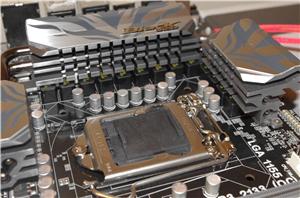
ECS P67H2-A Review: A visit back to Lucid's Hydra
If you remember back to October 2008, there were distinct murmurings about Hydra - an encompassing hardware and software solution to bring multiple GPUs together to act as one...
22 by Ian Cutress on 7/21/2011
Lucid's Virtu Enables Simultaneous Integrated/Discrete GPU on Sandy Bridge Platforms
We first met LucidLogix (now just Lucid) 2.5 years ago at IDF. The promise was vendor-agnostic multi-GPU setups with perfect performance scaling. The technology was announced at a very...
40 by Anand Lal Shimpi on 2/28/2011
Lucid Enables Quick Sync with Discrete Graphics on Sandy Bridge
If you read our Sandy Bridge Review you’ll know that we were very excited about Intel’s Quick Sync hardware transcode engine. It easily offers at least twice the performance...
44 by Anand Lal Shimpi on 1/7/2011
 Facebook
 Twitter
 RSS
RSS


