



Galaxy S II
Earlier in the week Samsung announced the Galaxy S 2 Plus, a rather strange late-cycle update to the SGS2. The device is pretty much what you'd expect, and contains similar specs to the existing SGS2 — 1.2 GHz dual core SoC, 4.3-inch SAMOLED Plus WVGA display, Android 4.1.2, and quad band HSPA+ 21.1. What was unknown about the Galaxy S 2 Plus was which SoC was inside. Originally I assumed this was just a respun Exynos 4 inside, but while I was at Broadcom's booth I noticed the Galaxy S 2 Plus on display, and noted that it includes a BCM28155 SoC inside. BCM28155 consists of two 1.2 GHz ARM Cortex A9s alongside a two core Broadcom VideoCore IV solution. I'm unclear about fabrication process...
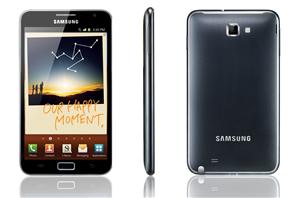
Samsung Galaxy Note Joining AT&T's Stables
Ahead of their keynote, Samsung and AT&T announced that they would be the first North American carrier to sell Samsung's Phone/Tablet mash-up, the Galaxy Note. Featuring a 5.3" HD...
3 by Jason Inofuentes on 1/9/2012
Adding Vellamo to our Mobile Benchmark Suite - Six Android Phones Tested
For a while now we've been keeping track of mobile browser performance using two relatively popular JavaScript heavy benchmarks that are a regular fixation in our smartphone reviews. If...
82 by Brian Klug on 11/16/2011
Samsung Confirms APQ8060 for T-Mobile Galaxy S 2
After the Samsung Galaxy S 2 launch announcement, I made an educated prediction that the T-Mobile variant would come with a Qualcomm SoC and not Samsung's own Exynos. The...
13 by Brian Klug on 9/13/2011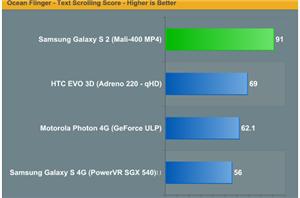
Samsung's Galaxy S 2: The Smoothest Scrolling Android Device Around
One aspect of differentiation between Android smartphones has always been how smoothly they scroll both in the OS and in the browser. Later versions of Android have addressed the...
13 by Anand Lal Shimpi on 9/12/2011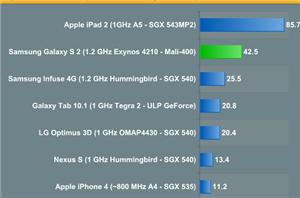
ARM's Mali-400 MP4 is the Fastest Smartphone GPU...for Now
Earlier this morning we published our long awaited review of the Samsung Galaxy S 2. In it we dedicated a few pages to investigating Samsung's own Exynos 4210 SoC...
30 by Anand Lal Shimpi on 9/11/2011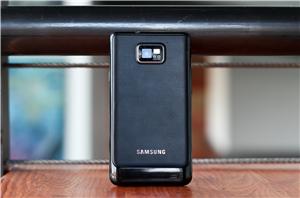
Samsung Galaxy S 2 (International) Review - The Best, Redefined
The road to our Galaxy S2 review has been a long one. The first time we saw the device was at Mobile World Congress, where it was initially announced...
133 by Brian Klug & Anand Lal Shimpi on 9/11/2011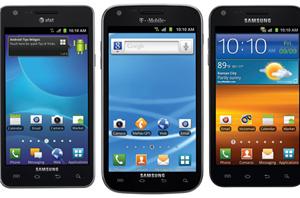
Hands on with the US-bound Samsung Galaxy S IIs
Samsung has already sold 5 million of them in 85 days in Korea and Europe, but until now the Galaxy S II has been just a dream in a...
36 by Jason Inofuentes on 8/31/2011
Why I Believe T-Mobile's Galaxy S II Uses a Qualcomm SoC
Earlier tonight Samsung announced all three US variants of the Galaxy S II: the Galaxy S II on AT&T, the Galaxy S II Epic 4G Touch on Sprint and...
8 by Brian Klug on 8/31/2011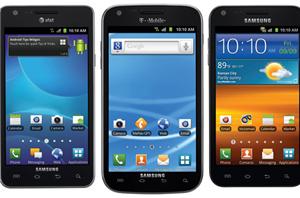
USA Samsung Galaxy S II Variants Announced
Right on schedule, Samsung Mobile announced variants of the already-popular Samsung Galaxy S II destined for T-Mobile, Sprint, and AT&T. As rumored, there was no word of a Verizon-bound...
21 by Brian Klug on 8/30/2011Samsung Announces Galaxy S II LTE and Tab 8.9 LTE for IFA
Let's be clear, this fall has easily one of the busiest release schedules, and Samsung's not interested in making it any easier. In addition to the US SGS II...
9 by Jason Inofuentes on 8/28/2011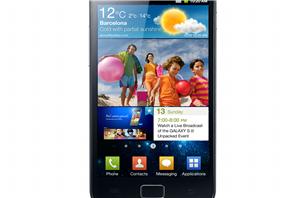
Verizon Will Be Absent From Galaxy S II Reveal
In just a few days we'll be covering the Samsung Galaxy S II event in New York City, and expect to have some hands-on time with Samsung's latest and...
10 by Jason Inofuentes on 8/25/2011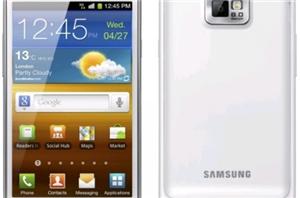
Samsung Releases White Galaxy S II
Image is courtesy of techtechies.com Samsung has today issued a press release which officially unveils the white version of their popular Galaxy S II. This announcement has been widely expected...
24 by Kristian Vättö on 8/16/2011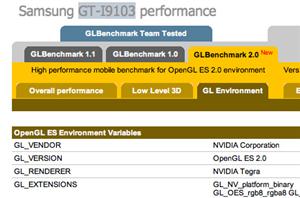
Samsung's Tegra 2 Superphone: The GT-I9103
On Day 0 of this year's Mobile World Congress Samsung and NVIDIA announced that the new Galaxy Tab 10.1 will come to market with NVIDIA's Tegra 2 (T20) SoC...
29 by Anand Lal Shimpi on 2/16/2011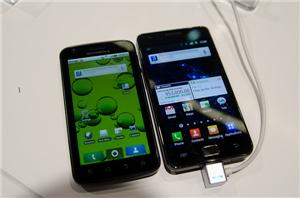
Samsung's Galaxy S II Preliminary Performance: Mali-400MP Benchmarked
There's a lot of speculation about the SoC used in Samsung's Galaxy S II, thankfully through process of elimination and some snooping around we've been able to figure it...
63 by Anand Lal Shimpi & Brian Klug on 2/14/2011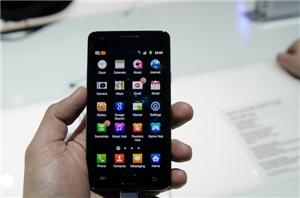
Hands on with the Samsung Galaxy S II & Galaxy Tab 10.1
In a not completely unexpected move Samsung Mobile announced that it would be working with NVIDIA on two different projects. First and foremost is the Samsung Galaxy Tab 10.1...
25 by Anand Lal Shimpi on 2/13/2011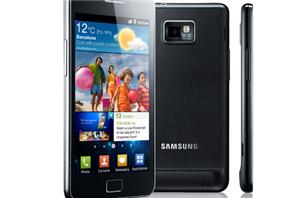
Samsung Intros NVIDIA Tegra 2 based Galaxy Tab 10.1 & New Superphone, Galaxy S II Debuts
Including Apple, we've covered six major players in the high end smartphone SoC space: Apple, Intel, NVIDIA, TI, Samsung and Qualcomm. Not all of these six will survive in...
19 by Anand Lal Shimpi on 2/13/2011
 Facebook
 Twitter
 RSS
RSS


