Back when ASUS released the UL80Vt last year, we gave it a glowing review, praising its balance of performance and battery life without breaking the bank. The UL80Vt had an overclocked Core 2 Duo SU7300, an NVIDIA G 210M with a manually switchable option, and ASUS’ now standard 84Wh battery. This gave it pretty solid performance, on par with larger mainstream notebooks, and close to 13 hours of ideal-case battery life, even with turbo mode enabled. Today, we’ve got the UL80Jt, an updated version running the new Core i3-330UM processor and NVIDIA’s Optimus-enabled G 310M graphics. Does it measure up to the reputation its predecessor had, or will it ultimately be overshadowed by newer and equally well rounded notebooks? Read on to find out.
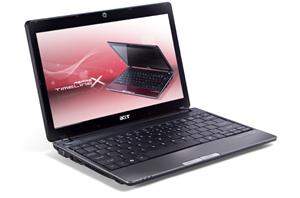
Acer is launching a series of new notebooks in their Aspire TimelineX range boasting mobile form factors, Intel Arrandale processors, and up to 8 hours of battery life. These new models come in a variety of sizes, starting with an ultra low voltage 11.6" model. 13.3", 14" and 15.6" models ...
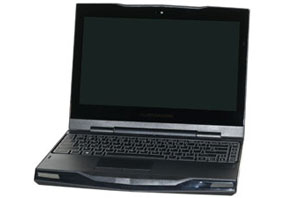
Four months ago, Alienware turned the mobile gaming world on its head by cramming a reasonably fast GPU into a small chassis with an 11.6" display. We loved the concept of an ultraportable gaming laptop, but we had a few complaints. Now Alienware has returned with the updated R2 model, sporting NVIDIA's Optimus Technology and the same GT 335M GPU. Added to that is an Intel Arrandale ULV processor, our first laptop to use such a CPU. That addresses two of the biggest concerns we had with the original, but does it make for a truly better laptop? Today we'll look to answer that question with our in-depth review.
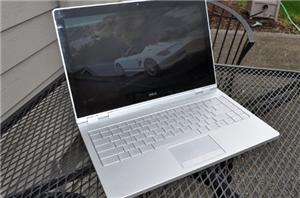
When it debuted at CES 2009, the 0.65” Dell Adamo 13 gave the notebook world a Windows equivalent to the MacBook Air. With the ultrathin body, the brushed aluminum unibody, and Apple-like attention to detail, the Adamo was truly stunning to behold. The drawback was pricing, which started at $1999 for lackluster specifications. Fast forward to today and you can pick up an Adamo for $999, making it far more palatable. At half the original price and with some of the sleekest aesthetics we've seen, the Adamo is definitely worth a closer look. But even at just under a grand, the Adamo comes in at a higher price than most of it's CULV competitors. Do the standard solid state disk and high feature, high style design make up for the price difference? Read on to find out.
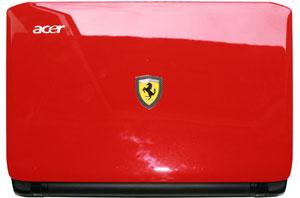
Acer's latest Ferrari-branded laptop looks to compete in the crowded CULV ultraportable market. Packing an X2 L310 processor and HD 3200 graphics, on paper at least the Ferrari One should compete relatively well. Does AMD have a viable answer to the long battery life CULV laptops? Do the HD 3200 graphics offer any real benefit? And should something that's actually quite slow carry the name "Ferrari"? We may not have an answer to that last question, but we can certainly shed more light on the first two items.
Intel launched their Core i3/i5 (Arrandale) mobile processors early in 2010, with roadmaps showing low voltage and ultra low voltage parts. Earlier today, Intel released new details on their CULV parts with a big emphasis on enabling thinner, ultra portable designs. We've been waiting for availability of CULV Arrandale parts ever since we heard about the parts, and finally the wait is over.
We’ve already looked at a number of systems with Intel’s CULV platform, but interestingly, all of them have been of the dual-core variety. We frequently champion the CULV platform as offering massive battery life and decent performance at a very reasonable price, and usually present the lower end, single-core CULV machines as an alternative to netbooks. So it’s only fair to the netbook class that we test an ultraportable based around the single-core CULV platform.
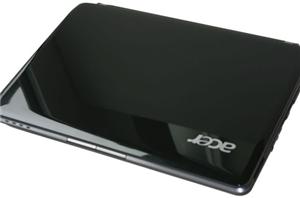
The laptop on our operating table today is the Acer Aspire 1410, and it may be the best reason to avoid netbooks. The AS1410 is similar to the Acer Timeline 1810T we looked at as part of our CULV roundup, only with a single-core SU3500 processor, 2GB RAM, a 250GB HDD, and a smaller battery. Instead of $600, the AS1410 costs just $400, so we're definitely in netbook territory. The two notebooks share the same 3.10lb chassis, 11.6” screen, and chiclet keyboard, so the AS1410 is essentially just a stripped down 1810T.
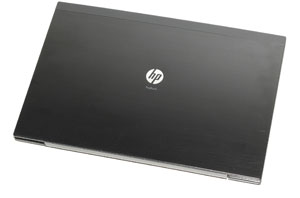
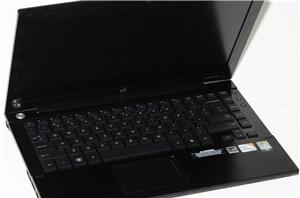
HP's ProBook line targets the business sector, and the 5310m looks like the sort of laptop you'd expect a CEO to carry around. Of course, looks aren't everything, and IT support departments everywhere can attest to the fact that the top paid executives rarely need the fastest or best computer hardware… need, no, but they want it, or at least they want to think they have it. For those who don't need absolute maximum performance but still want a nice looking, well-built laptop, the 5310m may be just the ticket.
The feature set of the 5310m is relatively straightforward, building on the tried-and-true Core 2 Duo product line. The interesting twist with the 5310m is that you can get it with either an entry-level Celeron SU2300 CULV processor, or you can bump up to a full-blown Core 2 Duo CPU. The Core 2 options are limited to the SP9300 and SP9400, both of which come in the small BGA956 package. The overall design is very much thin and light (emphasis on thin), with a 13.3" LCD and chassis weighing just 3.8 pounds with a 4-cell battery. Pricing starts at around $620 for the Celeron SU2300 package, while the test system with SP9300 and a few other upgrades retails for $760 online. With a higher build quality than consumer laptops, the HP 5310m is an attractive offering, provided you're willing to live with the now "outdated" Core 2 technology.
It's been some time since we last had an HP laptop in our labs for review. Recently, we received the new ProBook 5310m business laptop, and there's certainly a lot to like. This is a CULV laptop with a twist: you can opt for full-blown Core 2 Duo (SP9000) processors as well if you want more performance. Perhaps the bigger advantage over most of the current crop of CULV laptops is that the 5310m is available with a matte LCD.
Pricing is a bit higher than much of the direct competition, but you're balancing that with some additional features. The ProBook 5310m comes with aluminum surfaces on the cover and palm rest, and it also provides a DisplayPort output. This is a very thin and light laptop—less than an inch thick and weighing in at 3.8 pounds—that has a very good keyboard. It may not replace the ThinkPad T-series for overall comfort, but the spacing is far better than most chiclet keyboards.
If you could get twice the performance for only a 50% increase, would you be willing to fork over the extra money? Compared to Atom, Intel's current CULV products offer exactly that, albeit with slightly less battery life. We have three representative models to look at today, and after seeing what CULV offers, you might think twice about buying that new Atom netbook.