Latest Posts
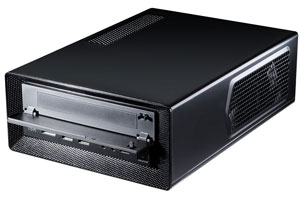
Zotac ZBOX: Brazos Goes HTPC
by Andrew Van Til, on 6/9/2011

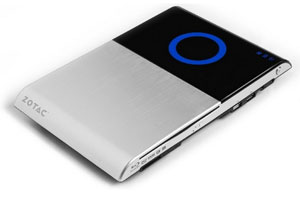
The ultimate goal of any HTPC is to handle any media content you might desire, all while consuming very little power and generating no noise. Package all of that in an attractive case that can fit in with your other home theater equipment and you’ve got a winning HTPC solution. Previous attempts have used NVIDIA’s ION platform (Atom + GeForce GPU), which met the low-power requirement but often failed at decoding certain video streams, and the Atom CPU was so slow that the UI interactions frequently felt sluggish. Other solutions have used higher performance CPUs, but such designs use more power, creating unwanted noise from the cooling fans, and there’s still the issue of media support.

Now, Zotac hopes to satisfy the needs of the low-power crowd while providing enough performance and decoding prowess to please A/V aficionados who want 24FPS content to work properly. To do this, they’ve turned to AMD’s Brazos platform, sporting Atom-like power with roughly twice the CPU performance and integrated graphics that are faster than ION and we might just have a winner. Zotac also includes a Blu-ray drive, for those who prefer disc content. Can the new ZBOX AD03BR-PLUS-U finally supplant the higher performance CPUs with discrete GPUs that so many HTPC users end up using in order to handle all of their video decoding needs? Let’s find out.

The Brazos Update: AMD's E-450 news
by Anand Lal Shimpi on 6/1/2011

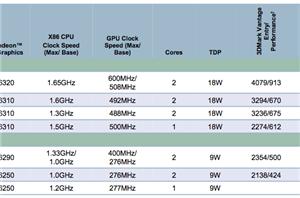
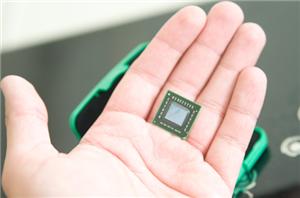
At Computex there are a few systems floating around with an updated version of AMD's Brazos platform. The E-350 we reviewed not too long ago featured two Bobcat cores running at 1.6GHz alongside an 80 SP GPU running at 400MHz. Later this year AMD will refresh the platform with an ...

Nettop and Mini-ITX Buyer’s Guide
by Zach Throckmorton on 4/22/2011

Most of our Buyer's Guides focus on full desktop builds, but what about something a little smaller? Perhaps you're looking for an inexpensive yet sufficiently powerful system to function as an HTPC, or maybe you want a low power device so you can cut down a bit on power bills. Whatever the reason, if you're interested in building a mini-ITX system or a nettop we've got several takes on the concept to discuss.

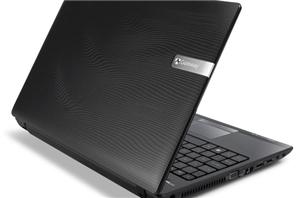
Gateway's New Notebooks for the Extreme Budget: 15.6" with AMD Fusion news
by Dustin Sklavos on 3/25/2011

Gateway announced this past Moday that they're releasing to the market a trio of value-oriented desktop (well, really nettop) replacement notebooks built around AMD's Fusion platform. Brazos has been a big hit with OEMs as nearly every major manufacturer is producing machines based around it, particularly the extremely popular E-350 ...

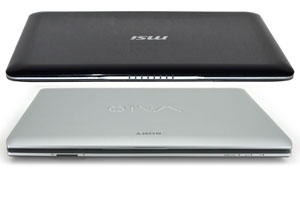
More of AMD’s Brazos E-350 with the MSI X370 and Sony VAIO YB

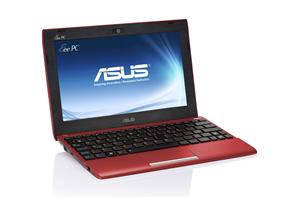
It may have taken some time for AMD’s Fusion to finally arrive, but now it’s here and we’re starting to see a decent number of Brazos laptops. We’ve already reviewed HP’s dm1z, which set the bar that other manufacturers will have to match or exceed. Today, we add two more E-350 laptops to the mix of reviews, one an 11.6”-screen and the other a 13.3”-screen chassis.

In the black corner, we have MSI’s ultra-slim X-series laptop, the X370; in the silver corner is a smaller competitor in Sony’s VAIO YB. How do these two compare with the HP dm1z and with each other? What are the benefits and detriments involved with moving to a larger chassis?  And is the Brazos platform right for you? That’s what we’re going to discuss in this head-to-head matchup.

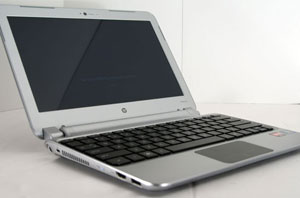
HP dm1z: Taking Fusion on the Road
by Dustin Sklavos on 2/21/2011

HP's been on board AMD's ultraportable bandwagon since the chipmaker first shipped the underwhelming Congo platform, and HP continued to produce reasonably compelling not-quite-netbooks with the Athlon/Turion II Neo-equipped Nile platform. But now that AMD has made a concerted effort to dethrone Intel's Atom with Brazos, HP has been able to produce a true netbook competitor. We have the shiny new dm1z equipped with the AMD E-350 in our hands: is this the netbook we've been waiting for?

The Brazos Review: AMD's E-350 Supplants ION for mini-ITX
by Anand Lal Shimpi on 1/27/2011

AMD has been curiously absent from the value netbook and nettop segments since Atom’s arrival nearly three years ago. These markets are highly profitable only for component vendors, as the OEMs that sell netbooks and nettops must survive on very slim margins in order to hit aggressive price points. It wasn’t too long ago that we were shocked by $699 desktop PCs, but to now be able to get a fully functioning portable PC with display at below $300 is impressive. In order for the profit equation to work out however, you can’t simply scale down a larger chip - you need an architecture targeted specifically at the type of very light workloads you expect to encounter in these segments. Underclocking and undervolting an architecture targeted at high end desktops or servers won’t cut it.

Generally a single microprocessor architecture can cover an order of magnitude of power envelopes. You can take an architecture from 10W - 100W using clock speed, voltage scaling and disabling features (e.g. cutting cache sizes). You can’t efficiently take a 100W architecture and scale it down to 1W. Intel realized this with Atom, and what resulted was a new architecture designed to span the 0.5W - 5W range. Given the constraints of the process (Atom was built at 45nm) and a desire to keep die size down to a minimum (and thus maximize profits), Intel went with a dual-issue in-order architecture reminiscent of the old Pentium - but with a modern twist.

AMD came to the same realization. For it to compete in these value markets, AMD couldn’t rely on its existing Phenom II derived architectures. The Phenom II and its relatives currently span a range of TDPs from 9W to 140W, and at the lower end of that spectrum we’re talking about some very low clock speeds and performance targets. Getting down to 1W was out of the question without a separate design.

What AMD came up with was a core called Bobcat, initially targeted for netbooks, notebooks, nettops and entry level desktops. Architecturally Bobcat is a significant step ahead of Atom: while still dual-issue, it features an out-of-order execution engine making it the Pentium Pro to Atom’s Pentium.

It isn’t just CPU architecture that AMD surpassed Atom with, the first incarnation of Bobcat is an integrated SoC with on-die DirectX 11 GPU. AMD calls this combination a Fusion APU (Accelerated Processing Unit) as it places both a CPU and GPU on a single die. Read on for our full review of AMD's first Fusion part: the E-350.

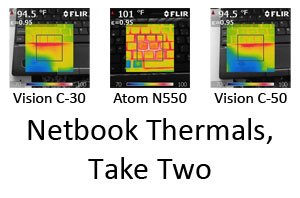
AMD’s Brazos vs. Atom Thermals, Revisited news
by Jarred Walton on 1/14/2011

Last week we met with AMD at CES to see some of their latest and greatest offerings. We already reported on the meetings in our earlier article, but in the interest of full disclosure AMD wanted us to come back and rerun some tests. We’ve done that and have some ...

AMD and GlobalFoundries, CES 2011
by Jarred Walton on 1/7/2011

The entities formerly known as AMD—namely, AMD and GlobalFoundries—are both here in Vegas for CES, and we had an opportunity to stop by and discuss their current and future technologies. 2011 is set to be a major year for both companies, with new process nodes, new CPUs, and new GPUs targeting all segments of the computing spectrum. Judging by the amount of AMD laptops scattered around the various booths, this could be something of a comeback for the “little” guys. Why the excitement, and what’s coming this year?

The Brazos Performance Preview: AMD E-350 Benchmarked
by Anand Lal Shimpi on 11/16/2010

Last week I mentioned that I had recently spent some time with AMD down in Austin, TX, benchmarking its upcoming Brazos platform. The Brazos platform is composed of an AMD Zacate or Ontario APU and the Fusion Controller Hub (a South Bridge based on the SB800 series). Brazos systems will run the gamut of mainstream notebook, netbook and nettop segments ranging from $299 to around $500. While AMD let us reveal the fact that we tested Brazos, we weren't allowed to publish numbers last week. Today, we can.

Read on for our full Brazos performance preview.

Updated: Now with Core i3-330UM performance data!

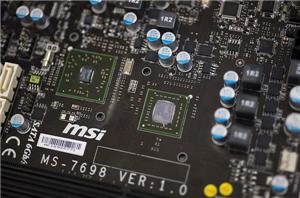
Previewing AMD's Brazos, Part 1: More Details on Zacate/Ontario and Fusion
by Anand Lal Shimpi on 11/9/2010

I hate to keep things from you all, but last week I was diligently working in a room at AMD’s new campus in Austin, Texas. You see, AMD wanted to give us more time with the Brazos/Zacate platform we tested at IDF ahead of its official launch. It’s too early for production worthy OEM systems and AMD wasn’t too keen on these reference platforms leaving its offices so it did the next best thing: fly us out to test the systems on AMD’s campus.

The rules were simple. We couldn’t run anything that would harm the system, but other than that we were free to bring whatever we wanted and test however we wanted. AMD dropped by our private room to check to see if we needed anything but other than that, it was all hands off.


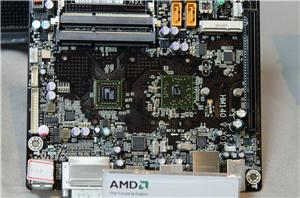
The Brazos test platform

While I’d love to share performance data with you today, I can’t. You’ll have to wait another week or so for that. What AMD is allowing us to talk about are the specific configurations AMD’s first Fusion APUs will ship in and general impressions from the testing. 

Read on!

Latest from AnandTech