Latest Posts
AMD Radeon HD 7970 Review: 28nm And Graphics Core Next, Together As One
by Ryan Smith, on 12/22/2011

At AMD’s Fusion Developer Summit 2011 AMD announced Graphics Core Next, their next-generation GPU architecture. GCN would be AMD’s Fermi moment, where AMD got serious about GPU computing and finally built an architecture that would serve as both a graphics workhorse and a computing workhorse. With the ever increasing costs of high-end GPU development it’s not enough to merely develop graphics GPUs, GPU developers must expand into GPU computing in order to capture the market share they need to live well into the future.

At the same time, by canceling their 32nm process TSMC has directed a lot of hype about future GPU development onto the 28nm process, where the next generation of GPUs would be developed. In an industry accustomed to rapid change and even more rapid improvement never before have GPU developers and their buyers had to wait a full 2 years for a new fabrication process to come online.

All of this has lead to a perfect storm of anticipation for what has become the Radeon HD 7970: not only is it the first video card based on a 28nm GPU, but it’s the first member of the Southern Islands and by extension the first video card to implement GCN. As a result the Radeon HD 7970 has a tough job to fill, as a gaming card it not only needs to deliver the next-generation performance gamers expect, but as the first GCN part it needs to prove that AMD’s GCN architecture is going to make them a competitor in the GPU computing space. Can the 7970 do all of these things and live up to the anticipation? Let’s find out…

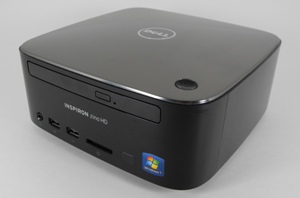
Dell Zino HD 410 HTPC Review
by Ganesh T S on 2/19/2011

Dell is one of the leading vendors in the PC market to have a play in the SFF HTPC (small form factor home theater PC) space. In 2009, they introduced the first Zino HD HTPC, the Zino 400. It used the AMD's Athlon 64 2650e/2850e / Athlon 64 X2 3250e/6850e on the AMDRS780G chipset with the option of the integrated 3200 GPU or a discrete 4330 mGPU. It received a decent enough response to warrant a refresh of the lineup after a year.

In Q4 2010, the Zino 410 HD HTPC was launched. It made use of the same formula from the previous generation product (usage of CPUs meant for the laptop market, and pairing it with either the integrated GPU or a discrete mGPU). However, Dell learnt some important lessons from the first generation launch, which they have put to good use in the design of the Zino 410 HD HTPC.

We have had the highest end Zino 410 HD HTPC configuration in our labs since October 2010.   Read on for our take on the second generation Zino HD HTPC, and also why it took us so long to publish the review.

Farewell to ATI, AMD to Retire the ATI Brand Later this Year
by Anand Lal Shimpi on 8/30/2010


Four years ago AMD did the unthinkable: it announced the 5.4 billion dollar acquisition of ATI in a combination of cash and stock. What followed was a handful of very difficult years for AMD, an upward swing for ATI and the eventual spinoff of AMD’s manufacturing facilities to GlobalFoundries in order to remain profitable and competitive.

In the years post acquisition, many criticized AMD for blowing a lot of money on ATI and having little to show for it. Even I felt that for $5.4 billion AMD could’ve put together its own competent graphics and chipset teams.

Despite the protest and sideline evaluations, good has come from the acquisition. The most noticeable is the fact that AMD’s chipset business is the strongest it has ever been. AMD branded chipsets and integrated graphics are actually very good. And later this year, AMD will ship its first Fusion APUs (single die CPU/GPU): Ontario using Bobcat cores and an AMD GPU. Ontario will be the first tangible example of direct AMD/ATI collaboration since the acquisition.

Just as we’re about to see results from the acquisition AMD is announcing that it will retire the ATI brand later this year. Save those boxes guys, soon you won’t see an ATI logo on any product sold in the market.

Latest from AnandTech