Latest Posts
gScreen SpaceBook: Back to the Future with Dual Screens? news
by Kristian Vättö on 7/17/2011

gScreen has released two SpaceBook-branded laptops that sport dual 17.3” 1080p monitors. That makes SpaceBook the laptop with the most real screen estate with over four million pixels. gScreen has achieved dual screens by making them sliding - the other screen will slide behind the other one to maintain a ...

ASUS U41JF: Arrandale's Not Dead Yet
by Jarred Walton on 3/28/2011

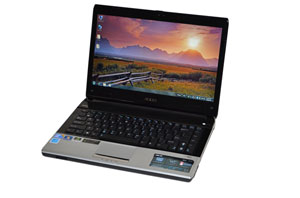
Sandy Bridge laptops are finally starting to trickle into the market, from the usual gamut of manufacturers. Chances are, if your favorite vendor isn’t selling several SNB notebooks already, they will be by the end of April. But with all the SNB brouhaha going on, ASUS has decided to release one final update to their U-series laptops using Arrandale processors.

We’ve got the newly christened U41JF on the test bench today, though the U31JG comes with very similar specs and tips the pricing scale at a very attractive $699. Yes, Sandy Bridge processors are faster than their Arrandale predecessors at the same clock speed, but ASUS has a few tricks up their sleeves (as usual) to keep the tried-and-trusted Arrandale platform in the running. Read on for our full review and thoughts on ASUS’ latest additions to their ultra mobility U-series.

Mobility Sector Updates: Waiting for Sandy Bridge and Market Analysis

The past week shook up the whole computer industry with Intel’s announcement that a potential flaw in their Cougar Point chipset required a respin to fix. In the ensuing chaos, we’ve had quite a few reviews put on hold or pulled altogether as we await the revised chipset. We also have a few other items to discuss in regards to the mobility sector, so if you’re debating purchasing a new laptop/notebook vs. waiting for “fixed” hardware, we hope to shed some light on the situation.

Dell Latitude E6410: Minding Intel's Business
by Jarred Walton on 12/2/2010

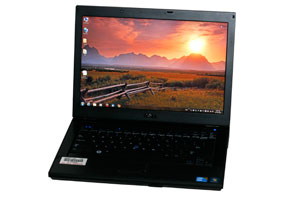
Business centric laptops are something most people have used at some point or another, but they're not always the first devices to get reviewed. The reason is pretty simple: businesses are conservative in nature, so they generally don't want to jump on the latest and greatest technology until they've let it mature a bit. Consumer devices are thus the first to move to new CPUs, GPUs, etc. while the enterprise-class laptops in particular will lag behind and continue to sell long after they're "outdated". The upside to business laptops is that they're built to last, making the plastic consumer laptops look flimsy and weak by comparison.

Packing one of Intel's reasonably fast i5 CPUs and a 1440x900 matte LCD in a mag-alloy chassis, with nary a glossy surface in sight, this is a business laptop in every sense of the word. And if your general use case is Office and Internet work rather than gaming and movies, there's a lot to like with the E6410. Of course, with Sandy Bridge right around the corner this is more about setting the stage to see just how far Intel's new platform improves on the current Arrandale offerings, but we'll have to wait another month before we can take the wraps off of Sandy Bridge laptops.

ASRock Core 100HT-BD : Bringing HTPCs to the Mainstream Market [UPDATED : Noise Issue]
by Ganesh T S on 7/19/2010

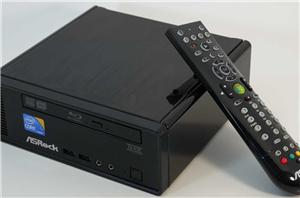
Anandtech has evaluated many systems in search of the utopian HTPC. However, every one of them has ended up with some issue or the other. When ASRock offered to send us their flagship HTPC introduced at the 2010 CeBIT show, we jumped at the opportunity to evaluate it and determine whether it was the HTPC of our dreams.


Instead of going with a second generation ION chipset that many had expected them to (after the ION 330-HT from last year), they sprang a surprise by opting for an Arrandale based platform. Having realized that the Atom in the nettop was the main reason for enthusiasts to avoid using them as full-fledged HTPCs, they have corrected their approach now. We had earlier mentioned that Clarkdale / Arrandale was quite up to the task as a HTPC platform. In the last few months, we have seen the introduction of many H55 / H57 based mini-ITX motherboards supporting the Clarkdales. The strong demand for such motherboards indicates that there is a definite market for pre-built HTPCs based on the Clarkdales and Arrandales in that form factor. The Core 100 series from ASRock seems to fit that bill.

How does ASRock's flagship product fare? Is it the destination in our search for the utopian HTPC? Read on for Anandtech's review of the ASRock Core 100HT-BD.

Alienware M11x R2 First Look
by Jarred Walton on 7/2/2010

A few weeks ago, Alienware launched a revamped version of the famed M11x, the world's smallest gaming laptop. We've been pestering them to get a review sample ever since the press release, as we know there's a ton of interest in the updated M11x. Much to our surprise, a package arrived unannounced yesterday with said laptop. We quickly unpacked the system and prepped it for testing. We already liked the original concept, and the R2 release improves on several areas. Specifically, the old overclocked CULV SU7300 processor was swapped out for a Core i7-640UM and the GPU now has NVIDIA's Optimus Technology to allow seamless switching between the Intel HD IGP and GT 335M. We'll be running benchmarks over the weekend, but today we wanted to present our initial impressions.


Intel Ultra Thin: CULV Arrandale Boosts Performance and Reduces Size
by Jarred Walton on 5/24/2010

Intel launched their Core i3/i5 (Arrandale) mobile processors early in 2010, with roadmaps showing low voltage and ultra low voltage parts. Earlier today, Intel released new details on their CULV parts with a big emphasis on enabling thinner, ultra portable designs. We've been waiting for availability of CULV Arrandale parts ever since we heard about the parts, and finally the wait is over.

ASUS U30Jc: Refining Thin and Light Performance
by Jarred Walton on 5/18/2010

Over the past year or so, we've been watching the evolution of ASUS' U-series (and UL-series) of ultraportable laptops. The first generation ULxxVt models were highly promising, coupling switchable graphics with overclockable CULV processors in order to provide a good blend of battery life and performance. The ULxxVf models took things a step further by using NVIDIA's Optimus Technology to provide seamless switching between IGP and GPU workloads, all while keeping the same basic CULV platform. While CULV was fine last year, the recent onslaught of Arrandale i3 and i5 CPUs makes them look slow and outdated. Enter the ASUS U30Jc.

With the U30Jc, ASUS gives CPU performance a significant boost by moving to a Core i3-350M processor. There's no Turbo Boost on tap with Core i3, but the CPU runs at 2.26GHz and has other enhancements like Hyper-Threading that push performance significantly higher than CULV (and Core 2 Duo in general). Perhaps more importantly, ASUS has definitely invested some effort into making the U30Jc more aesthetically pleasing, with a brushed aluminum exterior that really pleases. GPU performance and the LCD are the only chinks in the armor, but for the $900 price tag, this is one of the better buys on the market.

Apple's 15-inch 2010 MacBook Pro: More Battery Life Tests, High Res Display Evaluated

Apple is in a position that’s enviable by any consumer facing company. It drums up genuine excitement for nearly every product it launches. Apple has somehow found a way to make something as small as just another processor refresh exciting.

It’s not all smoke and mirrors though. The previous generation unibody MacBook Pro posted some incredible battery life numbers. And two weeks ago Apple paired it with Intel’s Core i5 and i7 mobile CPUs, delivering the sort of desktop-like performance we’ve been waiting for.

Since the release we’ve had the time to answer a few more questions about the new systems. We updated our launch article with Core i5 vs. Core i7 results. But today, in response to many of your requests, we’ve got more battery life results and a full evaluation of the 15-inch MacBook Pro’s display quality. Apple is often the go-to manufacturer for creative professionals; we put our colorimeter on the MacBook Pro to find out if they’re making the right choice.

Apple's 15-inch Core i5 MacBook Pro: The One to Get?
by Anand Lal Shimpi on 4/14/2010

If you've followed our Mac coverage over the past year you know I've been telling everyone to wait until Apple brought Arrandale into its MacBook Pro lineup. The time has finally come and this week Apple updated its entire MacBook Pro lineup.

While the 13-inch models still sport Core 2 Duo CPUs, the 15 and 17-inch models now ship with your choice of Core i5-M or Core i7-M processors. In a somewhat unexpected twist, all of the new models ship with discrete graphics courtesy of NVIDIA's GeForce GT 330M. 

Intel gets to sell Apple some chipsets again and NVIDIA gets its GPUs in the new systems (possibly making even more money than before). But do you all benefit? Read on to find out!

Update: We've added benchmarks of the Core i7 model as well on Page 3!

Latest from AnandTech