



Alienware
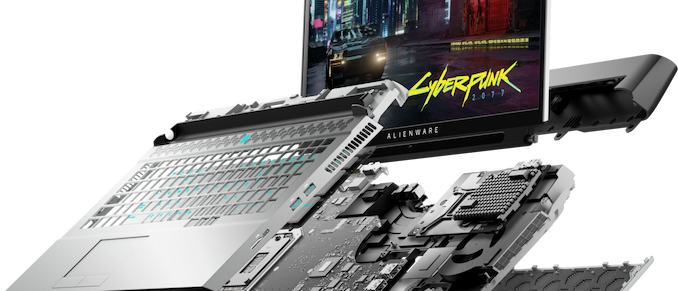
Today Dell is refreshing the better portion of their gaming lineup, moving to the latest Comet Lake processors on both their Dell-branded Gaming laptops, as well as their Alienware lineup. Graphics also get a bump with NVIDIA’s new Super RTX GPUs. For those looking for AMD powered systems, Dell is also officially announcing the G5 15 SE with AMD Ryzen 4000 and Radeon RX 5600M graphics. Alienware 2020 Update Model Area-51m R2 m15 R3 M17 R3 CPU Intel Core i7-10700 octa-core 4.8 GHz Intel Core i7-10700K octa-core 5.1 GHz Intel Core i9-10900 deca-core 5.2 GHz Intel Core i9-10900K deca-core 5.3 GHz Intel Core i5-10300H Quad-Core 4.5 GHz Intel Core i7-10750H Hex-Core 5.1 GHz Intel Core i9-10980HK Octa-Core 5.3 GHz Intel Core i5-10300H Quad-Core 4.5 GHz Intel Core i7-10750H Hex-Core 5.1 GHz Intel Core i9-10980HK Octa-Core 5.3 GHz GPU NVIDIA Options: GTX 1660 Ti...

CES 2020: Alienware Showcases Concept UFO, 8" Handheld For Gaming
Dell and Alienware have unveiled a new portable gaming machine it is calling Concept UFO. Demonstrated during its Dell Experience press conference at CES 2020, the Alienware Concept UFO...
19 by Gavin Bonshor on 1/8/2020
Quick & Deadly: Alienware 25 (AW2521HF) 240 Hz Fast IPS Monitor Revealed
Dell’s Alienware was among the first brands to offer a 27-inch Fast IPS gaming display featuring a 240 Hz refresh rate back in August, 2019. This spring, the company...
23 by Anton Shilov on 1/2/2020
Dell’s Alienware Aurora Ryzen Edition Comes w/ Ryzen 5 3500 or Ryzen 9 3950X
Dell’s Alienware division has started sales of its Aurora Ryzen Edition desktops. The latest Aurora systems not only put AMD’s processors back into mid-tower Aurora machines for the first...
17 by Anton Shilov on 11/18/2019
Alienware’s Area 51m Gets GeForce RTX 2070/2080 Upgrade Kits
Earlier this year, Alienware launched its Area 51m laptop, a high end desktop replacement (DTR) class laptop. Now, living up to the idea of being a proper replacement to...
9 by Anton Shilov on 11/8/2019
Fast & Furious: The Alienware 27 (AW2720HF) 240 Hz IPS Monitor with FreeSync
Dell has announced its Alienware 27 gaming display that is based on a 'Fast IPS' panel that brings together a 240 Hz refresh rate, rich colors, and wide viewing...
31 by Anton Shilov on 8/28/2019
Dell Announces Alienware Aurora R9: An Ultimate mATX Gaming PC
Living up to its status as a high-end, botique system builder, back in early 2019 Alienware rolled out its "Legend" industrial design. Intended to set the brand apart from...
27 by Anton Shilov on 8/22/2019
Dell Reveals Alienware 34 Curved Monitor: WQHD IPS with 120Hz G-Sync
Dell this week has introduced its new top-of-the-line curved gaming display, the Alienware 34. The new AW3420DW monitor resembles its predecessor from 2017, with the same resolution and G-Sync...
24 by Anton Shilov on 8/20/2019
Dell Unveils G5 Gaming Desktop: Starting at $629
Historically, Dell has addressed the market for higher-end gaming desktops with their Alienware-branded machines, which are frequently built around unlocked CPUs as well as advanced graphics cards. Meanwhile, for...
68 by Anton Shilov on 8/19/2019
Dell Launches 55-Inch Alienware OLED Display: 4K at 120 Hz with Deep Blacks
Today at Gamescom, Dell has officially launched its new flagship OLED gaming monitor, the Alienware 55. First demonstrated back at Computex, the display uses a 4K OLED panel featuring...
48 by Anton Shilov on 8/19/2019
Dell Updates Alienware m15 & m17 Gaming Laptops: New Chassis, New Processors, & Optional OLED Display
Built to strike a balance between performance, style and compact sizes, Dell’s Alienware m-series of gaming laptops were originally introduced last fall, and seem to have quickly risen in...
15 by Anton Shilov on 5/28/2019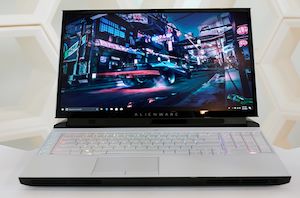
CES 2019: Dell Alienware Area-51m DTR Laptop with Core i9-9900K & GeForce RTX
In the recent years a number of PC makers have introduced desktop replacement-class notebooks with processors originally developed for desktops. Meanwhile, large OEMs tend to be more conservative and...
34 by Anton Shilov on 1/18/2019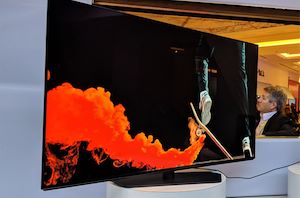
Dell at CES 2019: Alienware 55-Inch 4K 120 Hz OLED Gaming Monitor Showcased
In a surprising move Dell demonstrated a prototype of its Alienware 55 OLED display for gamers at CES. The 55-inch OLED monitor features a 120 Hz adaptive refresh rate...
21 by Anton Shilov on 1/11/2019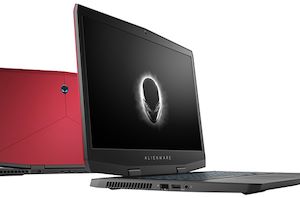
Dell at CES 2019: Alienware m17 Packs Core i9, GeForce RTX into 17.3-Inch Chassis
Having launched Alienware m15 ultra-thin gaming laptops last year and updated them this week, Dell is rolling out more notebooks for gamers concerned about compact dimensions. The new Alienware...
18 by Anton Shilov on 1/11/2019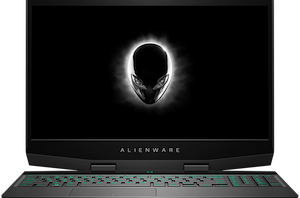
Dell at CES 2019: Alienware m15 Gets Core i9, GeForce RTX, & 4K HDR400 Display Upgrade
Released last October, Dell's Alienware m15 laptop was the brand’s first attempt to address the growing market for stylish and portable gaming laptops. The 15.6-inch machine indeed looks very...
3 by Anton Shilov on 1/7/2019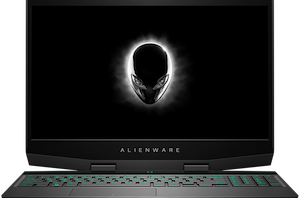
Alienware Rolls Out Thin & Powerful m15 Laptop: Coffee Lake & GTX 1070 Plus 4K
Bringing together performance, style, and portability is always a challenge, but it looks like Dell’s Alienware is on the right track with its m15 laptop. The Alienware m15 notebook...
15 by Anton Shilov on 10/4/2018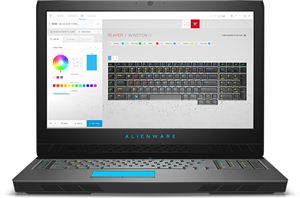
Dell Adds Per-Key LED Lighting to Alienware 15 and Alienware 17 Laptops
Dell has introduced new versions of its Alienware 15 R4 and Alienware 17 R5 gaming notebooks, which now feature new keyboards with customizable per-key lighting. The systems rely on...
6 by Anton Shilov on 8/23/2018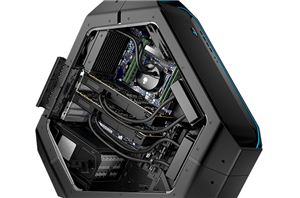
Alienware Installs NVIDIA’s GeForce RTX Cards In Aurora and Area-51 Desktops
Alienware this week announced its latest versions of Aurora and Area-51 desktops, the most notable change being that the new models will be equipped with NVIDIA’s latest GeForce RTX...
13 by Anton Shilov on 8/23/2018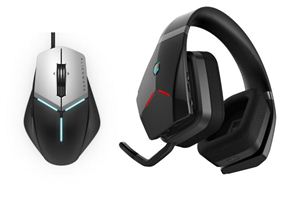
Alienware Releases Wireless headset and Elite Gaming Mouse
After an absence from the headset market for nearly a decade, Alienware has jumped back in it feet first with the Alienware Wireless Headset (AW988). The headset also happens...
1 by Joe Shields on 6/6/2018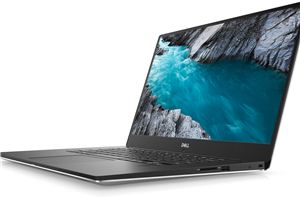
Dell's Spring Range: New 8th Gen Alienware, Laptops, and Monitors
Inspiron All-in-Ones On the desktop side of matters, Dell has announced updates to the entire range of its popular Inspiron All-in-One desktop line, starting from its cost effective 22 &...
34 by Ian Cutress, Anton Shilov & Joe Shields on 4/3/2018
 Facebook
 Twitter
 RSS
RSS


