



Antec P280 Review: When Enthusiasts Are Engineers
by Dustin Sklavos on November 15, 2011 10:20 AM EST- Posted in
- Cases/Cooling/PSUs
- Antec
- P280
Antec's existing Performance One series, peaking with the P183 and P190, has become a standard for silent, high performance computing. These enclosures have been extremely popular from the word "go," and for a long time the P180 and its descendants have been easy recommendations. But you could argue the designs are starting to feel a little outdated, and while Antec's recent Solo II was an interesting step forward, it felt like a tentative one.
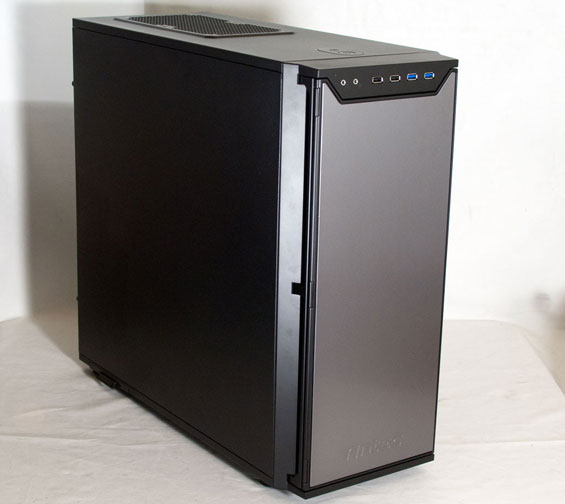
The new P280, on the other hand, is a major evolution. Intended not as a refresh of the P183 but to exist alongside it, the P280 features some radical changes for Antec in terms of design while lowering the cost of entry for the entire line. Is it a smart evolution, or did Antec's engineers split too many decisions in trying to appeal to both silent computing and high performance markets?
Speaking candidly, I think any enthusiast worth his or her salt was more than a little interested when Antec first announced the P280. The Performance One line has practically been an institution for a long time, but Antec's engineers have gone back to the drawing board with the P280 in a very big way, implementing a host of new ideas while adopting some of the modern design cues brought forth by vendors like Corsair and SilverStone. I had a chance to meet with Antec's representatives, including one of the designers of the P280, and it's pretty clear where they were coming from when they made this case: as enthusiasts first who had the opportunity to design the case they wanted to see and use.
| Antec P280 Specifications | ||
| Motherboard Form Factor | XL-ATX, ATX, Micro ATX, Mini ITX | |
| Drive Bays | External | 3x 5.25" |
| Internal | 6x 3.5"/2.5", 2x 2.5" | |
| Cooling | Front | 4x 120mm fan mount (two in the front, two internal behind the drive cage) |
| Rear | 1x 120mm Antec TwoCool exhaust fan | |
| Top | 2x 120mm Antec TwoCool exhaust fans | |
| Side | - | |
| Bottom | - | |
| Expansion Slots | 9 | |
| Front I/O Port | Mic and headphone jacks, 2x USB 2.0, 2x USB 3.0 | |
| Top I/O Port | Power and reset buttons | |
| Power Supply Size | ATX | |
| Clearance | 13" (Expansion Cards), 180mm (CPU HSF), 300mm (PSU) | |
| Weight | 22.3 lbs. (10.2 kg) | |
| Dimensions | 20.7" x 9.1" x 22.1" (526mm x 231mm x 562mm) | |
| Price | MSRP $139 | |
I'll concede that I haven't been wholly impressed by Antec's enclosures as of late, but the P280 is a completely different beast. It has the DNA of the Performance One series, but internally you'll find a design that diverges radically from its predecessors, and your first clue should be the nine expansion slots. Antec calls the P280 a "super mid-tower," but at this point the lines between a mid-tower and full tower have been so heavily blurred that each enclosure should be taken on a case by case basis (pun wholly intended.) The fact is, the P280 is big, but it has a lot going for it.


 Facebook
 Twitter
 RSS
RSS


164 Comments
View All Comments
fatpat268 - Tuesday, November 15, 2011 - link
"While some people may be a little peeved at losing the dual chamber design of the P180 line, I'm not particularly bothered by it."I'm not. The dual chambered design is the main reason why I want to get rid of my P182. In my experience, the dual chambers have little effect compared to a standard design, but it makes it twice as difficult to assemble.
I'm currently looking at new cases right now, and I'm glad that Antec ditched that design.
Strunf - Tuesday, November 15, 2011 - link
I share the same feeling about the dual chamber design (at least on the P182), it's quite a pain to work on the lower chamber, everything is cramped and you have to be extra careful to not let the cables touch the fan that is in-between the hard drives and the PSU.If there was a easy way to remove the piece of steel separating both chambers I would do it in a heart beat, the case would be much better then...
kmmatney - Tuesday, November 15, 2011 - link
Yep - getting the hard drive cables to not touch the fan can be tricky in the P-182. I still love it, though, just for how quiet it is. I can passively cool my HD4890 using only one case fan (and the hard drive fan) for an almost completely silent system. Glad to see the improvements, though.MrSpadge - Tuesday, November 15, 2011 - link
After some time I removed the fan in the lower chamber. I've got only one HDD and the PSU is 80+ Gold (now), so I don't it any more. Still cramped, but much easier.MrS
TeachPA - Wednesday, November 16, 2011 - link
I kind of liked my dual chamber 180. It was pain but once my cables were secure it didn't cause any problems.rrohbeck - Wednesday, November 16, 2011 - link
Look at the Define XL by Fractal Design.I just bought one and it's great. It has two chambers too, but done right without a fan in the way. And it doesn't have the fans in the top so it's quieter - much better as long as you don't want watercooling or manual fan control. I don't.
The one thing that the Antec has that I want is the double hinged door. Otherwise the Define XL is nicer and it has plenty of cooling with two additional fans. Enough to overclock the heck out of a Bulldozer with a NH-D14 anyway and it's still quiet.
kasakka - Thursday, November 17, 2011 - link
I've got the Define R3 and it has some issues like hard to close side plate, side plate screws not mounted on the plate itself (like they were on the Antec P150), too small reset button and a bit fiddly cable routing.It's not a bad case but not a great one either. Personally I really loved the Antec P150 except it had a poor quality power/reset button (easily breaking plastic) and couldn't fit full length graphics cards without taking a hacksaw to some parts.
geniekid - Tuesday, November 15, 2011 - link
I wonder a little bit about the CPU cooler. Would a cooler with a different configuration work better with some of these cases?I understand it's important to keep things consistent across different cases, but I can't help but think that cases that do such a good job of ambient cooling (R3, P280) should have no problem with a CPU that has it's OWN cooler attached to it already. It makes me think the CPU cooler isn't doing it's job properly.
geniekid - Tuesday, November 15, 2011 - link
"It makes me think the CPU cooler isn't doing it's job properly." Or, alternatively, that the case may have been designed with another CPU cooler in mind.Dribble - Tuesday, November 15, 2011 - link
Looking at the case it looks like cool air comes in at the front + bottom, turns 90 degrees gets heated by the gpu and then probably wants to exit mostly out the top which is blowing accross the cpu a bit. Another design of cooler might take a degree or two off.That said the gpu gets lots of cool air, and being as these days that's the hottest thing in the pc you could argue that it's now more important to cool then the cpu.