



CES 2007 Part I: Convergence Happened and the Most Impressive Demo of CES
by Anand Lal Shimpi on January 11, 2007 6:53 PM EST- Posted in
- Displays
Sony's Laser Light Engine LCoS Display
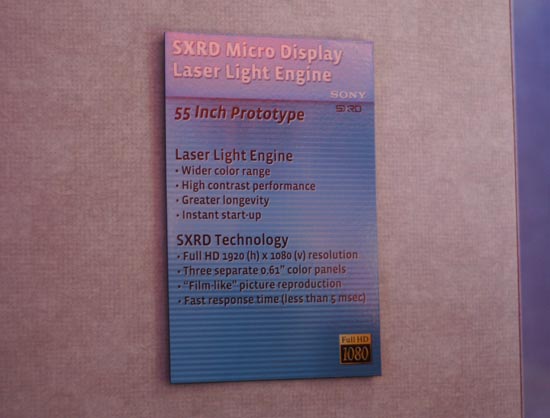
Another Sony prototype on display was a Laser backlit LCoS display, but unfortunately the prototype was far more crude than the OLED setup.
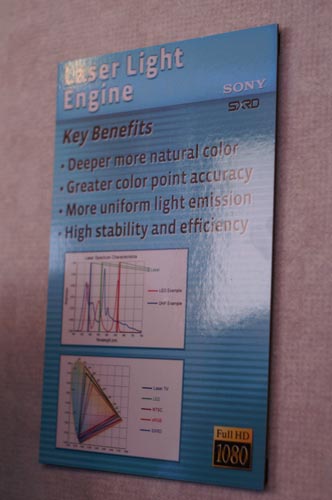
While a laser backlight in theory provides a larger color gamut, even larger than a LED backlight, the actual demo itself was unimpressive.
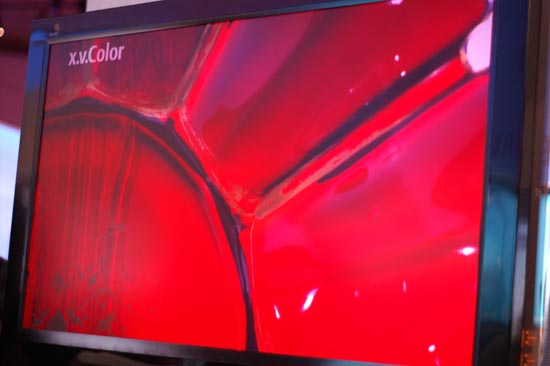
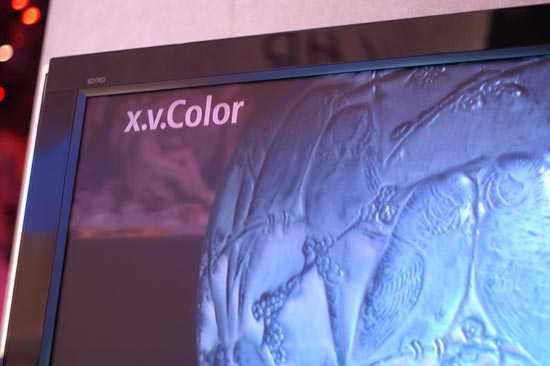
Colors appeared off and the overall image wasn’t very sharp; some of this was due to the fact that it’s not a direct view display, but mostly the issue was that it was a very early prototype.
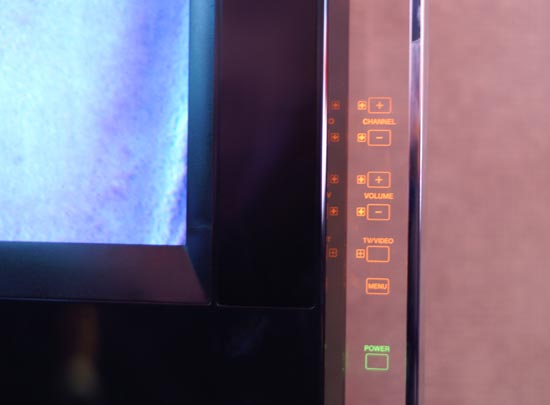
Although non-functional, the TV’s controls on the side of the display were pretty cool. Like the OLED prototypes, there’s no indication of when we may actually see this technology come to fruition.
Sony's $33,000 LCD
If you find yourself wondering what you can buy for $33K this April, Sony has an answer for you. While LCD and plasma manufacturers have been creating bigger and bigger displays to showcase at CES, they rarely end up as an actual product you can buy. Sony is changing the trend this year by showcasing a 70” LCD that will be shipping to customers in April, at a price tag of $33,000.
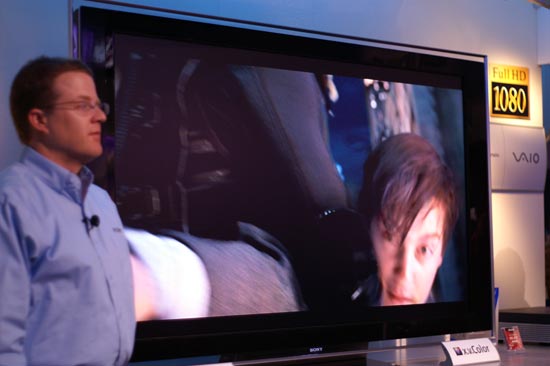
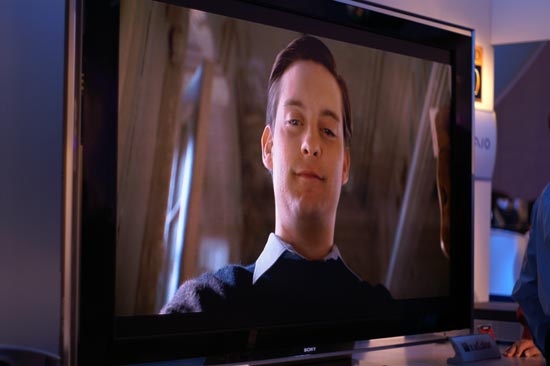
The 70” Bravia display features a single 120Hz 1080p panel with 10-bit color support and is LED backlit.
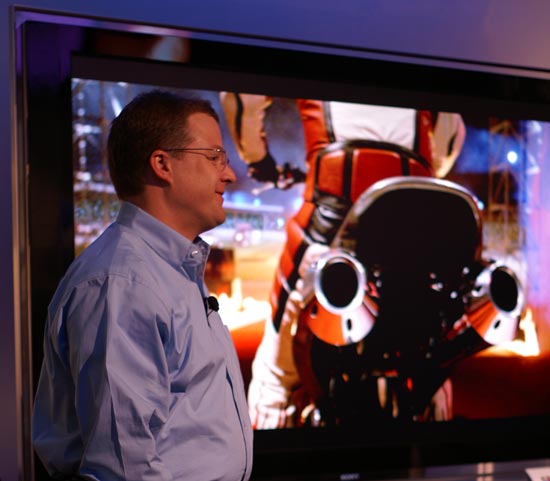
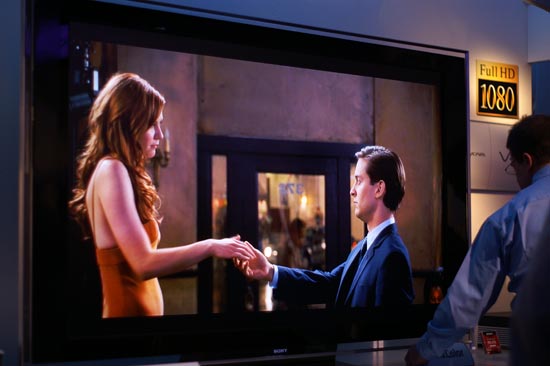
The display is absolutely huge and looked quite good, although not nearly as good as the OLED setups we talked about earlier obviously. For the discerning buyer in dire need of a 70” LCD, Sony has exactly what you’re looking for.


 Facebook
 Twitter
 RSS
RSS


18 Comments
View All Comments
artifex - Monday, January 15, 2007 - link
I'm getting offers in the ads from companies who claim to offer "free" stuff provided you join a lot of trial offers and buy a bunch of stuff and sucker your friends into joining, also.Does Anandtech approve of these ads? Don't say you have no control over them, because you do. You can complain to your provider, IndustryBrains, or switch if they continue to show these things.
The suckier the ads are, the less credibility you have among people who see them, and the more likely everyone will use adblockers, which will kill your revenue.
artifex - Monday, January 15, 2007 - link
You guys must be too young to remember G-Force, the anime. :)When Nvidia announced their first GeForce product, I thought they might get sued, themselves. But of course, g-force is a term that predates either.
Houdani - Friday, January 12, 2007 - link
<--- that's me being grumpy about Toshiba & Canon not displaying the SED TVs at CES'07 due to legal wranglings with Nano-Proprietary. This, of course, is only pushing out their availability that much farther, further closing the window on this tech. Hrmph!semo - Friday, January 12, 2007 - link
why is that such an issue? what is performance? some numbers you couldn't care less when playing assuming the fps stay above a certain number. you expect performance to drop when enabling other eye candy, but when it comes to realism everyone seems to complain.this makes me think, are ppl buying better video cards for the increased "performance" or for the more immersive experience.
Houdani - Friday, January 12, 2007 - link
Physics doesn't necessarily have to mean that more polygons are pushed to the screen (such as when things go boom). When this happens, then it taxes the video card more and has a subsequent impact on performance. I think this relationship is understood and accepted.However, if the physics don't add more polygons but instead cause objects to interact more realistically then we're at the spot where we don't want overall performance to slow down. This is where Ageia needs to flex their strength and not disappoint their audience.
In *software* we already have the ability to have great physics, but at a loss to performance. For Ageia to excel, they necessarily have to remove that hindrance and give us the physics without the performance hit -- otherwise they've provided us with little or no benefit, really.
semo - Friday, January 12, 2007 - link
that makes sense. how much of a performance hit are talking here anyway. and how much of the physics calculations are outsourced to the ppu (and are there any big overheads as a result)LoneWolf15 - Friday, January 12, 2007 - link
It would be, if you can make sure this product is extremely difficult to damage.
I've seen way too many students that don't care how they treat something a school gives them --after all, it's (in their minds) not like they bought and paid for it with their own money (the concept that their parents' taxes did is irrelevant in their minds in those cases).
I agree that the concept is brilliant on paper, and it should be perfect for higher education. In the K-12 evnironment though, unless there's a way of accountability that works without making parents upset, or a way of making them durable enough that this is not an issue, this could be an idea that falls one tiny step short of a great finish.
bokep - Friday, January 12, 2007 - link
I've been following OLEDs since I first learned about it over half a decade ago. Nice to see it working that well and should be coming out within the next few years.CSMR - Thursday, January 11, 2007 - link
Great reviews, thanks for keeping the world updated!archcommus - Thursday, January 11, 2007 - link
...let's be serious here, LCD is surely getting the job done just fine.