



ASUS Maximus Formula SE: X38 and DDR2 Unite!
by Rajinder Gill on November 9, 2007 7:00 AM EST- Posted in
- Motherboards
Conclusion
The term "underwhelming" was used by us in our introduction to describe our sentiments about the X38 in DDR2 configurations. After testing the ASUS Maximus Formula SE for the past few weeks, the initial memory latency and bandwidth figures had us feeling exactly that way too. Of course, recent BIOS updates have improved the situation and once we broke past the synthetic memory benchmarks, it became clear that real world gaming or application usage does not suffer at all from the apparent synthetic deficit at equivalent processor speeds. We did find this board to be very quick and certainly worthy of attention for those looking to build a premium gaming platform or for the enthusiast looking to get the most out of their processor while utilizing DDR2 memory technology.
The lack of memory divider options to really push the board seems to be an issue from Intel's end, as the Gigabyte/MSI/Foxconn/abit X38 motherboards suffer the same malady. For DDR2 users, the decision of which chipset to buy can be summed up by considering whether or not you intend to run two graphics cards in Crossfire mode or do not plan on upgrading to Penryn shortly. For single GPU systems, we think a sub $175 P35 motherboard like the abit IP35 Pro is an excellent purchase while tweakaholics will have the superlative DFI LP UT P35 T2R, fulfilling the upper-end enthusiast role. However, considering the quickly maturing BIOS releases and the additional performance gains that come with them, we are no longer adverse to recommending an X38 DDR2 board. If we had to make a choice today, the ASUS Maximus Formula SE would be at the top of our X38 DDR2 list.
So, apart from running Crossfire in dual x16 mode and having a fairly tweakable BIOS, where does this leave the ASUS Maximus Formula? On the plus side, the latest BIOS releases are maturing rapidly, and we have found no real incompatibility issues using XP or Vista with a wide variety of components. Though the BIOS is touted as being for the "Extreme Tweaker", it's very easy to use. There are a few quirks to auto overclocking with the 0505 BIOS, voltages tend to drift towards the high side, at times outside the realms of safety in our opinion. This is why we suggest using manual settings as the best overclocking option for long term use. The bios recovery system worked flawlessly after a failed overclock setting and continues to be the best in the industry. We also found the features available on the board and the component choices utilized are excellent for the most part.
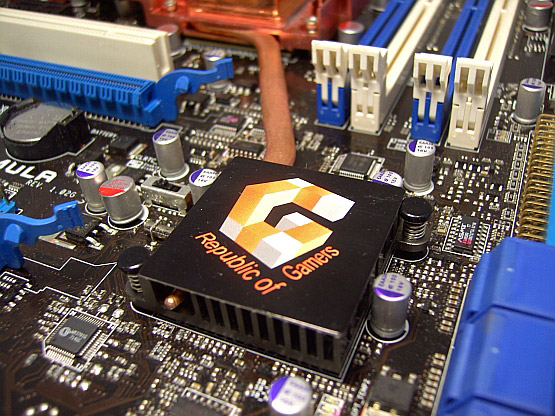
Our biggest gripes revolve around the somewhat disappointing execution of the supplied water block design and unreliable 1/2" tubing clamps when using high flow rate pumps. Sure, we love the concept - a single water block cooling two key areas of the motherboard, saving a lot of user cost and PC case clutter. Unfortunately, the bonding of the block to the Northbridge heatsink makes the whole water-cooling concept almost meaningless with our particular board sample. In non-modified form, the differences between running air rather than water to cool the Northbridge are virtually nonexistent. We have passed our suggestions to ASUS, who seem very willing to explore ways of improving the current design. Given the choice of spending in excess of $70 for two good water blocks to cover the Northbridge, and Southbridge, we prefer a well-implemented single block solution from ASUS. We have expressed our concerns to ASUS and they have shipped us a new board to test that hopefully resolves this problem.
We want ASUS to continue supplying their easy to use BIOS tweaking functions for mass audiences, though we feel that they do not need to combine "tweaker" functions under a respun marketing slogan. The current inclusion of a very limited and coarse GTL reference adjustment, "Transaction Booster", "Static Read Control" and "Clock Twister" actually prevents the enthusiast from full and flexible control, especially when the motherboard is pushed really hard (which it probably will be considering its target market). In this price class we need the option of full tweaking - certainly if a board is marketed as "Extreme Tweaker" as it should offer just that. ASUS definitely faces some stiff competition from Gigabyte, whose GA-X38-DQ6 offers nearly the same performance and features, bar the water-cooling out of the box. Then we have the possibility of DFI's and abit's X38 DDR2 offerings complicating choices even further. Oh, we also forgot the upcoming X48 chipset, which is bound to be more than just a speed binned X38 but is still targeted for the DDR3 performance crowd.
Extreme benchmarkers do make up a small percentage of the overall PC market, yet the success of an enthusiast level product hinges largely upon their opinion. The current buzzword in the benching scene is DDR3 and ASUS has its grip firmly on that market, with their DDR3 boards (Maximus/Formula Extreme) holding most of the Futuremark 3D world records. This leaves the appeal of current DDR2 X38 boards to early adopters who are either running CrossFire, waiting for a DDR3 price drop, or for Penryn to finally arrive. We have to acknowledge that the real test for supremacy between the X38 and P35 is yet to come - by that we are referring to the Penryn based processors that will be hitting retail shelves shortly. Once users have retail silicon on hand, it will be interesting to see how well both chipsets handle high FSB rates on the new processors. In our early testing, the nod goes to the X38 and is one more reason to consider the chipset once it matures. More than ever in this segment of the market, it's still all about features and overclocking. In this regard, we have to give the ASUS Maximus Formula SE a passing grade, and a recommended buy when looking at the current X38 offerings.
The term "underwhelming" was used by us in our introduction to describe our sentiments about the X38 in DDR2 configurations. After testing the ASUS Maximus Formula SE for the past few weeks, the initial memory latency and bandwidth figures had us feeling exactly that way too. Of course, recent BIOS updates have improved the situation and once we broke past the synthetic memory benchmarks, it became clear that real world gaming or application usage does not suffer at all from the apparent synthetic deficit at equivalent processor speeds. We did find this board to be very quick and certainly worthy of attention for those looking to build a premium gaming platform or for the enthusiast looking to get the most out of their processor while utilizing DDR2 memory technology.
The lack of memory divider options to really push the board seems to be an issue from Intel's end, as the Gigabyte/MSI/Foxconn/abit X38 motherboards suffer the same malady. For DDR2 users, the decision of which chipset to buy can be summed up by considering whether or not you intend to run two graphics cards in Crossfire mode or do not plan on upgrading to Penryn shortly. For single GPU systems, we think a sub $175 P35 motherboard like the abit IP35 Pro is an excellent purchase while tweakaholics will have the superlative DFI LP UT P35 T2R, fulfilling the upper-end enthusiast role. However, considering the quickly maturing BIOS releases and the additional performance gains that come with them, we are no longer adverse to recommending an X38 DDR2 board. If we had to make a choice today, the ASUS Maximus Formula SE would be at the top of our X38 DDR2 list.
So, apart from running Crossfire in dual x16 mode and having a fairly tweakable BIOS, where does this leave the ASUS Maximus Formula? On the plus side, the latest BIOS releases are maturing rapidly, and we have found no real incompatibility issues using XP or Vista with a wide variety of components. Though the BIOS is touted as being for the "Extreme Tweaker", it's very easy to use. There are a few quirks to auto overclocking with the 0505 BIOS, voltages tend to drift towards the high side, at times outside the realms of safety in our opinion. This is why we suggest using manual settings as the best overclocking option for long term use. The bios recovery system worked flawlessly after a failed overclock setting and continues to be the best in the industry. We also found the features available on the board and the component choices utilized are excellent for the most part.
Our biggest gripes revolve around the somewhat disappointing execution of the supplied water block design and unreliable 1/2" tubing clamps when using high flow rate pumps. Sure, we love the concept - a single water block cooling two key areas of the motherboard, saving a lot of user cost and PC case clutter. Unfortunately, the bonding of the block to the Northbridge heatsink makes the whole water-cooling concept almost meaningless with our particular board sample. In non-modified form, the differences between running air rather than water to cool the Northbridge are virtually nonexistent. We have passed our suggestions to ASUS, who seem very willing to explore ways of improving the current design. Given the choice of spending in excess of $70 for two good water blocks to cover the Northbridge, and Southbridge, we prefer a well-implemented single block solution from ASUS. We have expressed our concerns to ASUS and they have shipped us a new board to test that hopefully resolves this problem.
We want ASUS to continue supplying their easy to use BIOS tweaking functions for mass audiences, though we feel that they do not need to combine "tweaker" functions under a respun marketing slogan. The current inclusion of a very limited and coarse GTL reference adjustment, "Transaction Booster", "Static Read Control" and "Clock Twister" actually prevents the enthusiast from full and flexible control, especially when the motherboard is pushed really hard (which it probably will be considering its target market). In this price class we need the option of full tweaking - certainly if a board is marketed as "Extreme Tweaker" as it should offer just that. ASUS definitely faces some stiff competition from Gigabyte, whose GA-X38-DQ6 offers nearly the same performance and features, bar the water-cooling out of the box. Then we have the possibility of DFI's and abit's X38 DDR2 offerings complicating choices even further. Oh, we also forgot the upcoming X48 chipset, which is bound to be more than just a speed binned X38 but is still targeted for the DDR3 performance crowd.
Extreme benchmarkers do make up a small percentage of the overall PC market, yet the success of an enthusiast level product hinges largely upon their opinion. The current buzzword in the benching scene is DDR3 and ASUS has its grip firmly on that market, with their DDR3 boards (Maximus/Formula Extreme) holding most of the Futuremark 3D world records. This leaves the appeal of current DDR2 X38 boards to early adopters who are either running CrossFire, waiting for a DDR3 price drop, or for Penryn to finally arrive. We have to acknowledge that the real test for supremacy between the X38 and P35 is yet to come - by that we are referring to the Penryn based processors that will be hitting retail shelves shortly. Once users have retail silicon on hand, it will be interesting to see how well both chipsets handle high FSB rates on the new processors. In our early testing, the nod goes to the X38 and is one more reason to consider the chipset once it matures. More than ever in this segment of the market, it's still all about features and overclocking. In this regard, we have to give the ASUS Maximus Formula SE a passing grade, and a recommended buy when looking at the current X38 offerings.


 Facebook
 Twitter
 RSS
RSS


24 Comments
View All Comments
jozeaphe - Sunday, February 17, 2008 - link
Hi Guys i Just Build a new PC :Asus Maximus Formula SE .
Intel Core 2 Duo E8500 .
2 GB Ram - 800 MHz ( for the moment ) .
can any one help to overclock my PC to Max settings within the following :
1. Stock Intel CPU heatsink\fan ( come with processor ) . No water cooling on the northbridge .
2. Stock Intel CPU heatsink\fan ( come with processor ) . With water cooling on the northbridge .
3. The above 2 options but using 2 GB Ram - 1066 ( if thats make a difference ) .
And Thank u All , Jozeaphe@gmail.com .
guitronics - Wednesday, February 13, 2008 - link
I don't know if I have an 'SE',but I have the game Stalker.These Mobo's are NHRA Top Fueler's, not 18 wheeler's. They're Gaming 'Boards,not workstations,or servers.Their cause is overclocking/tweaking. So:Some legacy stuff hadda go...serial and parallel:Buy a PCI card,if you really need it.There are plenty of pci slots.No Esata? There are 6 Sata,and 1 IDE port.2 -GB Lan options.Yes,it does ECC:But why does a gamer want that?There are 1394a ports,not 800 Mhz.Or,at least that speed isn't documented.The USB mouse...it's time to get on the "dump legacy stuff" wagon.How big a deal is that?Up to 8 GB of memory,and onboard 0,1,5;and 10 Raid support.Put a Blu-Ray on the IDE,run raptors' in raid 0, still have room for > 4 < More drives....Terabyte's, anyone?A good case and you can swap 'em out...no big deal."It's a Gaming Machine"!
jay401 - Tuesday, November 13, 2007 - link
I think we've officially reached the point of option saturation, where there are literally TOO many options in the BIOS for most overclockers to ever care about. Sure, it's great for the handful that will actually make use of all of those options, but we're getting dangerously close to the point where it is TMI.RFV - Wednesday, November 21, 2007 - link
you'd love the DFI BIOS!RFV - Tuesday, November 13, 2007 - link
I have read that the Asus Maximus Formula SE is now "End Of Line" so you better hurry if you want to purchase one. Asus did the same thing with the Blitz Formula SE, so this is not suprising news, the Maximus Formula SE was always going to be a limited edition board from the get go. Also, fom the reviews I have read on this board from people who upgraded from P35 boards is that the Maximus Formula SE X38 board required more volts than the Asus P5K Deluxe board to reach the same overclock. They also reported that the X38 boards generally ran hotter than the P35 boards at the same overclock.457R4LDR34DKN07 - Monday, November 12, 2007 - link
Thanks for the in depth bios descriptions, it has helped me dramatically increase stability while using patriot pc8500 memory.Etern205 - Saturday, November 10, 2007 - link
What happened to the Maximus Extreme?Raja Gill - Sunday, November 11, 2007 - link
that's nextzoom314 - Saturday, November 10, 2007 - link
I wonder does Asus still have Locked Multipliers on Extreme cpus still like they do on the P5W DH Deluxe? Meaning any multiplier above the Default Multiplier is locked off to prevent users from overclocking, rendering an Extreme Dual/Quad cpu an Expensive Normal Dual Core or Quad Core cpu(A QX6700 becomes a Q6700 cpu). Of course one can adjust the Multiplier downwards to 6 as Asus say No one needs those upper Multipliers and Hence Asus does Not Support Extreme any cpu!!!!Raja Gill - Saturday, November 10, 2007 - link
the upwards multipliers work fine on this board...