



AMD 690G: Technology Overview
by Derek Wilson and Gary Key on February 28, 2007 2:30 PM EST- Posted in
- CPUs
It has been awhile since we have had the opportunity to review an AMD chipset. The last chipset produced by AMD was the 8000 series that was born out of necessity for the launch of the Opteron series of processors back in 2002. Before that, AMD had produced some unique chipsets for the Athlon and Duron processors series that included the AMD-750 that was quickly updated to the AMD-760 after a rough launch. Our favorite AMD chipset was the AMD-760 MPX that provided an affordable multi-processor platform when paired with the Athlon MP processors. In fact, we still have an MSI based 760 MPX system running in the labs today as a media back-up server.
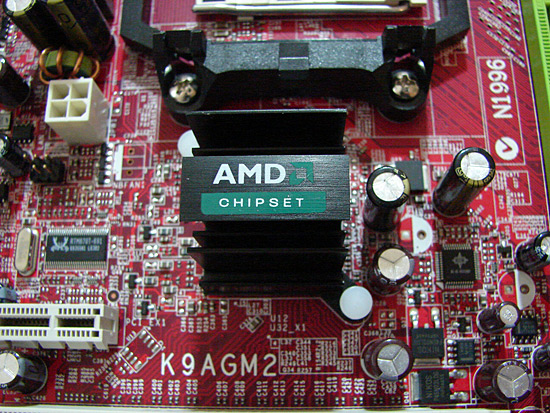
Today is the official launch date of AMD's first integrated graphics platform, the AMD 690G/690V chipset. While this chipset design was under development well before the ATI acquisition, the final specifications and platform design were a joint effort between the two companies. We expected this platform to be released late last year and the delays have been somewhat frustrating for all parties concerned. However, this new product launch will be the first of many for AMD over the coming months as we will see a new DX10 graphics architecture and a major overhaul to the processor lineup. In the meantime, we will concentrate our focus on this new but very familiar player in the integrated graphics market.
The legacy of integrated graphics is one of minimum functionality. With Intel as the number one graphics provider in the world, this can pose a problem for application developers looking to take advantage of the widest user base possible. Designing for the lowest common denominator can be a frustrating task when the minimum feature set and performance is so incredibly low. The latest market numbers indicate that 9 out of every 10 systems sold in the US have integrated graphics so the importance of a well performing IGP cannot be understated.
While the introduction of Vista has helped push companies to raise the feature set bar more than usual, we would love to see even more aggressive feature and performance requirements for graphics hardware in the future. In the meantime, application developers will be able to rely on DX9 functionality, but in spite of Intel's minimal support in this area, performance and compatibility with games is dismal. It seems likely that the majority of these integrated graphics users will not be able to experience PC gaming on any real level.
That's why we are always grateful to see the major players in the graphics market releasing new integrated chipsets. Intel needs some competition in the very low cost graphics segment to help inspire innovation. In addition, integrated graphics from AMD and NVIDIA will have a much higher degree of compatibility and better performance with applications and games. Higher adoption rates of better quality integrated chipsets helps increase the minimum level for which programmers can develop. This improves everyone's graphical experience and is absolutely a good thing.
Unfortunately, we are always left wanting more with integrated hardware. Motherboard OEMs will fight for every cent that goes into their design, and AMD and NVIDIA still need to make a profit on their chipsets. The engineers' dilemma is always balance between cost and benefit, and this is one of those areas where cost is king. We simply have to take what we can get in spite of how much we may beg for more. Let's take a quick look at the actual specifications of the AMD 690G/690V chipsets.
Today is the official launch date of AMD's first integrated graphics platform, the AMD 690G/690V chipset. While this chipset design was under development well before the ATI acquisition, the final specifications and platform design were a joint effort between the two companies. We expected this platform to be released late last year and the delays have been somewhat frustrating for all parties concerned. However, this new product launch will be the first of many for AMD over the coming months as we will see a new DX10 graphics architecture and a major overhaul to the processor lineup. In the meantime, we will concentrate our focus on this new but very familiar player in the integrated graphics market.
The legacy of integrated graphics is one of minimum functionality. With Intel as the number one graphics provider in the world, this can pose a problem for application developers looking to take advantage of the widest user base possible. Designing for the lowest common denominator can be a frustrating task when the minimum feature set and performance is so incredibly low. The latest market numbers indicate that 9 out of every 10 systems sold in the US have integrated graphics so the importance of a well performing IGP cannot be understated.
While the introduction of Vista has helped push companies to raise the feature set bar more than usual, we would love to see even more aggressive feature and performance requirements for graphics hardware in the future. In the meantime, application developers will be able to rely on DX9 functionality, but in spite of Intel's minimal support in this area, performance and compatibility with games is dismal. It seems likely that the majority of these integrated graphics users will not be able to experience PC gaming on any real level.
That's why we are always grateful to see the major players in the graphics market releasing new integrated chipsets. Intel needs some competition in the very low cost graphics segment to help inspire innovation. In addition, integrated graphics from AMD and NVIDIA will have a much higher degree of compatibility and better performance with applications and games. Higher adoption rates of better quality integrated chipsets helps increase the minimum level for which programmers can develop. This improves everyone's graphical experience and is absolutely a good thing.
Unfortunately, we are always left wanting more with integrated hardware. Motherboard OEMs will fight for every cent that goes into their design, and AMD and NVIDIA still need to make a profit on their chipsets. The engineers' dilemma is always balance between cost and benefit, and this is one of those areas where cost is king. We simply have to take what we can get in spite of how much we may beg for more. Let's take a quick look at the actual specifications of the AMD 690G/690V chipsets.


 Facebook
 Twitter
 RSS
RSS


14 Comments
View All Comments
phusg - Thursday, March 1, 2007 - link
Excuse the pretty much off-topic, but hey it's from the article:Buggy as hell that AMD chipset, but at the time a nice low cost entry into dual core computing. I can only get mine stable when I run my RAID and Gbit cards in the 32bit/33Mhz slots, which is a real shame. Sound drivers are also fun. How is yours set-up? This would also be a good place to post it if somebody feels like sharing: http://www.2cpu.com/forums/showthread.php?t=46394">http://www.2cpu.com/forums/showthread.php?t=46394. Cheers.
Renoir - Wednesday, February 28, 2007 - link
1) How do they accomplish having HDCP support for both dvi and hdmi given that they're on independent display controllers? My understanding was that seperate crypto ROMs were required for each controller/output. Simple answer would be that they indeed have 2 sets of keys but I assume this isn't the case given that they only let you use HDCP on one digital output at a time. So how does that all work?2) How is vga implemented in the display controllers? 1=HDMI 2=DVI-I(hence dvi or vga) or some other configuration?
3) In a related point (upcoming mobile version of chipset) What connection do laptops use internally for their screens? I've asked this question on a few other sites but never got an answer. Surely someone must know? The reason I ask is I'm interested in getting a laptop in future which supports both hdcp for the laptop screen but also via an external digital connection to a larger display.
Sorry for the long post
A5 - Wednesday, February 28, 2007 - link
On page 2, in the audio section, you wrote:"of the HDMI audio capabilities but have tested our 5.1 setup with output set to 24-bits at 48,000MHz."
Should be 48KHz or 48,000Hz, not 48GHz :)
JarredWalton - Wednesday, February 28, 2007 - link
We have very high quality audio. It's under tight wraps, though, so you didn't hear about it here! (*Unh... sorry*)Tujan - Wednesday, February 28, 2007 - link
to see how this chipset is implemented.Probably won't get a set up with everything shown in the schematic at the first of the article.
Remembering when AMD used to have their ''own''chipsets...is this chipset going to be something wich is 'solely ' AMD marketed. Or will there be derivitives from MicroStar,Asus,Gigabyte etc ? Will ALL the chipsets featured in this article considering AMD/ATI be only that single vendor representation ?
I'll be glued to the articles as they transpose. So these chipsets are actually Blue-ray,HD-DVD ''ready''chipsets. Big hmmm there. Personally I dont think that anything less than that in inches bigger than 32 to be HD. So the HDCP stuff,etc,seems to have a bi-product of selling the new disks from the copyright world.Implementing their schemes on less that what would be considered HD.(another topic of course).I think HD should be considered in inches no matter the parameters of pixel count. Or frame/..strength.
Move it on over for the space necesary for HD. Minus the screen size,and video strength....I'd enjoy the technology for its mediums strength of storage space. Another emplementation facet,creeping up into the computerdom spectrum.
Spoelie - Wednesday, February 28, 2007 - link
The chipset as displayed are all chipset features, no extra chips needed. Not providing the necessary connectors would be extremely stupid.In inches? Someone trying to compensate? ;p
You can have a 50" plasma with 800xWhatever resolution all you want, it will never be HD or come close to portray the details a 24" 1920x1200 LCD can. "High definition" defines how much information you display, how sharp the picture is, not on how big a surface you're displaying that information. If that's what it meant, "HD" has been available for decades, thanks to projectors.
So if you really only think in inches, you shouldn't be bothering with the new formats, just watch VHS or videocd's (300xblabla mpeg) in your big ass projector room. Call your friends and tell them what a superHD setup you have. Never mind the blur and color bleeding, look how big it is!
Tujan - Thursday, March 1, 2007 - link
Right now,I have a max.capable computer screen of 1280x1240 using a vga connection.With a 19" monitor.The definition is not as much a credential as the media,or medium of wich you would wish to display . DVDs right now,are not actually HD. Unlike DVDs though Blue-ray,and HD-DVD require credentials of HDCP for the video card,and display in order to use the media.
You could go and use the newer large storage media for something other than protected content.That perhaps you created yourself,as in HD.Utilizing the criteria for 'high-definition'detailed as x(pixel)by x(pixel).I can get everything I need out of copyprotected media on a 19"screen.Or 24"for that matter.
I dont see the agony of accomadating the studios on the mere relevance of x(pixel)by x(pixel) when the reality is anything other than a large screen ,is defined by if it has HDCP or not. Im happy that there is a difference. Home made HD does not need the criteria of credential in order to be such a thing. If it is defined by x(pixel)by x(pixel) in wich video cards are capable of,and any screen size will do,more power to the smaller screens.
Still....the new HDCP content is a 'good thing'. It just to me doesn't have relevence on small screens. HD is not about small screens and HDCP. Its about having an HD movie.
I am definitely waiting for the bleeding to stop. More power to you at your desktop of course.
strikeback03 - Thursday, March 1, 2007 - link
HDCP was about the movie studios attempting to stop piracy. Of course now that AACS has been broken (multiple times in multiple ways) HDCP will just be a big pain in the rear and still not stop piracy.OrSin - Wednesday, February 28, 2007 - link
I going to just say what?I missed about half of what he was saying.
sprockkets - Wednesday, February 28, 2007 - link
Having 6 SATA ports is nice, but Raid 5 is all software done anyhow with nVidia chipsets, so what is the big deal?What is the max resolution over DVI/HDMI? I know the 6150s does not have the same resolution over DVI as it does the VGA port.