



AMD Radeon HD 4830: Affordable Performance And Heavy Competition
by Derek Wilson on October 23, 2008 12:01 AM EST- Posted in
- GPUs
The Card and The Test
The Radeon HD 4830 reference board we tested is based on a revised design put together for this part, but AMD built this chip to be able to fit into existing 4850 board designs as well. The maximum power envelope is the same, but actual power usage will be lower. AMD has informed us that initial boards based on the 4830 will be using 4850 boards, but that down the line we should start seeing boards based on the more compact 4830 reference design.
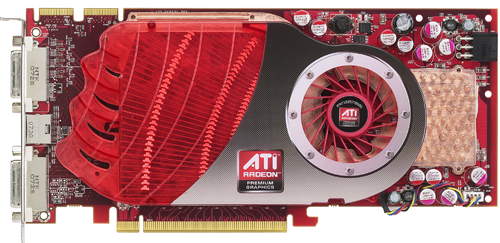
As for how the GPU stacks up against some of the other offerings from AMD, here's a handy chart:
| ATI Radeon HD 4870 | ATI Radeon HD 4850 | ATI Radeon HD 4830 | ATI Radeon HD 4670 | |
| Stream Processors | 800 | 800 | 640 | 320 |
| Texture Units | 40 | 40 | 32 | 32 |
| ROPs | 16 | 16 | 16 | 8 |
| Core Clock | 750MHz | 625MHz | 575MHz | 750MHz |
| Memory Clock | 900MHz (3600MHz data rate) GDDR5 | 993MHz (1986MHz data rate) GDDR3 | 900MHz (1800MHz data rate) GDDR3 | 1000MHz (2000MHz data rate) GDDR3 |
| Memory Bus Width | 256-bit | 256-bit | 256-bit | 128-bit |
| Frame Buffer | 512MB/1GB | 512MB | 512MB | 512MB |
| Transistor Count | 956M | 956M | 956M | 514M |
| Manufacturing Process | TSMC 55nm | TSMC 55nm | TSMC 55nm | TSMC 55nm |
Based on the information we know about the GPU, the 4830 is clearly just an RV770 with two SIMDs disabled. While AMD does have safeguards built into their GPUs to help improve yield, nothing is perfect. There will be ICs that come off the line that simply can't function properly at the desired speed or with all the hardware enabled to make it onto a higher end card. Chip makers will save these parts and bin them for possible use in lower end products later. We also sometimes see higher end binned chips released as special editions overclocked models, so it does work both ways.
The price of the 4830 means that it will see higher volume sales than either the 4850 or the 4870. That's just how it works: more people buy cheaper parts. The interesting twist here is that the RV770 is being used in 3 different parts ranging from $130 to $300 with very little time lapse between the initial release and the current situation.
While we still would really love to see a top to bottom launch on day one of a new architecture some time, this is very impressive in it's own right. The delay between the launch of the 4870 and the 4830 is likely due to the fact that AMD needed to maintain enough supply to meet demand for it's two higher end parts while steadily building up a supply of chips for use in the 4830. As demand will be higher, stockpiling chips that can't run at 4830 specification for a few months will certainly help meet the needs of the market.
Now that we know what we're testing, let's take a look at our test platform.
| Test Setup | |
| CPU | Intel Core 2 Extreme QX9770 @ 3.20GHz |
| Motherboard | EVGA nForce 790i SLI |
| Video Cards | ATI Radeon HD 4870 ATI Radeon HD 4850 ATI Radeon HD 4830 ATI Radeon HD 4670 NVIDIA GeForce GTX 260 core 216 NVIDIA GeForce GTX 260 NVIDIA GeForce 9800 GTX+ NVIDIA GeForce 9800 GT |
| Video Drivers | Catalyst 8.11 Beta ForceWare 178.24 |
| Hard Drive | Seagate 7200.9 120GB 8MB 7200RPM |
| RAM | 4 x 1GB Corsair DDR3-1333 7-7-7-20 |
| Operating System | Windows Vista Ultimate 64-bit SP1 |
| PSU | PC Power & Cooling Turbo Cool 1200W |


 Facebook
 Twitter
 RSS
RSS


56 Comments
View All Comments
JonnyDough - Friday, October 24, 2008 - link
Half the time you don't get the money back, or it takes half a year. Not only that, but they always make you jump through hoops. Even if you follow the directions to the T, sometimes they say you didn't.Furthermore, you have to cut up your box and include the UPC code, which sometimes means you suddenly have no serial number from the proof of purchase for warranty service.
I refuse to purchase a product based on a "rebated price." I always look at the regular price. I was taught to do that over a decade ago in consumer mathematics in H.S. and it took me a bit of life experience to learn the value in that lesson.
So as my title states, I would like to just re-iterate.
Rebates BLOW. As long as people are purchasing products that have a rebate available, the companies will continue to rip us off with them. My advice, skip over anything with a rebate and don't buy it.
strikeback03 - Monday, October 27, 2008 - link
I've probably filed over 100 rebates in the past 10 years, I have failed to receive 2. Only one was due to actual shadiness by the company (MSI), the other was due to a poorly worded rebate form and a customer-service rep who was also not properly informed. I've occasionally had to fight for rebated by re-sending copies of the materials, but have almost always gotten them.Given the choice, I'd go for the lower purchase price and if one seller is slightly higher but no rebate will choose that. But I don't ignore that rebates exist.
Mr Roboto - Friday, October 24, 2008 - link
That's why I really like NewEgg.com because they show the price BEFORE the rebate. Anything after that is just icing on the cake as it would seem NewEgg understands that a product with a rebate doesn't mean anything.Look at TigerDirect.com, almost every product has a little * next to it. TD has some of the worst rebate scams going in all of the internet. Just look at RipOffReport.com to see how badly they treat their customers. Of course I speak from experience. I bought an EVGA 680i and a BFG Tech 8800GTX from the local TD outlet a year and a half ago. When I got home both of the rebates were already expired. Very shady business.
Mr Roboto - Friday, October 24, 2008 - link
AMD has confirmed worked with us to confirm that there were some issues with the BIOS on our sample board. Rather than 2 disabled SIMD units, our review sample 4830 had 3 disabled SIMD units.So does this mean that if I pick up a new 4830 there is a possibility of hacking the BIOS to enable all of the SIMD units? Well if this is the case than I will definitely be picking up what apparently is a 4850 in 4830 clothing.
Gary Key - Friday, October 24, 2008 - link
I flashed the 4850 BIOS on my retail 4830 card today, no changes to the SIMD units or clock speeds. ;)poohbear - Friday, October 24, 2008 - link
why didnt u show the 4300 in Crossfire? would reall give us a great idea of whether picking 2 of em up is better than the 4850/4870.:0Tiredoldfart - Friday, October 24, 2008 - link
Very long time lurker, first time poster.As always the article is well detailed and plenty juicy on content.
However this growing trend on the articles here at anandtech is truly annoying.
Do we really need 2+ pages tellings that a possible rebate on the competition's card might make it a better deal by a few percentile points?
Rebate talking has no place on tech articles, the people that come here are perfectly capable of recognizing a good deal when they see one.
I came here to read about a part that fits perfectly into the video card niche i want, and end up slightly annoyed that a review of the 4830 ends up with a ton of "how a slightly better deal the 9800 series is if you get a rebate" references. Rebates are marketing doodah, its not a direct reduction in base price, your money is still tied in, dog knows for how many months.
I initially came here to read anand's articles, a good deal years back, and they had a purity and razor edge objectivity to what was being reviewed that i find increasingly lacking anywhere i look these days. I'd really really like to see more reviews that focus more on the merits of the hardware, than on the fogginess of the "final price after xyz marketing tricks".
I hope this doesnt sound too harsh, but this has been a pet peeve of mine for a long time now.
DerekWilson - Friday, October 24, 2008 - link
i actually agree with you.it's frustrating for me though because to fight the battle better nvidia decided to employ a whole lot of massive rebates. i'm still not going to say one piece of hardware is better than another because of a rebate, but with the size of some rebates out there it is hard to ignore them as a factor.
i tried to paint the picture but it's a tough situation.
i agree that rebates are marketing tools and i've said as much in previous articles. but the if both AMD and NVIDIA are going to get into it, it benefits no one but the consumer.
for practical reasons though, i really don't want to compare prices with rebates -- it changes and there are multiple different offers and way too many combinations to make a practical comparison.
honestly, i wish these guys would all just stop offering rebates and lower prices. but they aren't going to do that cause that cuts into their bottom line rather than their marketing budget.
it's just as frustrating on this side of it as it is for you guys to have to read about it ... but we do want to tell the whole story and the rebate battle seems like something of interest. maybe i was wrong.
::shrug::
Tiredoldfart - Sunday, October 26, 2008 - link
Derek, i'd like to thank you for taking the time to reply.I like your work quite a bit, and am only replying to better clarify what i mean.
My biggest concern is that the inclusion of the rebate system into the reviews of hardware has really been on the rise, on all the major sites.
It is slowly becoming "set in stone" as something as valid as a base price drop, when its far far shadier.
I understand that, as a reviewer, you cannot overlook something that affects the value of what you are reviewing.
But major exposure on a major tech site like this ends up re-enforcing the rebate system as acceptable and valid.
As far as reviews go, rebates can have the insidious effect of being there for the launch of an item, prompting the side with the larger marketing budget to get off more positive reviews. And once those initial reviews are out, nothing stops the company from changing the rules.
Rebates are by definition something outside of base price, often outside the company itself, efficiently outsourced to other companies. No reputation harm to the big brands, fire and forget. Everyone's had bad experiences with them, they are not good for the consumer in the medium and long run, in my opinion.
If there was a more stern position towards rebates by the consumers and those that inform/represent them, eventually alternatives to rebates would have to be found by the companies.
In the end, i ask a difficult thing, i know this.
For the people responsible to bringing us the news to mediate exposure of topics based on what serves the reader best.
But that has always been the juggling of the media, how to deal with the part that wants to sell without compromising its position towards the part that is willing to buy.
The amount of sway a review at anandtech has over both the consumers and the major tech companies these days is gigantic.
So to sum up what i mean, and use a far too worn out quote to boot..
"With great power there must also come — great responsibility!"
DerekWilson - Thursday, October 23, 2008 - link
Hi guys --I thought I had tested the 4870 on the 790i board, but it was apparently tested on the intel x48 board instead.
I reran the test because of what you guys were pointing out and I have updated the numbers in the charts. Power draw for the 4870 is higher in idle and load.
...
I've also been following the issue where AMD samples have 3 SIMDs disabled instead of 2 ... We are talking to AMD about the problem and will update you when we know what's going on.
Thanks,
Derek Wilson