



Turion
We've been looking forward to testing AMD's Nile Ultrathin platform since the first press releases went out. It's no secret that AMD's mobile offerings have trailed in performance and battery life for quite a while; in fact, pricing has been just about the only area where AMD could compete with Intel's mobile juggernaut. Nile—as well as the higher performing Danube platform—are supposed to increase performance by up to 38% in some cases while also boosting battery life. AMD claims some models will offer as much as 7.5 hours of mobility, which is a far cry from the sub-5 hour mark set by the old Congo platform. Does the Nile platform live up to the hype? Is there finally a reasonable alternative to Intel's CULV...
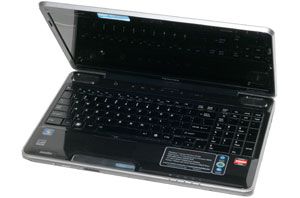
Toshiba A505D-S6987: A Look at Turion II Ultra M600 Performance
Our review of the Toshiba A505D-S6987 brings us to an interesting crossroads. In recent years Toshiba has made a habit of producing fairly well-rounded and inexpensive notebooks that are...
22 by Dustin Sklavos on 6/23/2010
 Facebook
 Twitter
 RSS
RSS


