Let's recap the current smartphone/tablet SoC landscape. Everything shipping today is built on a 4x-nm process, built either at Global Foundries, Samsung, TSMC or UMC. Next year we'll see a move to 28nm (bringing better performance and power characteristics) but between now and the end of 2012 there will be a myriad of designs available on the market.
The table below encapsulates much of what you can expect over the next 12+ months:
| 2011/2012 SoC Comparison | |||||||
| SoC | Process Node | CPU | GPU | Memory Bus | Release | ||
| Apple A5 | 45nm | 2 x ARM Cortex A9 w/ MPE @ 1GHz | PowerVR SGX 543MP2 | 2 x 32-bit LPDDR2 | Now | ||
| NVIDIA Tegra 2 | 40nm | 2 x ARM Cortex A9 @ 1GHz | GeForce | 1 x 32-bit LPDDR2 | Now | ||
| NVIDIA Tegra 3/Kal-El | 40nm | 4 x ARM Cortex A9 w/ MPE @ ~1.3GHz | GeForce++ | 1 x 32-bit LPDDR2 | Q4 2011 | ||
| Samsung Exynos 4210 | 45nm | 2 x ARM Cortex A9 w/ MPE @ 1.2GHz | ARM Mali-400 MP4 | 2 x 32-bit LPDDR2 | Now | ||
| Samsung Exynos 4212 | 32nm | 2 x ARM Cortex A9 w/ MPE @ 1.5GHz | ARM Mali-400 MP4 | 2 x 32-bit LPDDR2 | 2012 | ||
| ST-Ericsson NovaThor LP9600 (Nova A9600) | 28nm | 2 x ARM Cortex-A15 @ 2.5GHz | IMG PowerVR Series 6 (Rogue) | Dual Memory | 2013 | ||
| ST-Ericsson Novathor L9540 (Nova A9540) | 32nm | 2 x ARM Cortex A9 @ 1.85GHz | IMG PowerVR Series 5 | 2 x 32-bit LPDDR2 | 2H 2012 | ||
| ST-Ericsson NovaThor U9500 (Nova A9500) | 45nm | 2 x ARM Cortex A9 @ 1.2GHz | ARM Mali-400 MP1 | 1 x 32-bit LPDDR2 | Now | ||
| ST-Ericsson NovaThor U8500 | 45nm | 2 x ARM Cortex A9 @ 1.0GHz | ARM Mali-400 MP1 | 1 x 32-bit LPDDR2 | Now | ||
| TI OMAP 4430 | 45nm | 2 x ARM Cortex A9 w/ MPE @ 1.2GHz | PowerVR SGX 540 | 2 x 32-bit LPDDR2 | Now | ||
| TI OMAP 4460 | 45nm | 2 x ARM Cortex A9 w/ MPE @ 1.5GHz | PowerVR SGX 540 | 2 x 32-bit LPDDR2 | Q4 11 - 1H 12 | ||
| TI OMAP 4470 | 45nm | 2 x ARM Cortex A9 w/ MPE @ 1.8GHz | PowerVR SGX 544 | 2 x 32-bit LPDDR2 | 1H 2012 | ||
| TI OMAP 5 | 28nm | 2 x ARM Cortex A15 @ 2GHz | PowerVR SGX 544MPx | 2 x 32-bit LPDDR2 | 2H 2012 | ||
| Qualcomm MSM8x60 | 45nm | 2 x Scorpion @ 1.5GHz | Adreno 220 | 1 x 32-bit LPDDR2* | Now | ||
| Qualcomm MSM8960 | 28nm | 2 x Krait @ 1.5GHz | Adreno 225 | 2 x 32-bit LPDDR2 | 1H 2012 | ||
The key is this: other than TI's OMAP 5 in the second half of 2012 and Qualcomm's Krait, no one else has announced plans to release a new microarchitecture in the near term. Furthermore, if we only look at the first half of next year, Qualcomm is the only company that's focused on significantly improving per-core performance through a new architecture. Everyone else is either scaling up in core count (NVIDIA) or clock speeds. As we've seen in the PC industry however, generational performance gaps are hard to overcome - even with more cores or frequency.
Read on for our analysis of Qualcomm's Krait architecture and the MSM8960.
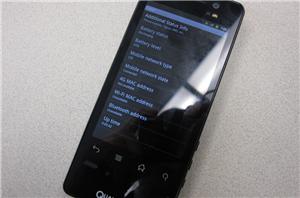
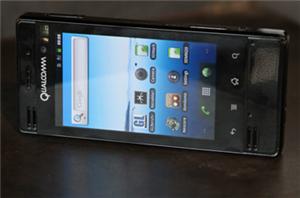
At both CES and MWC, Qualcomm teased us with their dual core Snapdragon SoC, the MSM8x60. First we saw it from afar, then they let us run tests on it, finally they let us take one with us to benchmark thoroughly. We've got the first Adreno 220 GPU benchmarks from the MSM8660 in a Qualcomm Mobile Development Platform already taken care of and are ready to share.
Read on for all the results!