



Sun's W2100z Dual Opteron Workstation
by Kristopher Kubicki on October 27, 2004 12:05 AM EST- Posted in
- Systems
Introduction
When Sun made their first announcement that they were going to embrace AMD's x86_64 push for practical desktop 64-bit computing, we were excited. Then we started hearing details about Solaris 10, Looking Glass, Sun Java Desktop System and countless other new technologies to catapult Sun back into the workstation market, even if they weren't going to use those incredible SPARC processors exclusively anymore. When Sun approached us for an opportunity to check out their newest dual Opteron 250 based performance workstation, we had to oblige!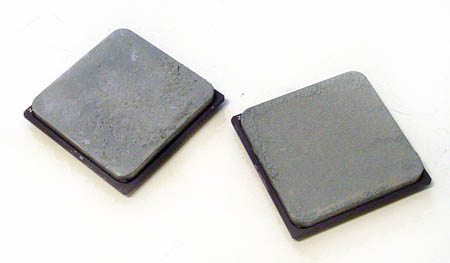
We are approaching our Sun w2100z as a system review, but in actuality, this is just as much a Linux review than anything else. We have already seen Linux performance tests of Opteron/Athlon 64 setups performing excellently in memory intensive applications, both on 32-bit and 64-bit platforms. Although most of our benchmarks are 64-bit Linux oriented today, we have a brief look at Sun's Java Desktop System 2.0 and Solaris 10 in the review, which are both 32-bit SMP kernels. We are also going to focus on some other operating systems configured for the w2100z as well as a slightly comparative analysis of a comparable system built with off-the-shelf components.
Ultimately, our goal will be to decide if Sun's w2100z is worthy of the buzz that it has created in the industry. We have structured our analysis so that anyone can easily compare the w2100z to their own test setup or even future setups that we have lined up for review. Most importantly, we will be assessing why one configuration performs better than another; benchmarks require us to read between the lines for the entire picture.
Eventually, we plan to build on this analysis of the Sun w2100z with comparisons from other Opteron workstations - this is the first in a series of Linux workstation articles.


 Facebook
 Twitter
 RSS
RSS


47 Comments
View All Comments
najames - Friday, October 29, 2004 - link
I use a Sunfire V440 daily at work. It is a 4cpu large entry level server seen here.http://store.sun.com/CMTemplate/CEServlet?process=...
I program daily on mainframe, Solaris, and PC. Benchmark programs I wrote took 38cpu seconds on the mainframe, 38cpu seconds on my PIII pc, 17cpu seconds on Solaris. Four programs submitted at once on the the mainframe took 38cpu seconds but wall time was hours, the PC choked, the Solaris server still did them in 17cpu seconds each in about the same wall time. The Solaris server didn't slow down, period. We have combined large programs that individualy would sometimes crash on the mainframe and the Solaris Unix server burns through them even with temp space going over 12gigs druing processing.
If the Sun Opteron server is anything like my little Sunny, they sould do very well.
Reflex - Friday, October 29, 2004 - link
*laff* Something tells me thats not the case.My curiosity is just that since these are obviously relabels, I am wondering who the original manufacturer is as the hardware is excellent and it might be nice to be able to acquire these for white box systems.
morespace - Friday, October 29, 2004 - link
Egad. You're absolutely correct. I didn't notice the daughterboard arrangement in that picture at first. It looks flat. But looking more closely at the placement of chips and capacitors on those motherboards, it's more than a family resemblance - they appear identical!I sense a conspiracy.
The hard drive enclosures appear different for what it's worth. Who makes these really? Apple?
Reflex - Friday, October 29, 2004 - link
I take that back, that is the same as the one I have on my bench, however their cabling is a bit more messy.Look closely. Anandtech did not show a straight out picture from the same angle, but thats the same motherboard in more or less the same chassis with a few modifications. The CPU, chipset, Adaptec chip, PCI and AGP slots are all in the same places on that board, both use the daughtercard method for the CPU, etc.
Thats why I am asking who actually makes that board and case, someone is preconfiguring the servers and Sun/IBM are labelling and reselling them.
Reflex - Friday, October 29, 2004 - link
That is not the same Intellistation that I have on my lab bench. I'll look up the model number when I go back in, but seeing as its friday night that won't be till monday.morespace - Friday, October 29, 2004 - link
Reflex, what are you on about? Here's a picture of the insides of an IBM Intellistation A Pro:http://www.digitalcad.com/articles/viewarticle.jsp...
Tell me, how does this look like a w2100z?
Nsofang - Friday, October 29, 2004 - link
Zealots on both sides always mess up any discussion. This is a review about the Sun WORKSTATION, yet punks bring in supercomputer arguments. WTF!! is wrong with you guys! If anything bring in arguments/discussions about comparable hardware G5's/Itaniums/NEC/SGI, something that adds to the discussion, not subtract.slashbinslashbash - Thursday, October 28, 2004 - link
#33: You're right, for "general purpose computing" FLOPS is a pretty bad measure, but you've just changed your argument. For "high-end workstations" (what this argument is supposedly about) FLOPS can be *very* relevant, depending on the application.#34: I meant "nothing special" in terms of how supercomputing clusters are normally hooked up. Just a few years ago, Gigabit Ethernet cards cost $200, and their most prominent application was in supercomputing clusters.
Reflex - Thursday, October 28, 2004 - link
#37: Yeah, I know, I was in a mood yesterday or I wouldn't have let him get me into it. ;)And you just made the point I was trying to make. While price can be an issue in the corporate space, its only the deciding factor when all other factors are equal. I was not even trying to get into a Mac vs. PC debate, this really has nothing to do with Mac's.
I do want to know who is building these workstations though, because its not Sun despite the label.
bob661 - Thursday, October 28, 2004 - link
Reflex,He's trying to pull you off the subject. Supercomputers are irrelevant in this discussion. The thread is about workstations. Sun markets workstations. Apple does not. I know our company doesn't care about a couple hundred or even a couple thousand dollar difference if the service is impeccable and the workstation performs the task without headaches.