



Android 3.2 on the ASUS Eee Pad Transformer: Tested
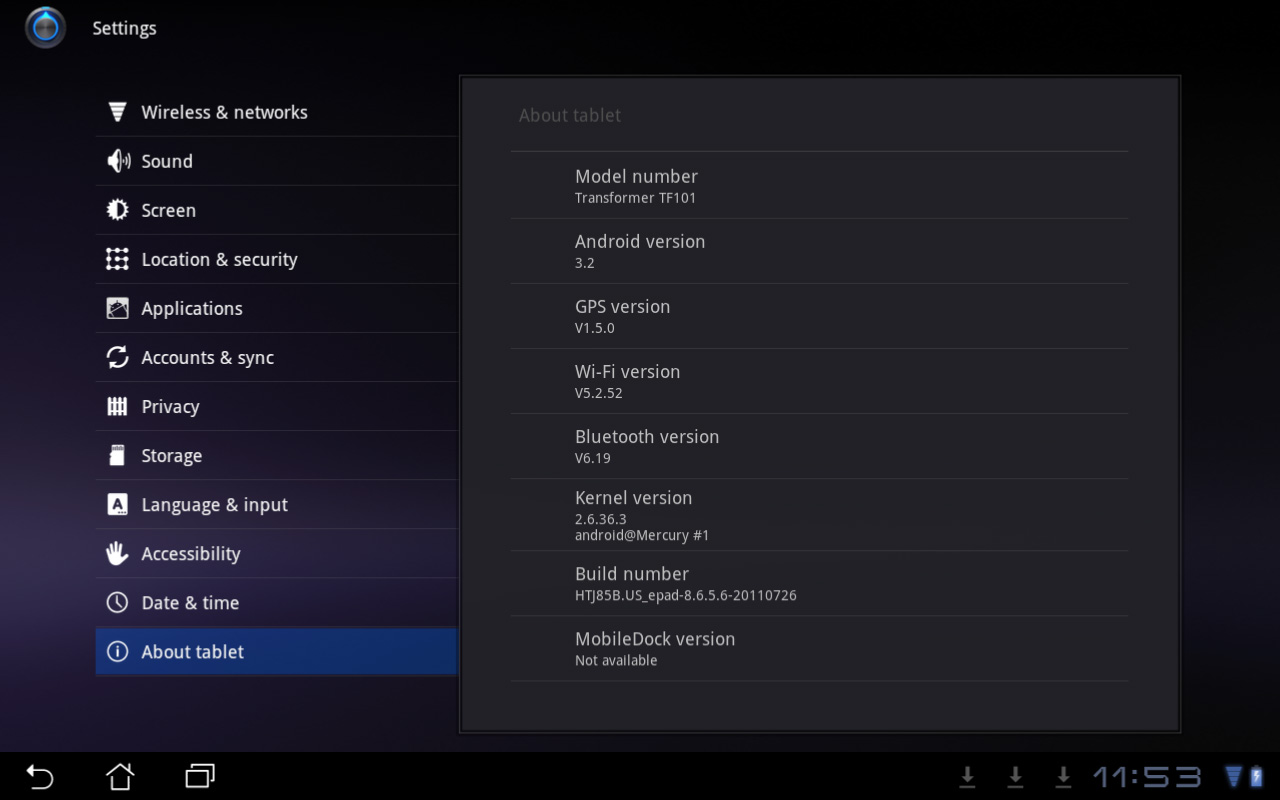
by Anand Lal Shimpi on August 3, 2011 2:43 AM ESTBack in June, Google announced that Android 3.2 would be arriving beginning this summer for Honeycomb tablets. Motorola, being Google's launch partner for Honeycomb, was first to get the update. Next on the list was ASUS and as of late last week, Eee Pad owners in the US started getting their version of Android 3.2. I updated my Eee Pad over the weekend and the process went seamlessly. As long as you've got more than 25% left on your battery you're good to go. If you haven't updated your Eee Pad since the launch you'll need two updates to get to 3.2.
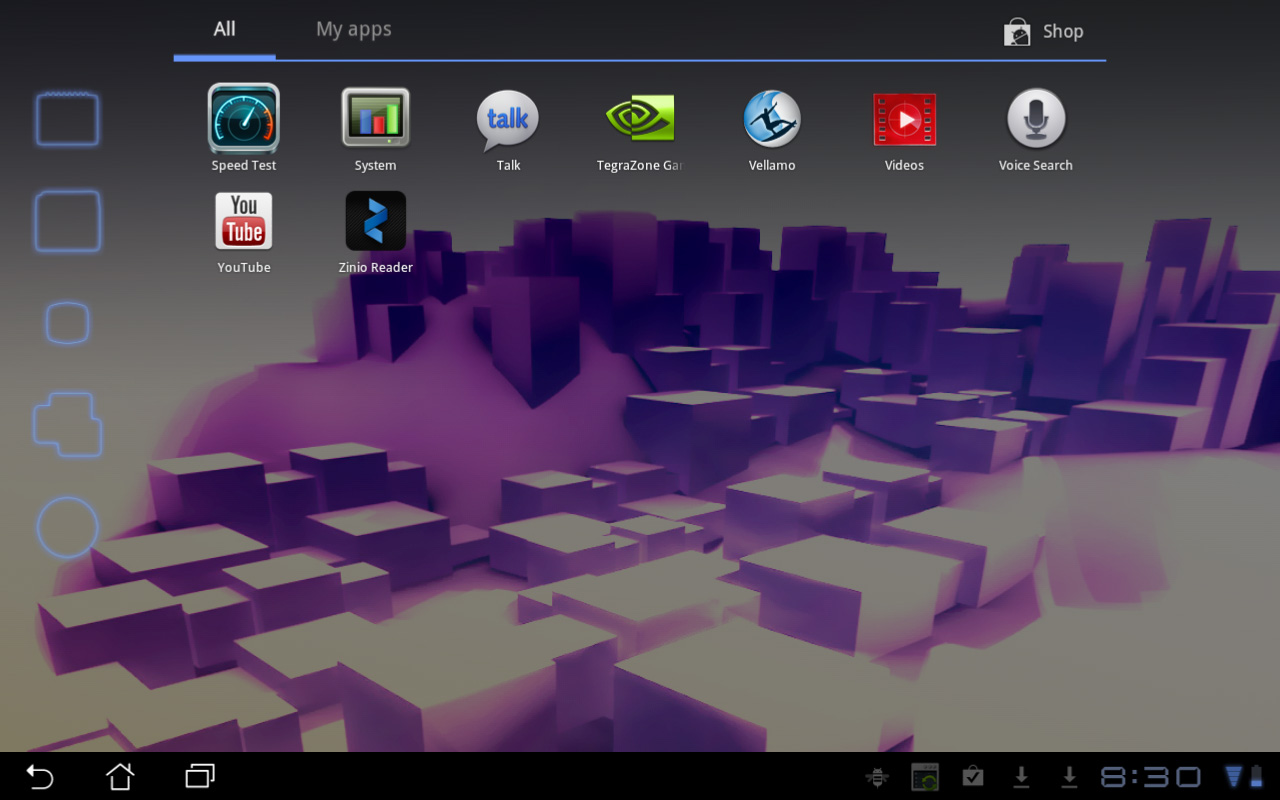
The 3.2 update on the Eee Pad brings about a new splashscreen as well as a TegraZone app. TegraZone is NVIDIA's custom marketplace that leverages the Android Market. TegraZone is used exclusively for games that are optimized for NVIDIA's Tegra 2 SoC.
The update itself is relatively minor from a feature standpoint. The version notes help explain the changes:
- Optimizations for a wider range of tablets
Android 3.2 includes a variety of optimizations across the system to ensure a great user experience on a wider range of tablet devices.
- Compatibility zoom for fixed-sized apps
Android 3.2 introduces a new compatibility zoom mode that gives users a new way to view fixed-sized apps on larger devices. The new mode provides a pixel-scaled alternative to the standard UI stretching for apps that are not designed to run on larger screen sizes, such as on tablets. The new mode is accessible to users from a menu icon in the system bar, for apps that need compatibility support.
- Media sync from SD card
On devices that support an SD card, users can now load media files directly from the SD card to apps that use them. A system facility makes the files accessible to apps from the system media store.
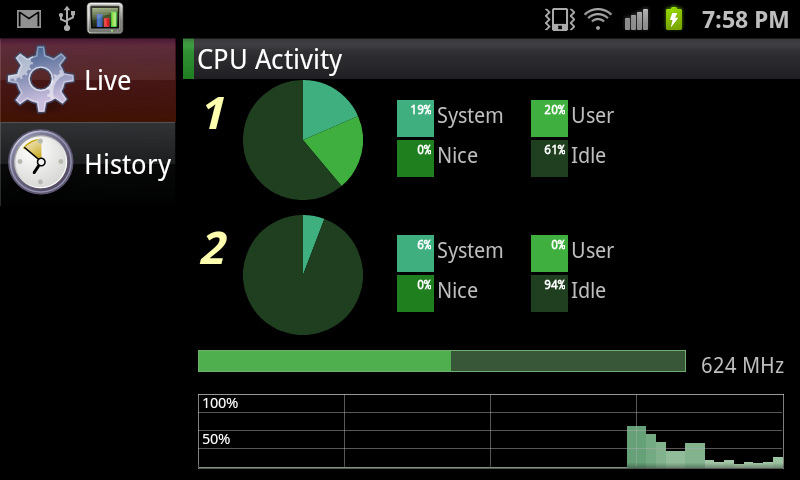
The first point is rather vague but the big news is of course the second point on the list. Modern Android smartphones run at one of three native resolutions: 800 x 480, 854 x 480 or 960 x 540. Honeycomb tablets on the other hand all run at 1280 x 800. What happens when you run an app optimized for the display resolution of an Android smartphone on a Honeycomb tablet? Many apps just expand to fit the screen. If they were optimized for one of the aforementioned resolutions, they just stretch by adding more horizontal/vertical resolution until they occupy the entire viewport. Here's an example using the SystemPanel app, an AnandTech favorite:
 |
 |
To the left we have SystemPanel running at 800 x 480 on an Android smartphone, and to the right we have it running at 1280 x 800 on the Eee Pad Transformer. The UI just scales up. Now take a look at the Speedtest app:
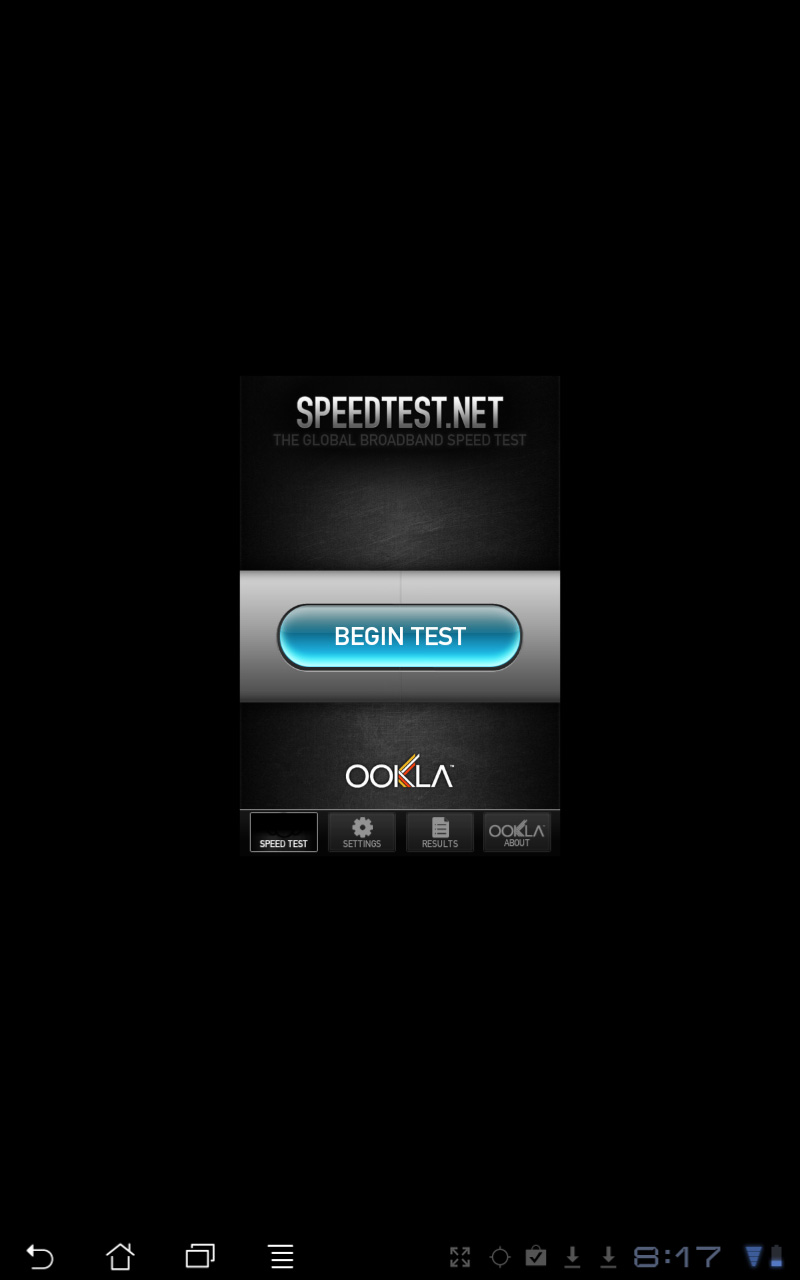
It doesn't scale up, it's hard coded to an 800 x 480 resolution and appears as such in the center of our Eee Pad. Android 3.2 addresses this very problem with its compatibility zoom feature:
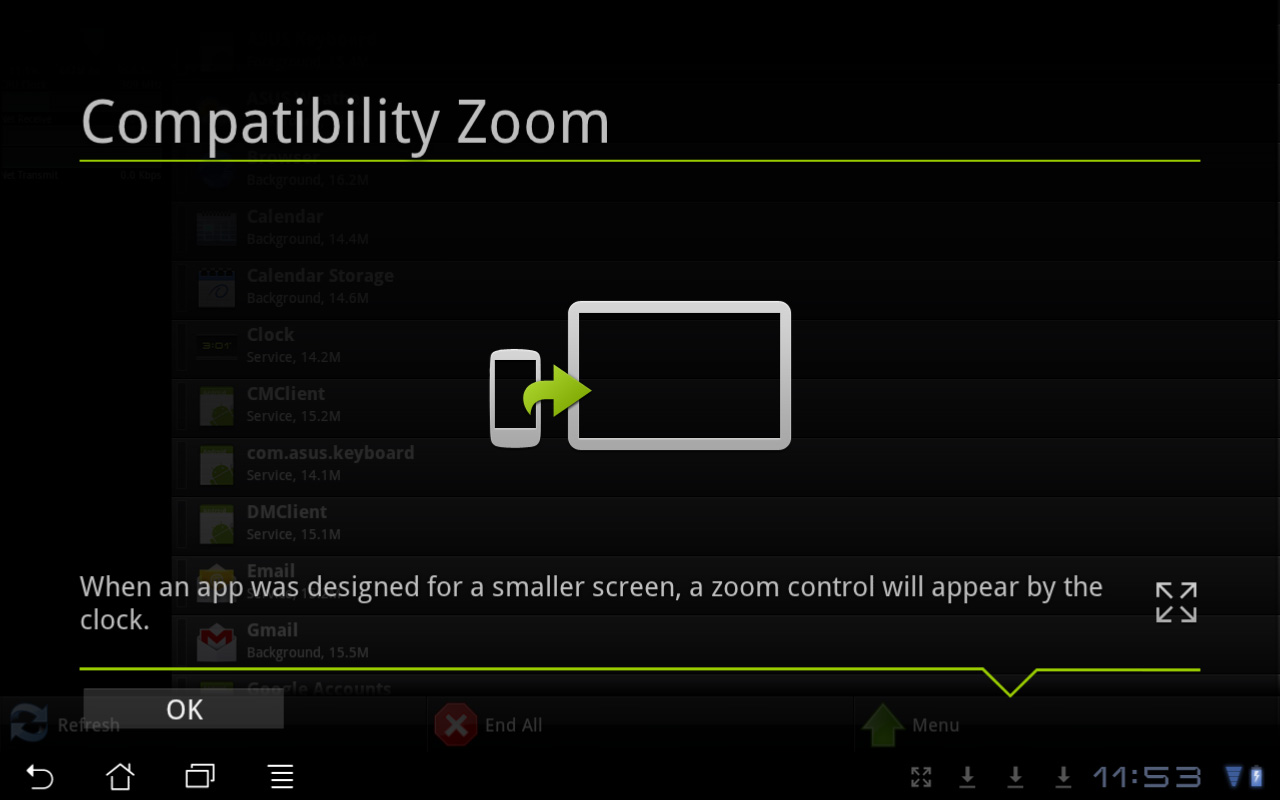
Here's the same Speedtest app but with the zoom control set to...zoom:
|
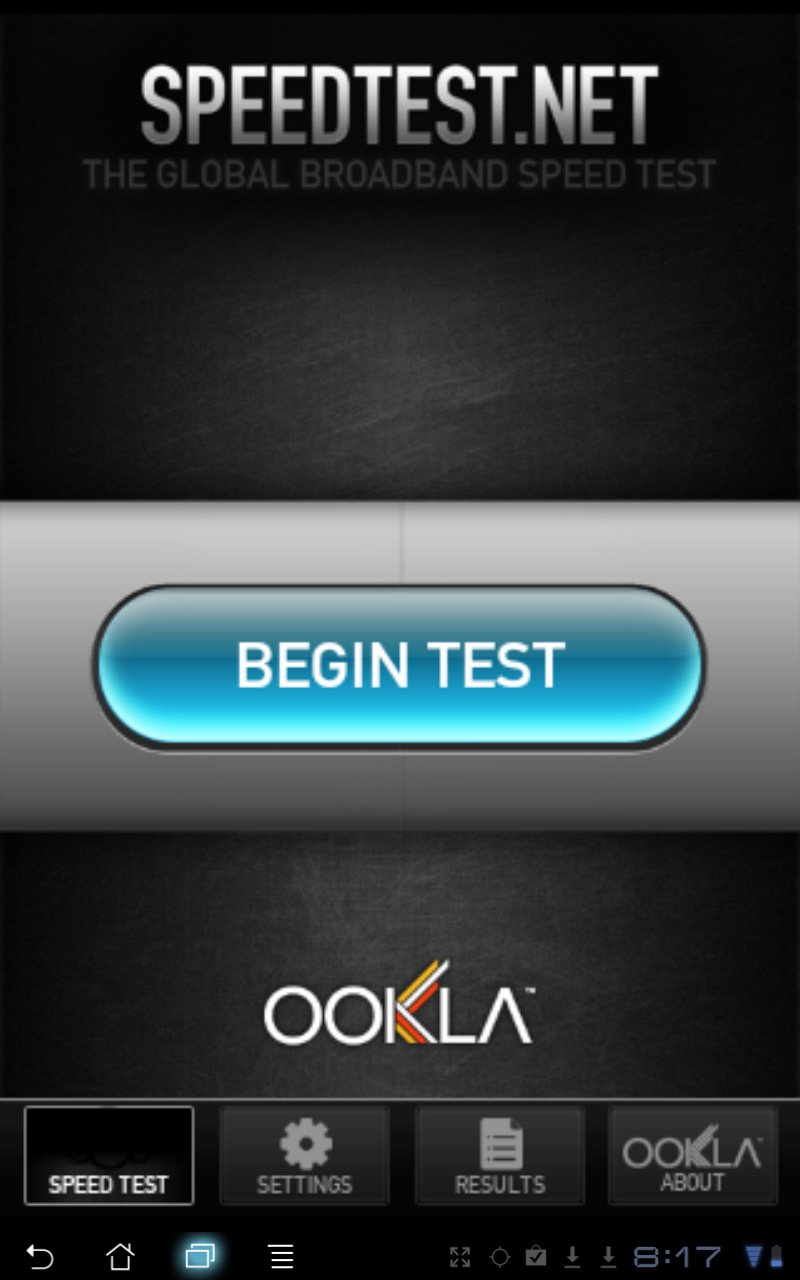 |
If you click to enlarge the image above you'll see it's not particularly pretty (interpolated scaling rarely is) but it does completely fill the screen.


 Facebook
 Twitter
 RSS
RSS


30 Comments
View All Comments
Ralos - Wednesday, August 3, 2011 - link
... when will they fix the WiFi and YouTube HD issues?I have two WiFis in my house. One (802.11n) is seen as half power two floors away (no concrete, no metal), and the other one (802.11g) is "out of reach" even when standing 10 feet from it. As for YouTube HD, it may takes 30 minutes to watch a 5 minutes video as it spends most of the time buffering.
But the most annoying one, and I can't understand why it hasn't been addressed yet is when will they add an option to disable the "clicking" on the trackpad. Ever try to write anything (email or whatever) on the keyboard? If you don't disable the trackpad altogether, then as soon as the palm of your hand will touch the pad, the cursor will be moved to somewhere else, and so will the rest of your typing.
I love the form factor, display and all, but this is just not "there" yet.
quiksilvr - Wednesday, August 3, 2011 - link
On the top left, there is a dedicated key for disabling the trackpad. It should be the fourth one from the top left.Ralos - Wednesday, August 3, 2011 - link
I do not wish to disable the trackpad altogether, just the "clicking" as is possible on any laptops. I'd like to be able to move the "mouse", but that not the slightest touch on the trackpad be registered as a click. Right now, I'm typing this on a desktop and the mouse points somewhere on the second line of this text. If I was on the Transformer and my palm (base of thumb) would just brush the trackpad, the the cursor would be moved there, and this text would be typed in the middle of this message...darkhawk1980 - Wednesday, August 3, 2011 - link
The Youtube HD issues are your own. If your tablet is spending too much time 'buffering' a video, I'd suggest a better internet connection. Youtube HD works fine for me over my crappy DSL.The trackpad is an issue they need to correct though. There should be an option that disables the trackpad during typing. That would pretty much fix every issue that is related to the trackpad on the dock.
nickfrost - Wednesday, August 3, 2011 - link
Actually the Youtube HD issues are from the update to 3.2. I'm in the same situation. Right after the update my TF shows half the signal strength and I can't download anything more than a couple of MB at a time. Streaming video is impossible.@Ralos check http://www.transformerforums.com/forum/asus-transf... and http://forum.xda-developers.com/forumdisplay.php?f... for solutions to the WiFi problem. I had to set my TF with static IP instead of DHCP to alleviate (not eliminate) the problems. It seems that the TF is renewing its DHCP lease evry couple of minutes thus dropping the connection.
Anand, you didn't experience this issue?
Ralos - Wednesday, August 3, 2011 - link
I totally confirm that the YouTube HD issues that I have were there in 3.1 and are not new to 3.2.Anand Lal Shimpi - Wednesday, August 3, 2011 - link
Are you talking about the YouTube app? I've confirmed that seems to work fine post update even with HD content. Even using the YouTube desktop site I can stream video but Flash doesn't run well enough on these tablets to really provide a good experience (dropped frames but no rebuffering).Signal strength hasn't been an issue post update either, at least in my office but I haven't done any edge case testing.
Take care,
Anand
nickfrost - Wednesday, August 3, 2011 - link
Yes. Using the Youtube App to watch an HD video results in frequent buffering (not stuttering). This happened for me right after the update to 3.2. It seems that the TF is trying to renew the DHCP lease every couple of minutes, therefore the connection drops. I'm not even able to download 8MB of PDF file!I set the connection to use a static IP and now it is better.
But still I experience a major problem with signal strength. My router is in my home office upstairs; my family room is directly below it. With 3.1 I used to get 4 bars, with 3.2 I get 2. Nothing else is changed except my TF firmware.
Take a look at https://code.google.com/p/android/issues/detail?id...
Ralos - Wednesday, August 3, 2011 - link
I can stream music alright. I have a 30Mbits/s connection (confirmed through Speedtest.Net on a desktop), and I access it through a 802.11n triple channel SMC wireless router. It is only showed as being connected to half the power (2 bars out of 4) on the Transformer. The other WiFi (a 802.11g one) is 10 feet away from the tablet, and it can't even connect to it. If it's been a long time, it will be marked as full strength, but when I try to connect to it, it fails, then marks it as out of reach.So far, it's only on YouTube *HD* that I experience this problem. *Normal* videos on YouTube (240 or 320p) seem ok.
Oh, and half the time I try to reach the Android Market, that fails too.
darkhawk1980 - Wednesday, August 3, 2011 - link
As I have said, it is just you. I can play them just fine on my (B50) Asus Transformer without ANY issues.Go to the XDA Dev forums. There are threads on how to fix your issue, both with Wifi as well as the Youtube HD problem. Many people like to assume it's a problem on the whole, it's not. It's only with specific people. Clear your cache and I'd be willing to bet the issue goes away after a restart.
As I said, I have no issue with 720P HD videos on my Transformer.