



OCZ Vertex 3 MAX IOPS & Patriot Wildfire SSDs Reviewed
by Anand Lal Shimpi on June 23, 2011 4:35 AM ESTPatriot's Wildfire
OCZ isn't the only company experimenting with SF-2281 drives and 32nm NAND. Patriot sent me the Wildfire, its first SF-2281 SSD. After a quick run through some performance tests I grew suspicious as it performed a lot like the Vertex 3 MAX IOPS I just tested. Cracking open the case I found the reason:
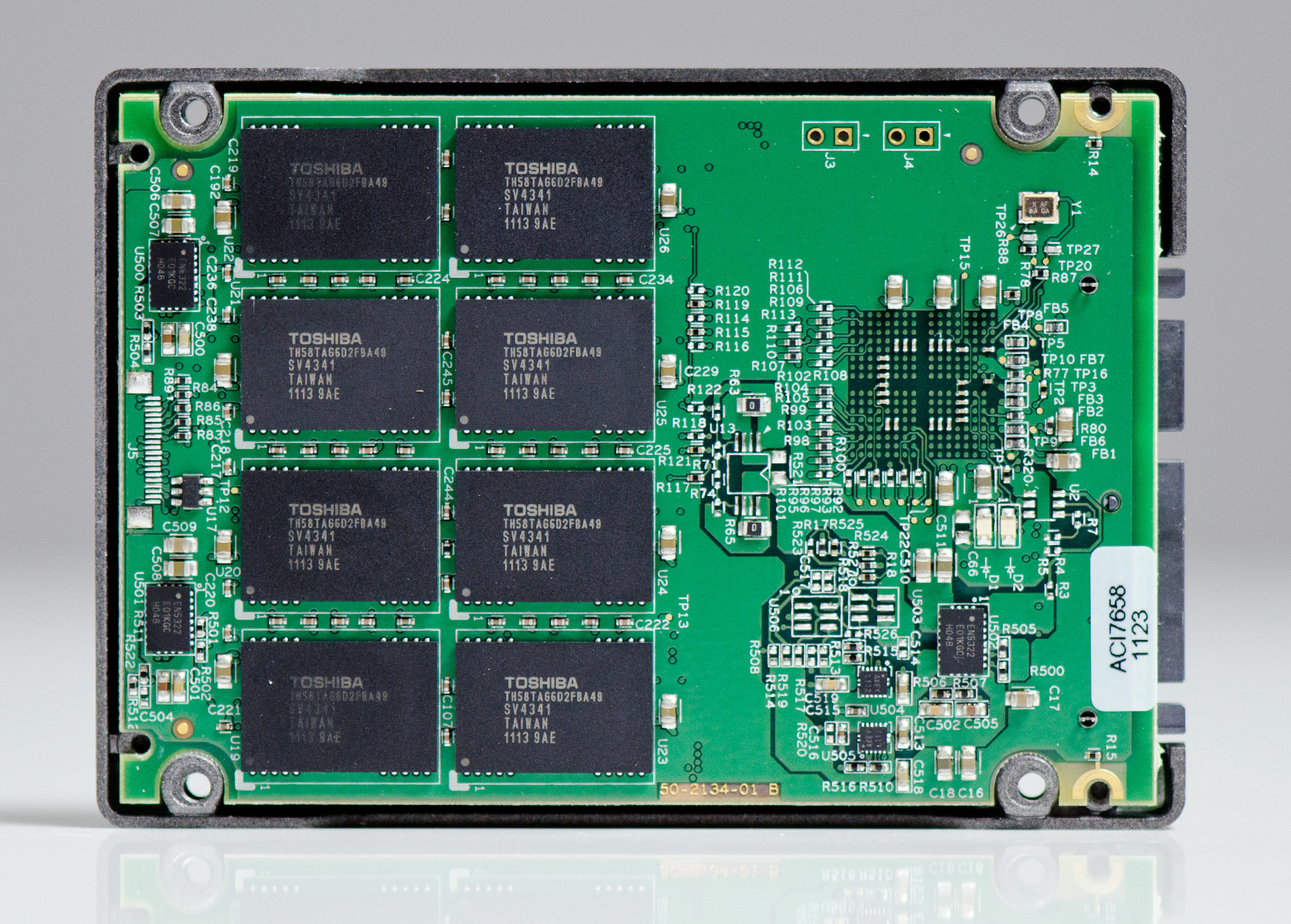
The Wildfire also uses 32nm Toshiba NAND. The 120GB drive Patriot sent has a 16 chip, 2 die per package configuration - compared to 8 chips with 4 die per package in the Vertex 3 MI. I don't see an advantage for one approach vs. the other. Patriot is targeting a $299 MSRP for the Wildfire, which would put it lower than the Vertex 3 MAX IOPS - although anything is possible once the drive goes on sale on the 28th of this month.
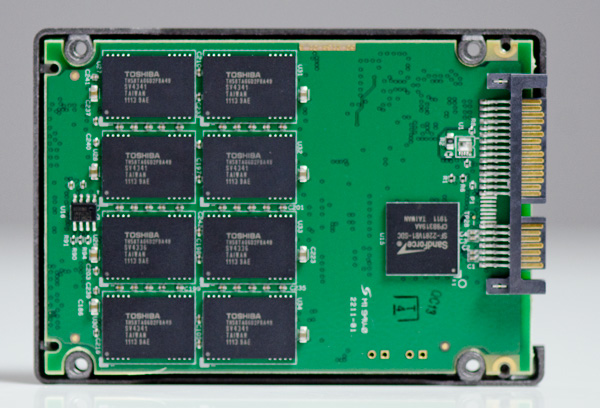
Patriot confirmed that the Wildfire would only use 32nm Toshiba NAND and that any NAND vendor changes would take place in other lines or subsets of the Wildfire brand.
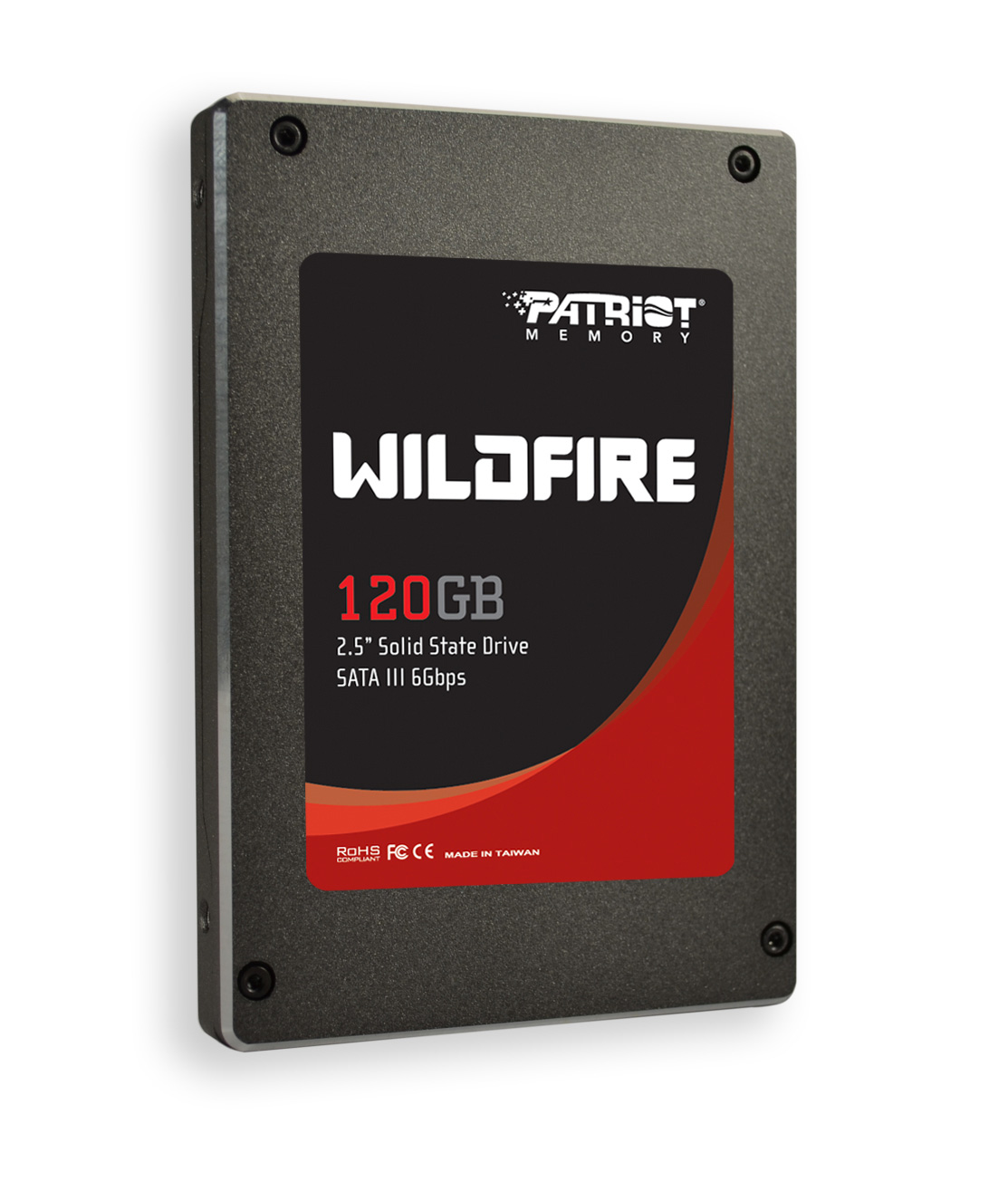
Patriot uses a different PCB layout from OCZ. I don't know that there's an advantage to either layout, they are just different.
The unit I have here shipped with SF firmware revision 3.19, which is equivalent to OCZ's revision 2.08 firmware as far as I know. No word on when we'll see a 2.09 equivalent.
Performance of the Wildfire (as you'll see from the tests that follow) is identical to the Vertex 3 MAX IOPS. To keep the charts more manageable I've only included 6Gbps results from the Wildfire in most areas. Performance on a 3Gbps interface is identical to a 3Gbps Vertex 3 MAX IOPS as you'd expect.
The Test
| CPU | Intel Core i7 965 running at 3.2GHz (Turbo & EIST Disabled) Intel Core i7 2600K running at 3.4GHz (Turbo & EIST Disabled) - for AT SB 2011, AS SSD & ATTO |
| Motherboard: | Intel DX58SO (Intel X58) Intel H67 Motherboard |
| Chipset: | Intel X58 + Marvell SATA 6Gbps PCIe Intel H67 |
| Chipset Drivers: | Intel 9.1.1.1015 + Intel IMSM 8.9 Intel 9.1.1.1015 + Intel RST 10.2 |
| Memory: | Qimonda DDR3-1333 4 x 1GB (7-7-7-20) |
| Video Card: | eVGA GeForce GTX 285 |
| Video Drivers: | NVIDIA ForceWare 190.38 64-bit |
| Desktop Resolution: | 1920 x 1200 |
| OS: | Windows 7 x64 |


 Facebook
 Twitter
 RSS
RSS


112 Comments
View All Comments
Paazel - Thursday, June 23, 2011 - link
Do you allow your computer to sleep? I had a Vertex 2 die on me, and forum speculation led me to believe that allowing my computer to sleep may have been the culprit.Anand Lal Shimpi - Thursday, June 23, 2011 - link
My personal machine that it's deployed in is a notebook that is allowed to sleep (and does so) regularly.I also don't do any of the odd stability optimizations on my testbeds either. Sleep is always enabled and definitely allowed to happen (I don't always catch my testbeds after they've finished a long test so they'll go off to sleep).
While I do believe that earlier issues may have been sleep related, I'm not sure about this one in particular.
Take care,
Anand
Ryan Smith - Thursday, June 23, 2011 - link
Just to throw in my own $0.02, although I put my Vertex 2 in a desktop, my results are the same as what Anand has seen. My desktop hybrid sleeps regularly, and I have not encountered any issues.JasonInofuentes - Friday, June 24, 2011 - link
+1 On an Agility 2 90GB, MicroCenter Sandforce 64GB drive and Agility 2 40GB in a desktop, netbook and HTPC setting, all allowed to sleep. Indeed I blame many of my PC related issues to my inability to sleep.sam. - Saturday, June 25, 2011 - link
I have a 120GB Vertex with the Indilinx controller and had mine die on me after about a year and a half of average use in my laptop. (Mind you the RMA process was good, and they replaced it with a new identical SSD). I had nearly 2700 power on times (putting my laptop to sleep multiple times a day) and 3.7 terrabytes written onto the SSD before it started corrupting registry files and BSODing.To be honest, a year and a half as a lifespan seems really bad for what was a high end product, though from what I hear the Sandforce controller is better in terms of reliability. I am still willing to let my laptop sleep though, though just doing my best to write less to the SSD.
kahwaji_n - Thursday, June 23, 2011 - link
i don't think so, maybe if your computer hibernate a Lot then it may be the reason for that, cause when computer sleep the ram will still hold the data and little data has to be written to disk drive contrary to hibernation where the Ram will put to sleep and all data will be written back to disk drive, if you have windows 7 and SSD in raid setup (where no trim command could be pass to controller) and your computer hibernate periodically! run the index Performance in windows 7 and see how the Performance is degraded severely.iwod - Thursday, June 23, 2011 - link
I think the first few Graph / Charts pretty much sums up what i have been saying. With Double the Seq Read, Random Read numbers, you only get less then 10% performance difference. The bottleneck for majority of our workload has shifted back from SSD storage to CPU processing speed.Which means, the best time to get an SSD is now!, If you can afford it and the Storage space is enough for a main OS drive.
L. - Thursday, June 23, 2011 - link
Err .. it's going to be dirt cheap pretty soon .. I wouldn't spend "GFX bucks" on a storage device tbh. (Seriously, for that price I prefer my 2TBWDgreen raid10 ... makes so much more sense even though it does not serve the same purpose...)khan321 - Thursday, June 23, 2011 - link
Why no mention of the increased lifespan of 32nm NAND? This is a massive benefit to me over 25nm.B3an - Thursday, June 23, 2011 - link
Because Anand has pointed this out before. Theres absolutely nothing to worry about regarding the lifespan on 25nm with a good controller, as it would last many many decades. The nand flash will lose it's charge before this happens anyway.