



Intel Core 2 Chipset Power Consumption Shootout
by Anand Lal Shimpi on October 12, 2006 12:53 PM EST- Posted in
- CPUs
Since the introduction of Intel's 90nm Prescott core, power consumption has been at the forefront of any CPU related discussion. But as both AMD and Intel strive towards introducing more power efficient cores we must turn our attention elsewhere to find new areas where power savings are necessary. The GPU is next on the chopping block for power consumption, but we've still got a little time before both ATI and NVIDIA unveil their new high DirectX 10 parts fully equipped with very high power consumption. While we wait for the next-generation of powerful GPUs and quad-core CPUs to debut, we decided to take a look at the power consumption of an often overlooked component in the system: the chipset.
Dutifully playing its role as traffic cop in any modern system, the chipset has to deal with getting data from each and every high speed, high powered component in the system and directing it to the right place. Thankfully the amount of logic in a chipset is nothing near that of a CPU, but given its role in a high performance system, the chipset can easily be a notable consumer of power. The question is - are some chipsets better than others for power consumption?
There have been obvious examples in the past where chipsets varied dramatically in power consumption, like ATI's CrossFire 3200 chipset vs. NVIDIA's nForce 590 SLI, the latter of which consumed significantly more power. But what about more mainstream offerings, and in particular, mainstream chipsets that support Intel's Core 2 processors - is there a noticeable difference in performance, power consumption and overall performance per watt between them?
We're asking this question now because it is inevitably the first question we need answered before we can start doing (as close to) apples-to-apples comparisons between CPUs with regards to power consumption. We chose to start with Core 2 platforms since that's the hot topic these days and power consumption/performance per watt is a very compelling reason to consider Intel's Core 2 line of processors.
The Platforms
We picked the three most popular mainstream Core 2 chipsets currently available for this comparison: Intel's P965, Intel's 975X and NVIDIA's nForce 570 SLI Intel Edition.
Intel P965 |
Intel 975X |
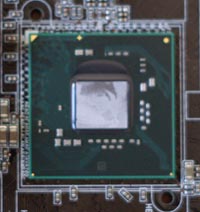 |
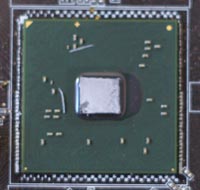 |
NVIDIA nForce 570 SLI |
|
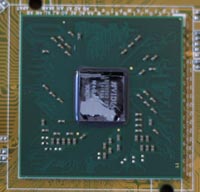 |
|
We will eventually add Intel's G965 to the mix but we'll save analysis of that chipset for our full review of the new integrated graphics core. These three chipsets represent the performance mainstream offerings any Core 2 purchaser would consider and a good starting point for these sorts of comparisons. Obviously there are other chipsets that we are interested to look at, for example VIA's PT880 and Intel's 945G, but we will have to save those for a later date in the interest of time.
As luck would have it, ASUS makes a motherboard based on all three chipsets we're interested in comparing today and thus we used all ASUS platforms for today's article.
Representing the Intel P965 chipset we have ASUS' P5B Deluxe:
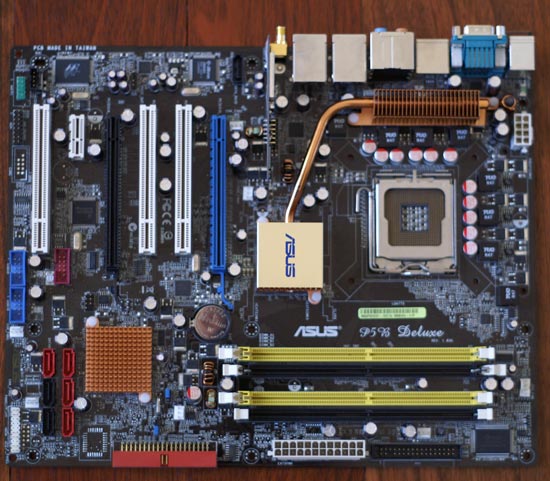
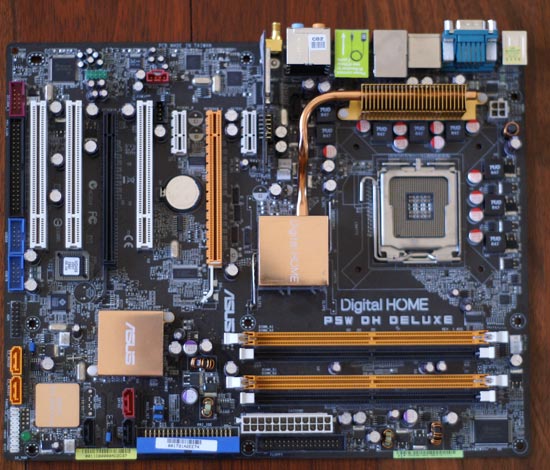
The ASUS P5W DH Deluxe, one of our first Core 2 motherboards, features Intel's 975X chipset:
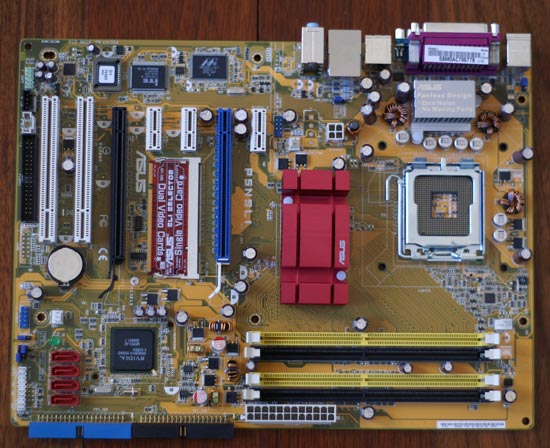
And finally we have ASUS' P5NSLI, a very affordable nForce 570 SLI solution:
Note that today's comparison is merely one aspect of comparing these three platforms; things like price, I/O, and networking performance as well as multi-GPU support are all important considerations that go beyond the scope of this article. Our concern today is power consumption and thus that's what we will focus on.


 Facebook
 Twitter
 RSS
RSS


44 Comments
View All Comments
PotatoMAN - Friday, December 29, 2006 - link
I am currently trying to in work a PC into my car, and I need to conserve every watt I possibly can (trying to use a DC to DC power supply to avoid losing power from inverting and converting DC->AC->DC). I think there are some limitations right now with the amount of power you can draw from a DC current in a car, and I need to keep my wattage below a certain threshold. Thanks to this review I can base my computer purchasing decisions for my car with some information in hand. Thanks again, Anandtech.Stomper88 - Monday, October 16, 2006 - link
Please post idle wattage as well. My computers sit there at idle much longer than any other state.rkhpedersen - Friday, October 13, 2006 - link
Why didn't you include the idle power consumption. Most computers are running idle far longer than actually doing something. It seems that the most important peice of info is left out of this test.mino - Friday, October 13, 2006 - link
Second that.Please add that chart, these are 3 numbers so it shouldn't be a problem provided you want to add it.
MadBoris - Friday, October 13, 2006 - link
I was just going to close down the site after briefly looking at some of the graphs.But came here first to check and post comments.
This information is pretty useless to me, but atleast a corporation 'may' benefit. Although I don't think corporations buy computer parts with a few watts power draw as the governing factor, unless the IT group has really lost it's way.
As far as Anandtech articles go, testing power draw would be more beneficial practical if showing differences between Core 2 Duo and Athlon X2 platforms. Also between GPU's ATI vs NVIDIA, current gen vs. last gen, etc. now that could be fairly interesting and would likely show a difference that actually means something.
This one was a sleeper for me. I think the idea of testing power draw is sound, just that the focus of testing, in this case, wasn't worth the time. Maybe next time.
mino - Friday, October 13, 2006 - link
Well, maybe we have lost our way ..Chipset power started to really matter the moment NB power got above 10W period.
The problem is heated chipset means more heat in case, less life for board, bigger problem to cool it down => active cooling => lower long-term stability ...
Is it 3W or 6W ? I don't care.
Is it 6W or 15W? That 15W variant is off the table even before I look after the features.
BPB - Friday, October 13, 2006 - link
Too bad they didn't include ASUS' new http://www.zipzoomfly.com/jsp/ProductDetail.jsp?Pr...">P5N32-SLI Premium/WiFi-AP nForce 590 SLI Intel Edition board. That's a board I'm considering for a third system. Right now we have two P5W DH Deluxe boards.Askari77 - Friday, October 13, 2006 - link
I'd like to see the results from a Intel 945G motherboard test as I heard it will support the Core 2 processor line. Unfortunately though I have a Gateway proprietary 945G board (codename Big Lake) but still built by Intel. So I'm more interested in compatibility rather than power consumption. Currently have a Pentium D, though I like the sound of the Core 2's.peldor - Friday, October 13, 2006 - link
Really, charts are great when you've got a half dozen video cards in a roundup and the results are different in each test. But in this case the results are essentially the same in every test: high, middle, low. It would have been a lot more efficient to present these in a table. Red for high, blue for low. All the results fit on one page.Staples - Friday, October 13, 2006 - link
Anandtech has never done an article that pitted the 865, 875 and 570 head to head on a Core 2. Sure there have been old reviews with both the intel chipssets with P4s but those were long ago and the performance may not be the same with the Core 2.Glad to see some benchmarks finally. Maybe I am crazy but this is the only hardware site I visit and I have been disapointed that you were lacking head to head chipset benchmarks when the Core 2 has been out for several months already.