



The Intel SSD 320 Review: 25nm G3 is Finally Here
by Anand Lal Shimpi on March 28, 2011 11:08 AM EST- Posted in
- IT Computing
- Storage
- SSDs
- Intel
- Intel SSD 320
It's called the Intel SSD 320, but the part number should give away just what we're looking at here:
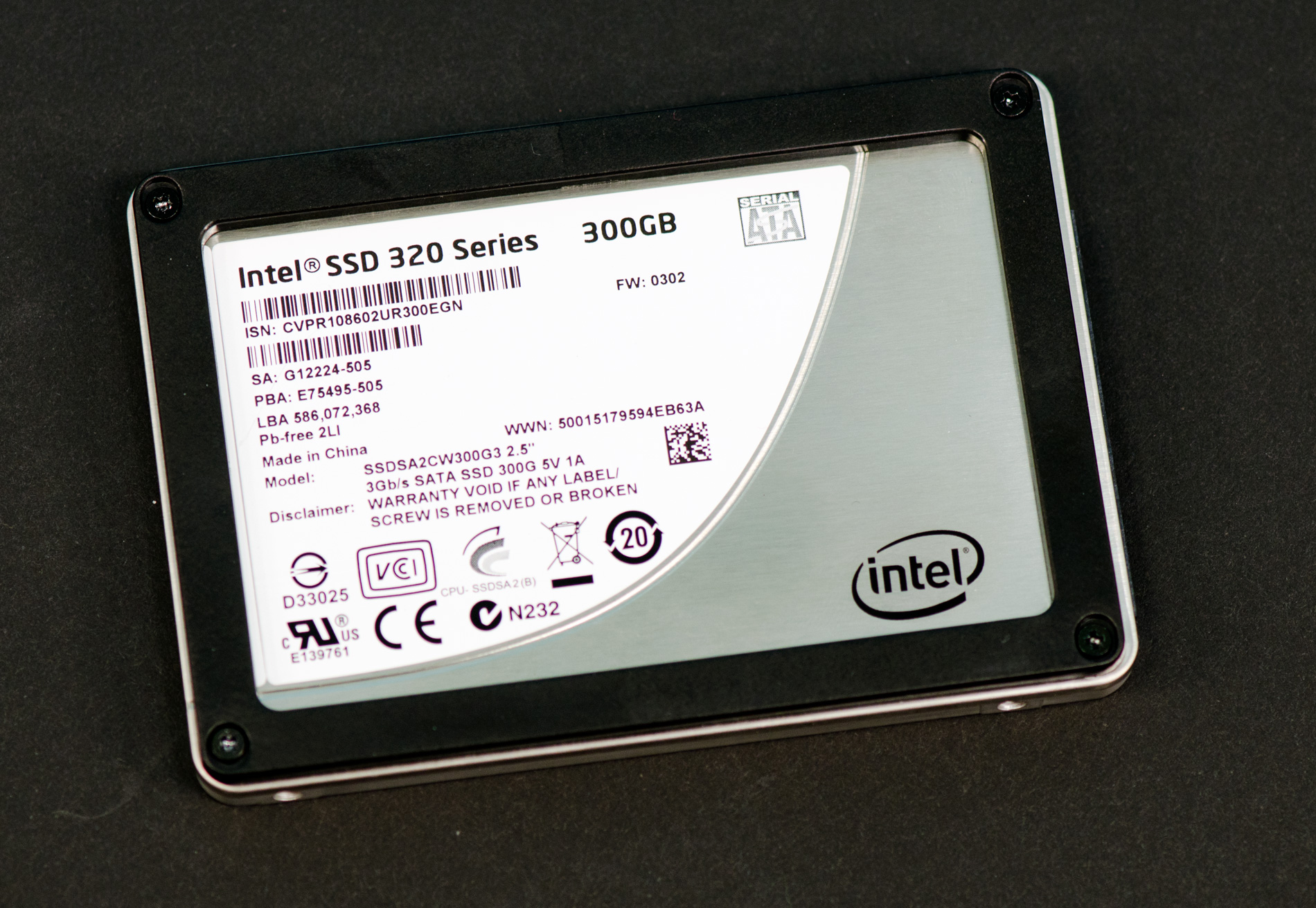
This is the long awaited third generation Intel based SSD. This is the G3. And at this point it's around 6 months late.
Back then it was simply called the Postville Refresh on Intel's roadmaps (Postville was the 34nm Intel X25-M G2). It would use 25nm Intel NAND, feature improved performance and full disk encryption - all behind a 3Gbps SATA interface.
When I spoke with Intel about the drive last year, all indications pointed to it being faster than drives based on SandForce's SF-1200 controller. And it is:
| Intel SSD 320 300GB vs. Corsair Force F120 | ||||
| AT Storage Bench 2011 (Heavy) | AT Storage Bench 2011 (Light) | |||
| Corsair Force F120 | 120.1 MB/s | 155.9 MB/s | ||
| Intel SSD 320 300GB | 132.8 MB/s | 161.7 MB/s | ||
Without turning to any real time compression/deduplication techniques, Intel has built a drive that's faster than the SF-1200. You also get that famed Intel SSD reliability:
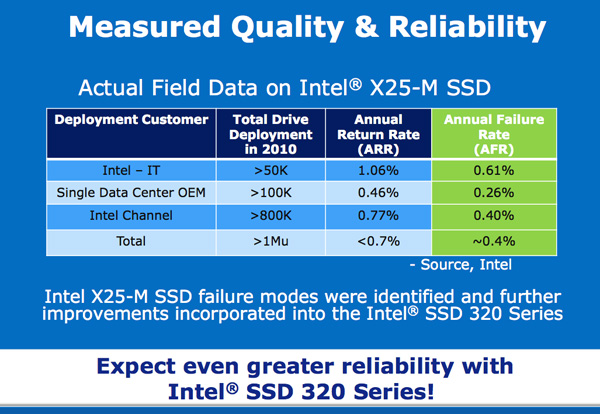
There's just one issue. The SF-1200 was the king of 2010. This year is shaping up to be all about the SF-2200 and the G3 isn't quite as competitive there. Intel realized this as well and thus we got the Intel SSD 510 to address the high performance market. Intel claims the 510 should have the same failure rate as the 34nm X25-M G2 at ~0.6% per year.
The Intel SSD 320 by comparison is aimed at the mainstream market. Remember that's what the M in X25-M always stood for to begin with. As a result we get lower pricing:
| Intel SSD Comparison | ||||||||||||
| X25-M G2 160GB | Intel SSD 320 40GB | Intel SSD 320 80GB | Intel SSD 320 120GB | Intel SSD 320 160GB | Intel SSD 320 300GB | Intel SSD 320 600GB | SSD 510 120GB | SSD 510 250GB | ||||
| User Capacity | 149GB | 37GB | 74GB | 111GB | 149GB | 279GB | 558GB | 111GB | 232GB | |||
| Random Read Performance | Up to 35K IOPS | Up to 30K IOPS | Up to 38K IOPS | Up to 38K IOPS | Up to 39K IOPS | Up to 39.5K IOPS | Up to 39.5K IOPS | Up to 20K IOPS | Up to 20K IOPS | |||
| Random Write Performance | Up to 8.6K IOPS | Up to 3.7K IOPS | Up to 10K IOPS | Up to 14K IOPS | Up to 21K IOPS | Up to 23K IOPS | Up to 23K IOPS | Up to 8K IOPS | Up to 8K IOPS | |||
| Sequential Read Performance | Up to 250MB/s | Up to 200MB/s | Up to 270MB/s | Up to 400MB/s (6Gbps) | Up to 500MB/s (6Gbps) | |||||||
| Sequential Write Performance | Up to 100MB/s | Up to 45MB/s | Up to 90MB/s | Up to 130MB/s | Up to 165MB/s | Up to 205MB/s | Up to 220MB/s | Up to 210MB/s (6Gbps) | Up to 315MB/s (6Gbps) | |||
| Price | $404 | $89 | $159 | $209 | $289 | $529 | $1069 | $284 | $584 | |||
It's still early in the 25nm ramp, but the 25nm Intel SSD 320 is cheaper than the 34nm Intel SSD 510. The only issue is that OCZ is very competitive with its pricing as well and compared to the Vertex 2, Intel's SSD 320 isn't really any cheaper. Intel likes to maintain its 65% profit margins so even though it makes the NAND and the controller in the 320, we're unlikely to see these drives drop below competitive pricing.
Intel expects the 25nm SSD 320 to be even more reliable than the 510 or X25-M.
The Same Controller
The Intel SSD 320, like the 310 and X25-M before it, uses an Intel branded controller. Opening up the 320 reveals a near identical controller to what we saw in the 34nm X25-M G2 housing:
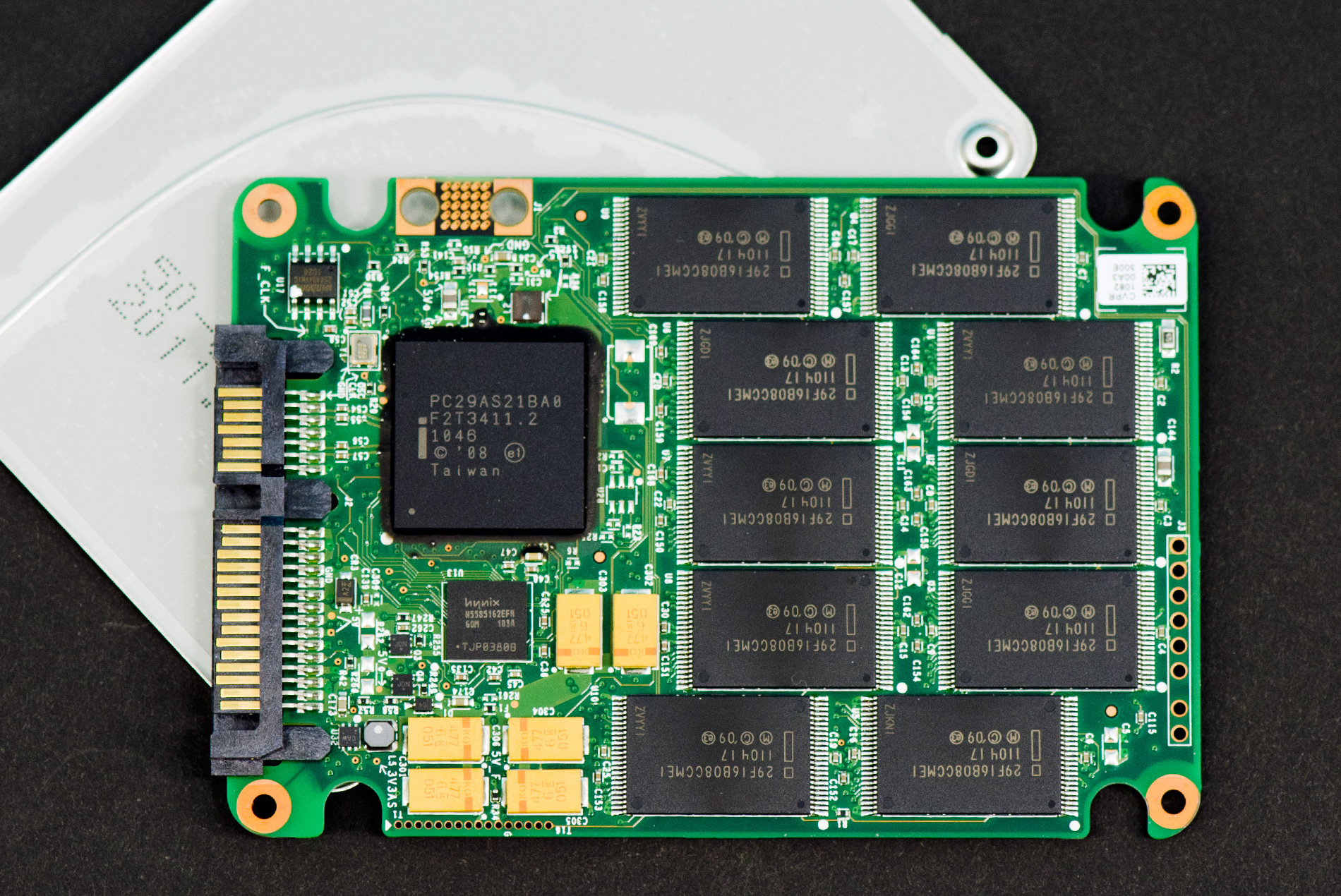
You'll notice the part number is identical to 2009's X25-M G2 controller. In fact, it's the same controller. Apparently the G2 controller had a number of features on-die, but not implemented in firmware. Things like full disk encryption and NAND redundancy never made it out in G2 but are here in the 320 all thanks to new firmware. And no, G2 owners aren't getting it.
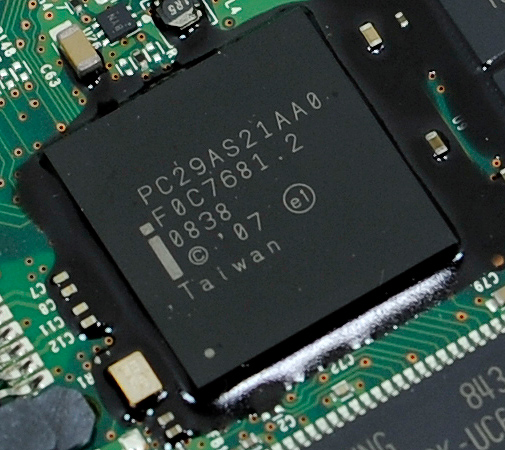
Intel's X25-M G1 Controller
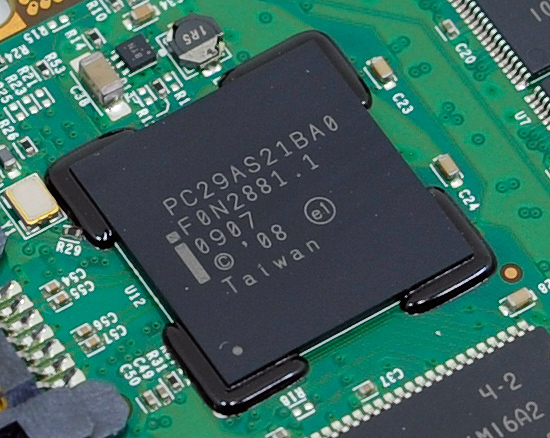
Intel's X25-M G2 Controller
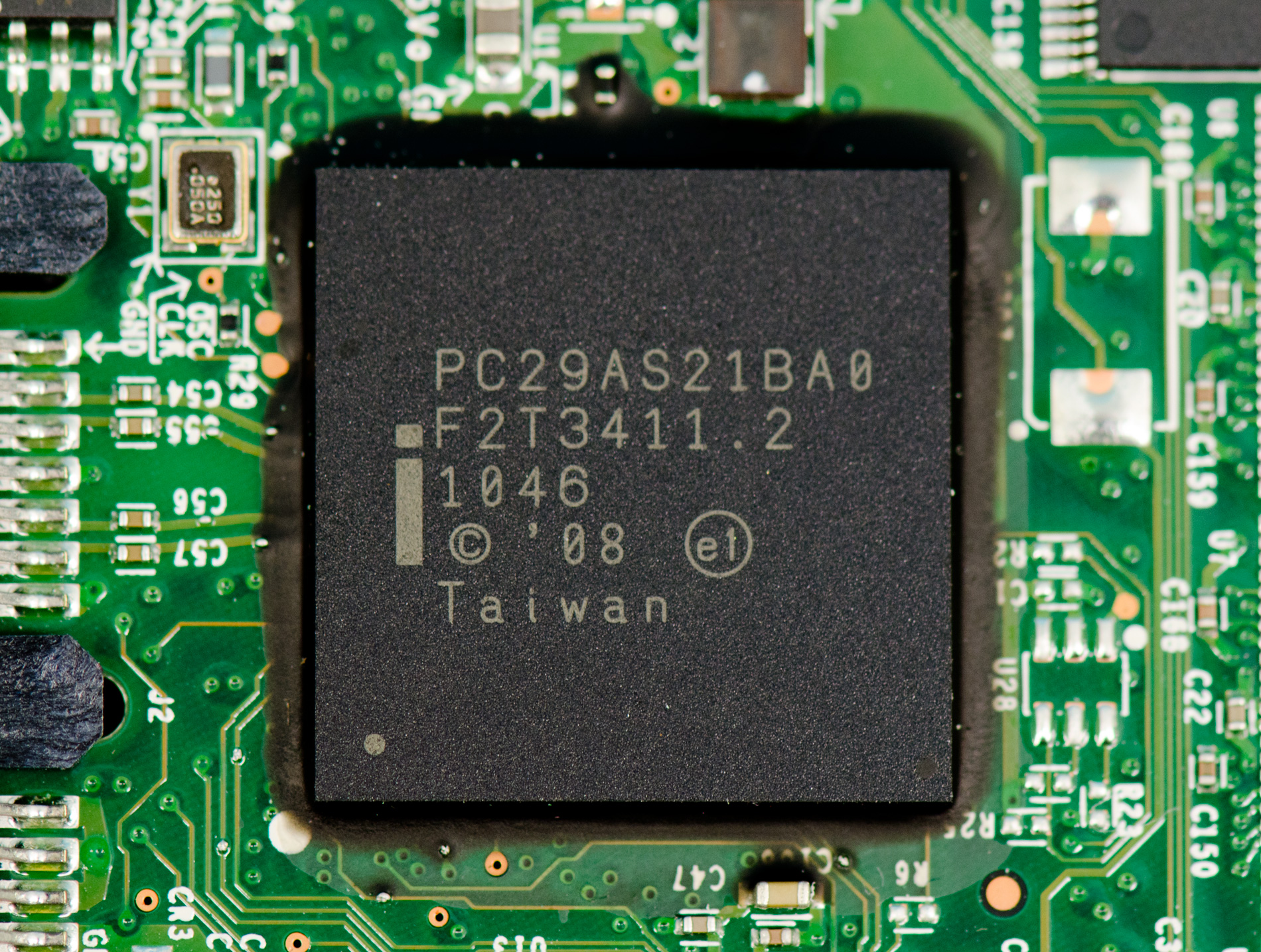
Intel's SSD 320 Controller
Since the controller hasn't changed, the basic architecture of the SSD hasn't changed either. Intel still doesn't store any user data in its external DRAM cache and there's still a 256KB on-die SRAM.
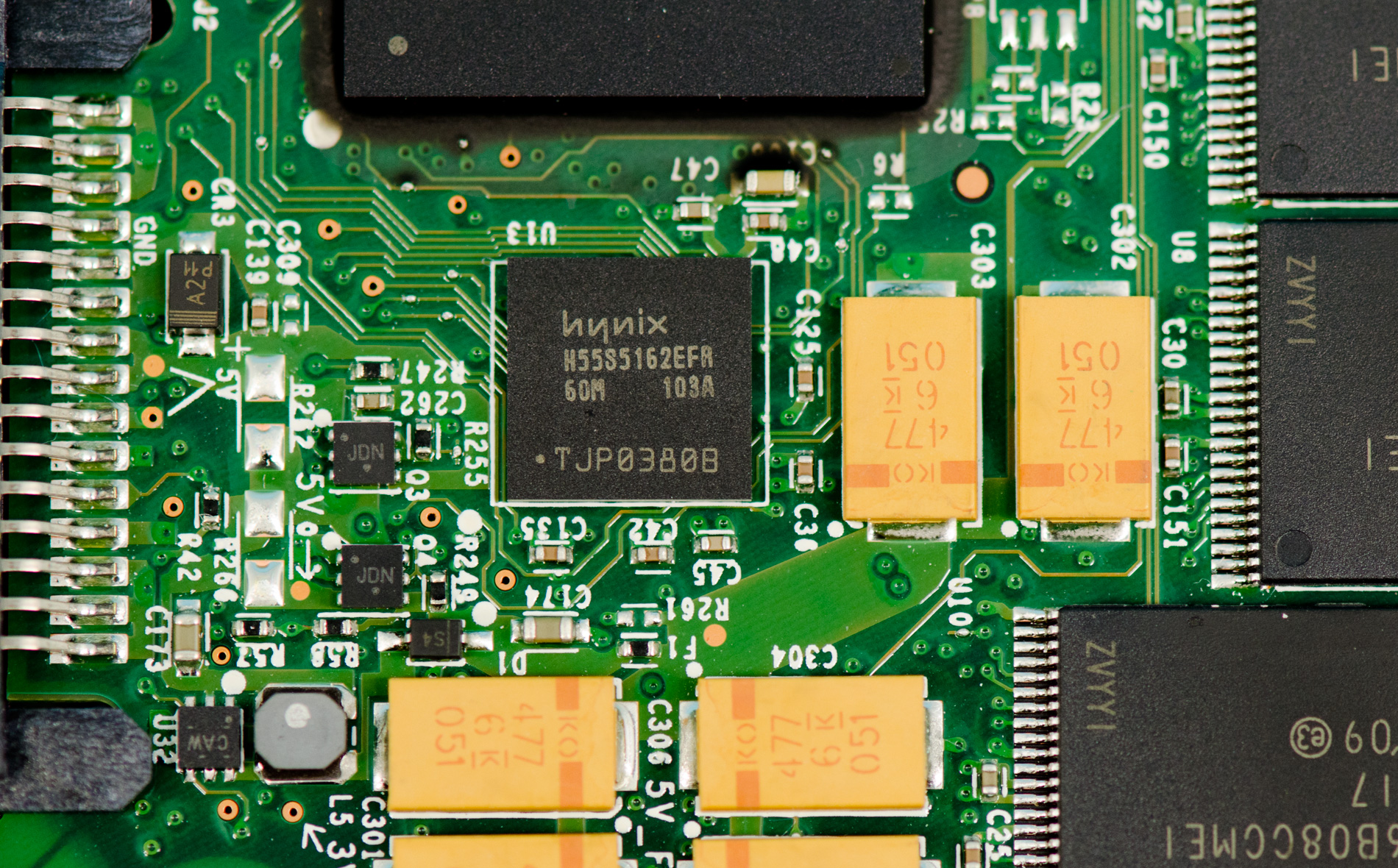
64MB 166MHz SDRAM
Next to the Intel controller is a 64MB 166MHz SDRAM device, now made by Hynix. You'll notice that the DRAM chip is a lot smaller than what we've seen in previous X25-M generations, despite growing in capacity. Intel actually turned to mobile SDRAM for use in the SSD 320 to help save on power. While the X25-M G1 and G2 both used a conventional 3.3V SDRAM device, Intel moved to a 1.8V mobile SDRAM chip with the 320.
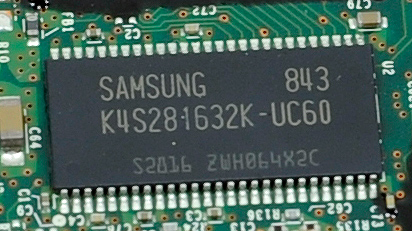
Intel X25-M G1: 16MB 166MHz SDRAM
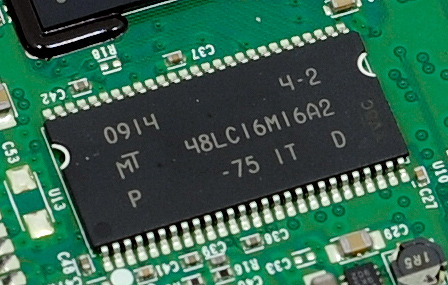
Intel X25-M G2: 32MB 133MHz SDRAM
Intel always prided itself on not storing any user data in its DRAM cache. The external DRAM is only used to cache mapping tables and serve as the controller's scratchpad. In the event of a sudden loss of power, Intel only has to commit whatever data it has in its SRAM to NAND. To minimize the amount of data loss in the event of a sudden power failure, Intel outfitted the SSD 320 with an array of six 470µF capacitors in parallel.
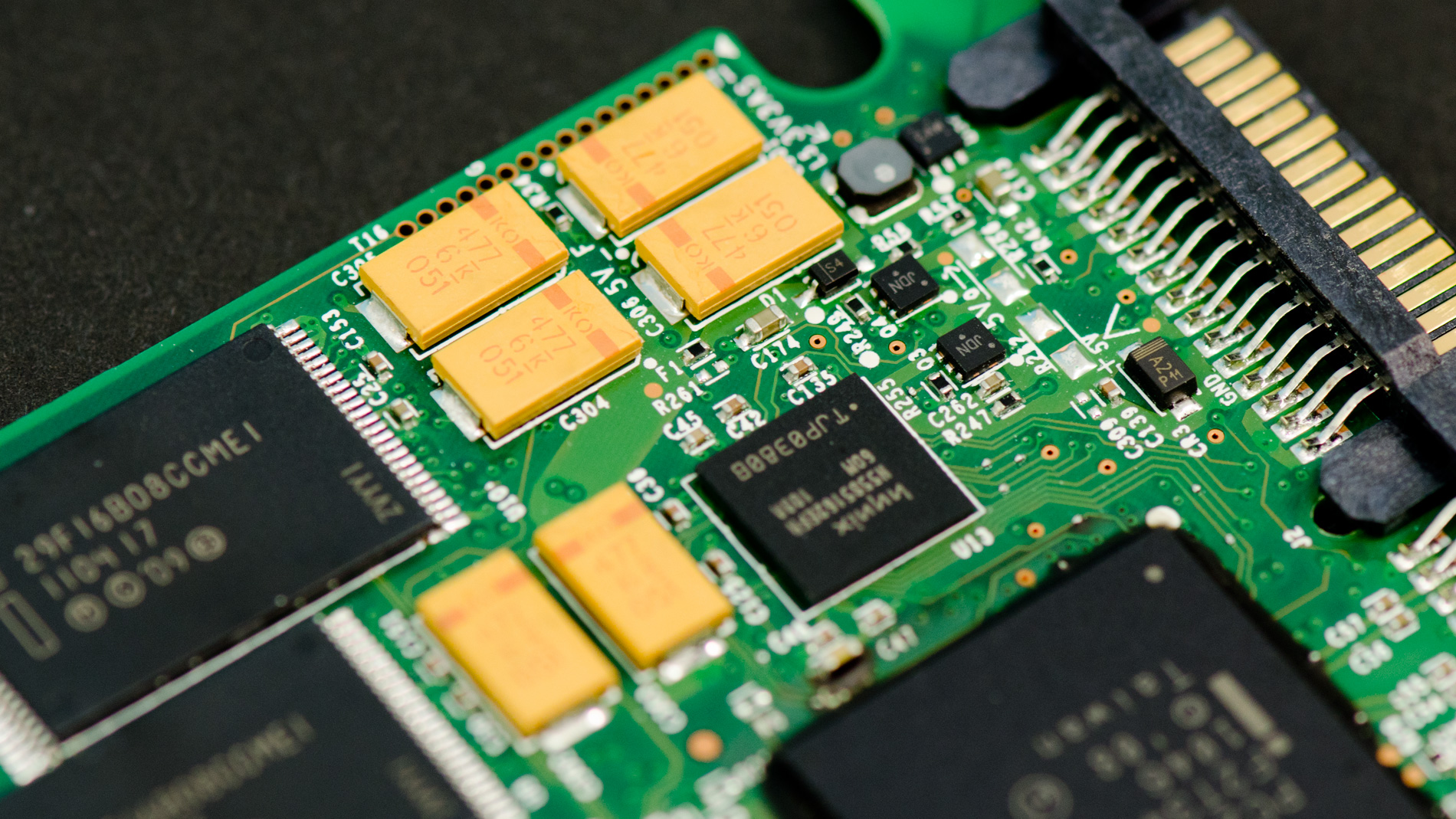
We've seen large capacitors on SSDs before, primarily the enterprise SandForce drives that boast a 0.09F supercap. Intel claims that for its design a single large capacitor isn't necessary given the minimal amount of data that's cached. It further claims that an array of multiple capacitors in parallel allows for much better reliability - if one capacitor fails the array is still useful (vs. a single point of failure in the case of the supercap).


 Facebook
 Twitter
 RSS
RSS


194 Comments
View All Comments
bji - Monday, March 28, 2011 - link
But don't they? I am pretty sure that the listed price for a 160 GB drive is about the same as I paid for my 80 GB G2 a year ago. Maybe these prices are higher than current prices on the older generation drives but you really should compare products at the same point of their life cycle to be fair. The G3 is half the cost that the G2 was at launch (actually less than half if I am remembering correctly) and in a year when they are at a later point in the product life cycle they wil be half as expensive or less per GB than the G2 is at the same point of its life cycle.qwertymac93 - Monday, March 28, 2011 - link
I think we all knew it wouldn't be as fast as The new sandforces, but i didn't expect it to be so expensive. i guess intel figured people will buy it just because it's intel. Not me though, I'm waiting for next gen(<25nm) ssd's before i make the plunge, i want sub $1 per gig.A5 - Monday, March 28, 2011 - link
Oh well - $170 for 120GB is still pretty good.AnnonymousCoward - Sunday, April 3, 2011 - link
G2 120GB is $230.aork - Monday, March 28, 2011 - link
"That works out to be 320GB of NAND for a drive whose rated capacity is 300GB. In Windows you'll see ~279GB of free space, which leaves 12.8% of the total NAND capacity as spare area."Actually you only see 279 GB of free space in Windows because Windows displays in GiB (2^30 bytes), not true GB (10^9 bytes). In truth, you are only getting the expected 6.25% of the total NAND capacity as spare area.
Stahn Aileron - Monday, March 28, 2011 - link
Flash storage is, as far as I know, always treated as binary multiples, not decimal. SSD drive manufacturers take advantage of the discrepancy between the OS's definition and the HD manufacturers' definition of storage units (GiB - 2^(x*10) - vs GB - 10^(x*3)) to help cover the spare area.It also helps keep everything consistent within the storage industry. Can you imagine the fallout from having a 300GB SSD actually being 300GiB vs an "identically sized" 300GB HDD reporting only 279GiB? If the consumers don't get pissy about that, I'm positive the HDD manufacturers would.
Mr Perfect - Monday, March 28, 2011 - link
Yeah, disappointing really. The switch to SSDs would have been a golden opportunity for drives to format to what the label says. Oh well.Taft12 - Monday, March 28, 2011 - link
Marketing would never allow that. We're not going back to binary measures of storage ever again :(Zan Lynx - Monday, March 28, 2011 - link
And why would we? RAM is the only thing that was ever calculated in powers of 2. Ever.CPU MHz? 10-base.
Network speed? 10-base.
Hard drive capacity? Always 10-base. Since forever!
Making Flash size in base-2 would introduce a new exception, not restore any wondrous old measurement system.
If the label says 300 GB and the box contains 300,000,000,000 bytes, then it does contain exactly what was advertised. Giga as a prefix has always meant 1 billion. Gigahertz? 1 billion cycles per second. Gigameter? 1 billion meters. 1 gigaflops? 1 billion floating point operations per second.
jwilliams4200 - Monday, March 28, 2011 - link
Well said, Zan. I thought that almost everyone knew this, but it is disappointing to see Anand still using the wrong units in his reviews and tables. Windows reports sizes in GiB, but incorrectly labels it GB. Unfortunately, Anand makes the same mistake. Sad.