



The Intel SSD 320 Review: 25nm G3 is Finally Here
by Anand Lal Shimpi on March 28, 2011 11:08 AM EST- Posted in
- IT Computing
- Storage
- SSDs
- Intel
- Intel SSD 320
It's called the Intel SSD 320, but the part number should give away just what we're looking at here:
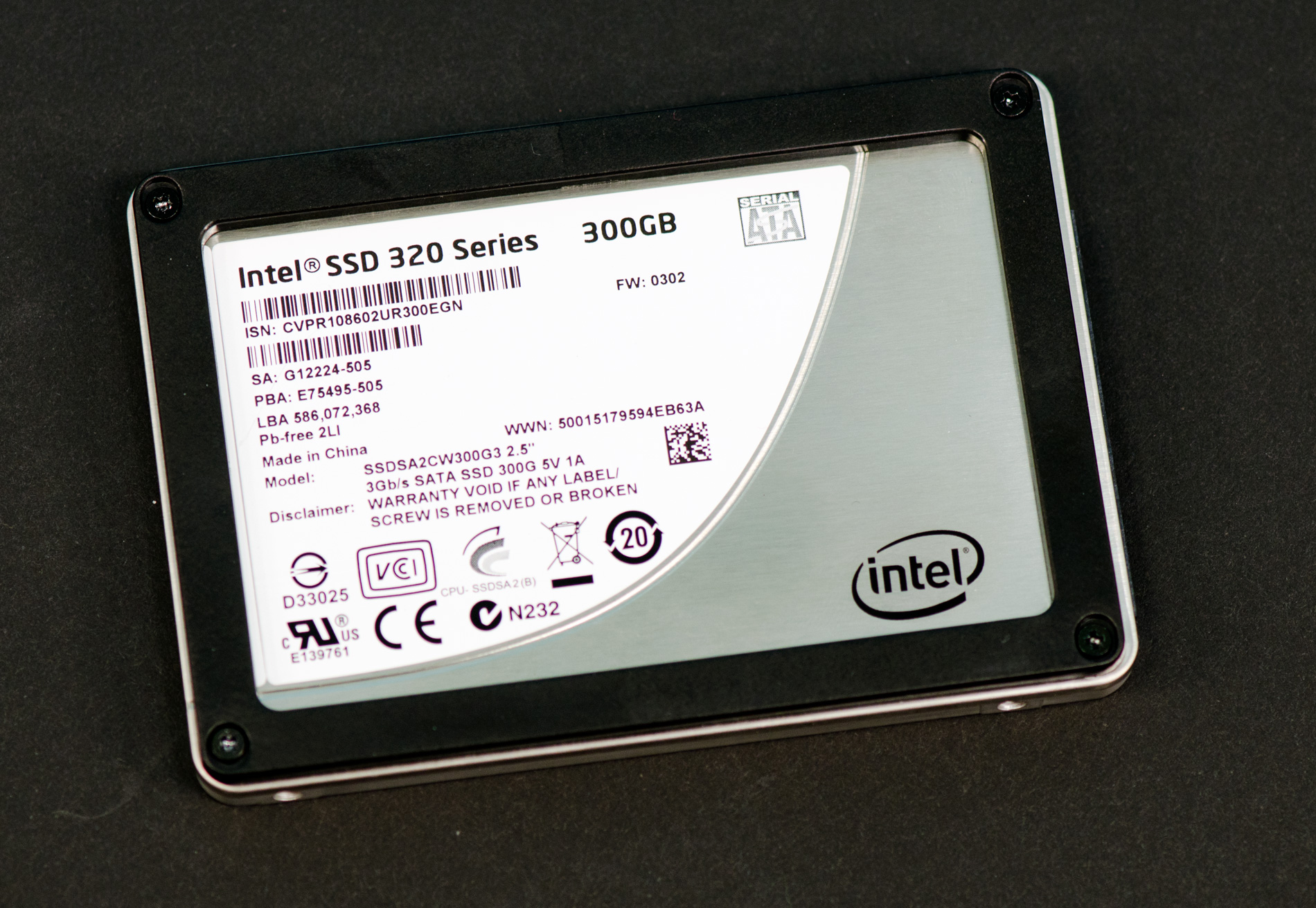
This is the long awaited third generation Intel based SSD. This is the G3. And at this point it's around 6 months late.
Back then it was simply called the Postville Refresh on Intel's roadmaps (Postville was the 34nm Intel X25-M G2). It would use 25nm Intel NAND, feature improved performance and full disk encryption - all behind a 3Gbps SATA interface.
When I spoke with Intel about the drive last year, all indications pointed to it being faster than drives based on SandForce's SF-1200 controller. And it is:
| Intel SSD 320 300GB vs. Corsair Force F120 | ||||
| AT Storage Bench 2011 (Heavy) | AT Storage Bench 2011 (Light) | |||
| Corsair Force F120 | 120.1 MB/s | 155.9 MB/s | ||
| Intel SSD 320 300GB | 132.8 MB/s | 161.7 MB/s | ||
Without turning to any real time compression/deduplication techniques, Intel has built a drive that's faster than the SF-1200. You also get that famed Intel SSD reliability:
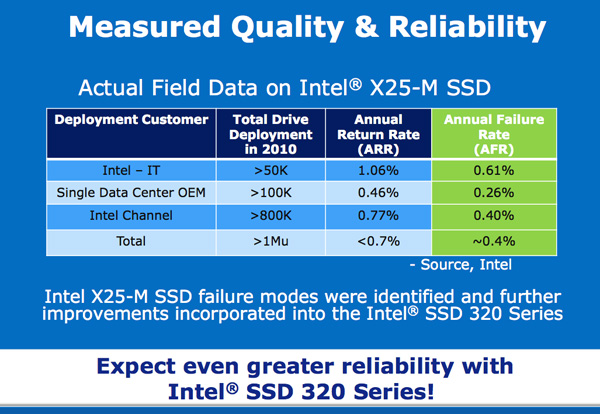
There's just one issue. The SF-1200 was the king of 2010. This year is shaping up to be all about the SF-2200 and the G3 isn't quite as competitive there. Intel realized this as well and thus we got the Intel SSD 510 to address the high performance market. Intel claims the 510 should have the same failure rate as the 34nm X25-M G2 at ~0.6% per year.
The Intel SSD 320 by comparison is aimed at the mainstream market. Remember that's what the M in X25-M always stood for to begin with. As a result we get lower pricing:
| Intel SSD Comparison | ||||||||||||
| X25-M G2 160GB | Intel SSD 320 40GB | Intel SSD 320 80GB | Intel SSD 320 120GB | Intel SSD 320 160GB | Intel SSD 320 300GB | Intel SSD 320 600GB | SSD 510 120GB | SSD 510 250GB | ||||
| User Capacity | 149GB | 37GB | 74GB | 111GB | 149GB | 279GB | 558GB | 111GB | 232GB | |||
| Random Read Performance | Up to 35K IOPS | Up to 30K IOPS | Up to 38K IOPS | Up to 38K IOPS | Up to 39K IOPS | Up to 39.5K IOPS | Up to 39.5K IOPS | Up to 20K IOPS | Up to 20K IOPS | |||
| Random Write Performance | Up to 8.6K IOPS | Up to 3.7K IOPS | Up to 10K IOPS | Up to 14K IOPS | Up to 21K IOPS | Up to 23K IOPS | Up to 23K IOPS | Up to 8K IOPS | Up to 8K IOPS | |||
| Sequential Read Performance | Up to 250MB/s | Up to 200MB/s | Up to 270MB/s | Up to 400MB/s (6Gbps) | Up to 500MB/s (6Gbps) | |||||||
| Sequential Write Performance | Up to 100MB/s | Up to 45MB/s | Up to 90MB/s | Up to 130MB/s | Up to 165MB/s | Up to 205MB/s | Up to 220MB/s | Up to 210MB/s (6Gbps) | Up to 315MB/s (6Gbps) | |||
| Price | $404 | $89 | $159 | $209 | $289 | $529 | $1069 | $284 | $584 | |||
It's still early in the 25nm ramp, but the 25nm Intel SSD 320 is cheaper than the 34nm Intel SSD 510. The only issue is that OCZ is very competitive with its pricing as well and compared to the Vertex 2, Intel's SSD 320 isn't really any cheaper. Intel likes to maintain its 65% profit margins so even though it makes the NAND and the controller in the 320, we're unlikely to see these drives drop below competitive pricing.
Intel expects the 25nm SSD 320 to be even more reliable than the 510 or X25-M.
The Same Controller
The Intel SSD 320, like the 310 and X25-M before it, uses an Intel branded controller. Opening up the 320 reveals a near identical controller to what we saw in the 34nm X25-M G2 housing:
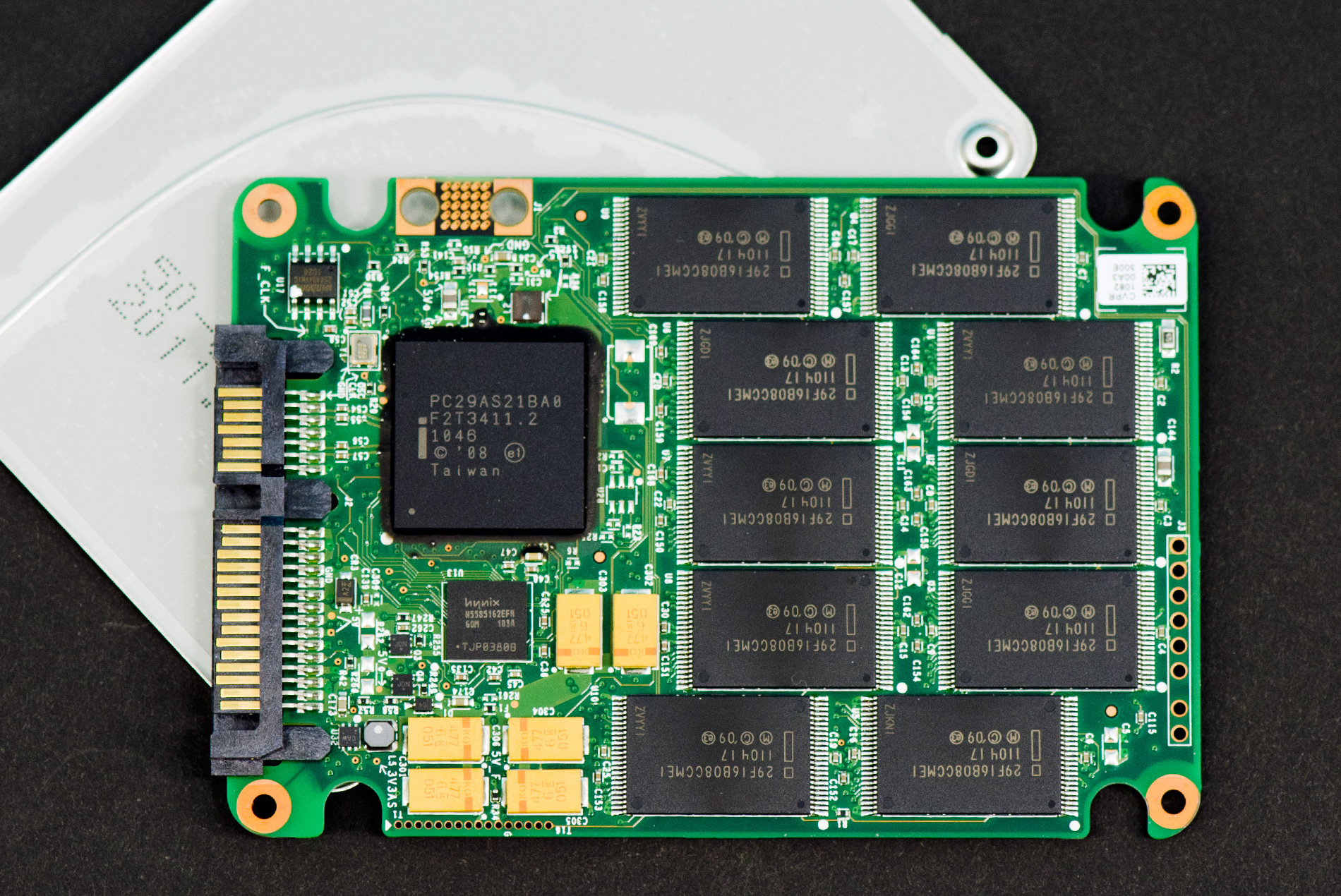
You'll notice the part number is identical to 2009's X25-M G2 controller. In fact, it's the same controller. Apparently the G2 controller had a number of features on-die, but not implemented in firmware. Things like full disk encryption and NAND redundancy never made it out in G2 but are here in the 320 all thanks to new firmware. And no, G2 owners aren't getting it.
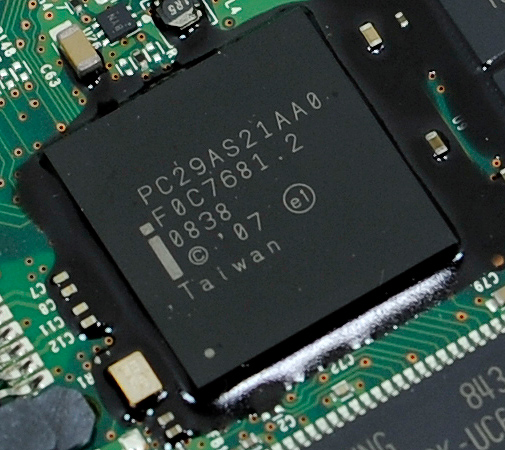
Intel's X25-M G1 Controller
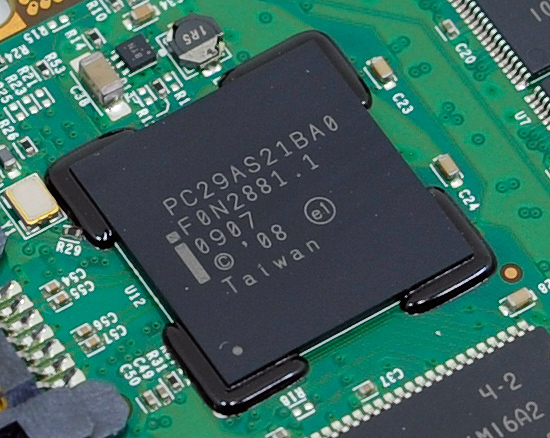
Intel's X25-M G2 Controller
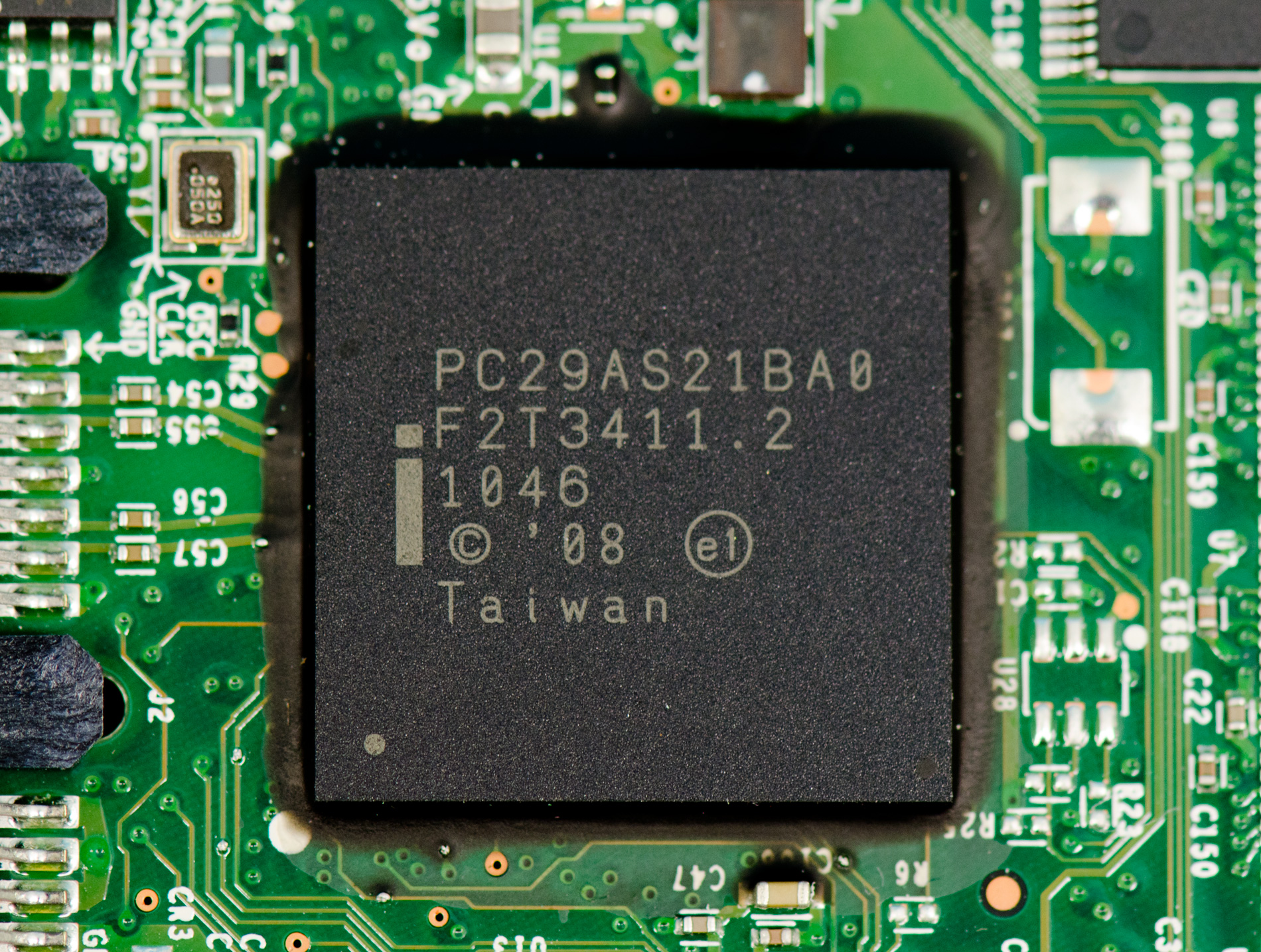
Intel's SSD 320 Controller
Since the controller hasn't changed, the basic architecture of the SSD hasn't changed either. Intel still doesn't store any user data in its external DRAM cache and there's still a 256KB on-die SRAM.
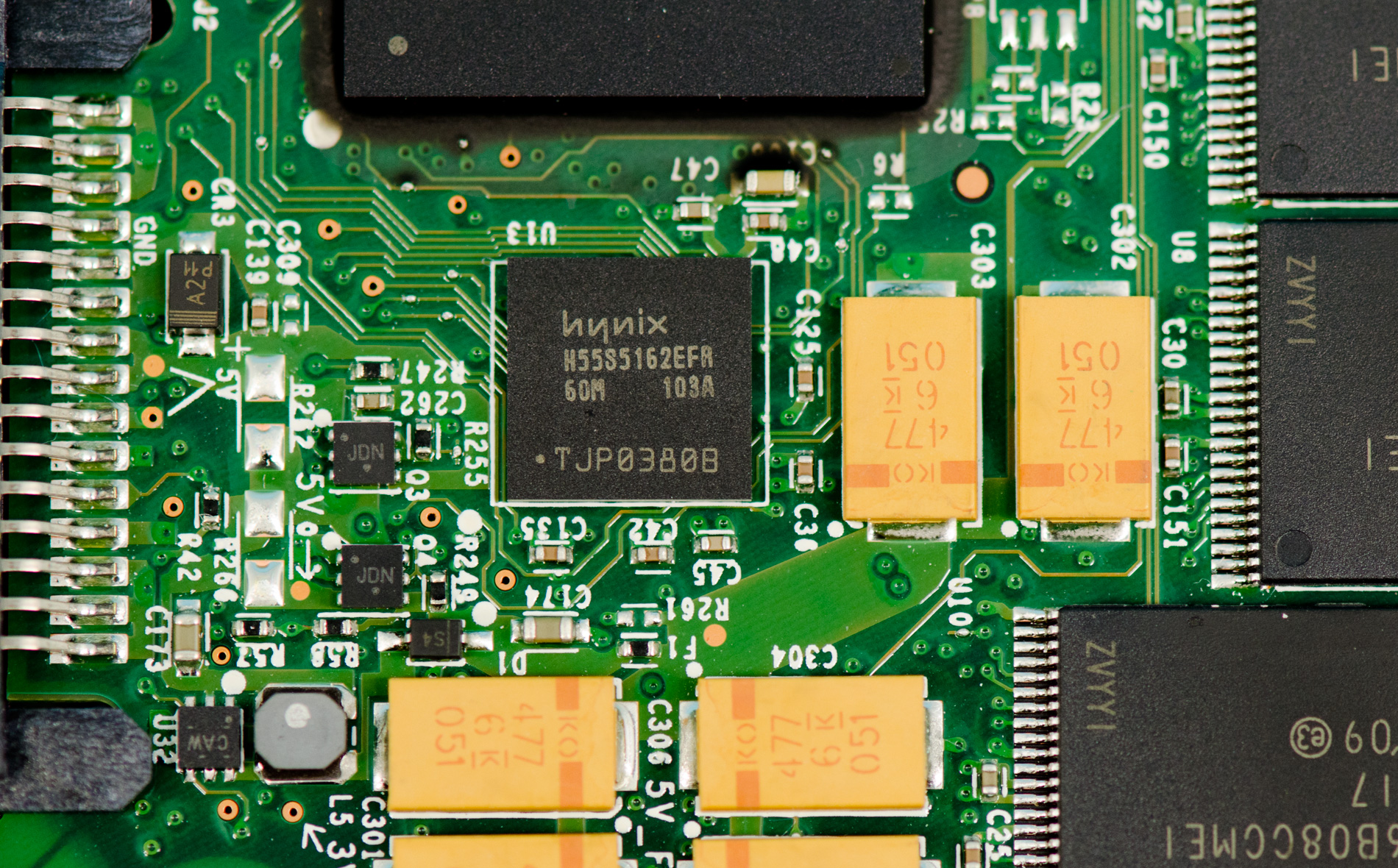
64MB 166MHz SDRAM
Next to the Intel controller is a 64MB 166MHz SDRAM device, now made by Hynix. You'll notice that the DRAM chip is a lot smaller than what we've seen in previous X25-M generations, despite growing in capacity. Intel actually turned to mobile SDRAM for use in the SSD 320 to help save on power. While the X25-M G1 and G2 both used a conventional 3.3V SDRAM device, Intel moved to a 1.8V mobile SDRAM chip with the 320.
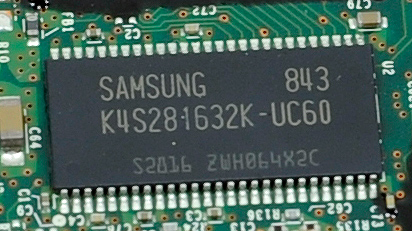
Intel X25-M G1: 16MB 166MHz SDRAM
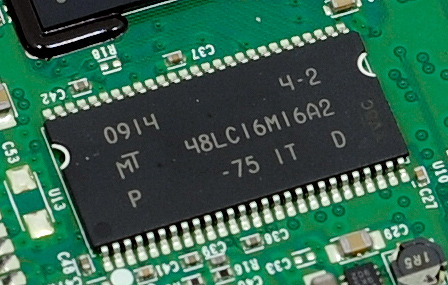
Intel X25-M G2: 32MB 133MHz SDRAM
Intel always prided itself on not storing any user data in its DRAM cache. The external DRAM is only used to cache mapping tables and serve as the controller's scratchpad. In the event of a sudden loss of power, Intel only has to commit whatever data it has in its SRAM to NAND. To minimize the amount of data loss in the event of a sudden power failure, Intel outfitted the SSD 320 with an array of six 470µF capacitors in parallel.
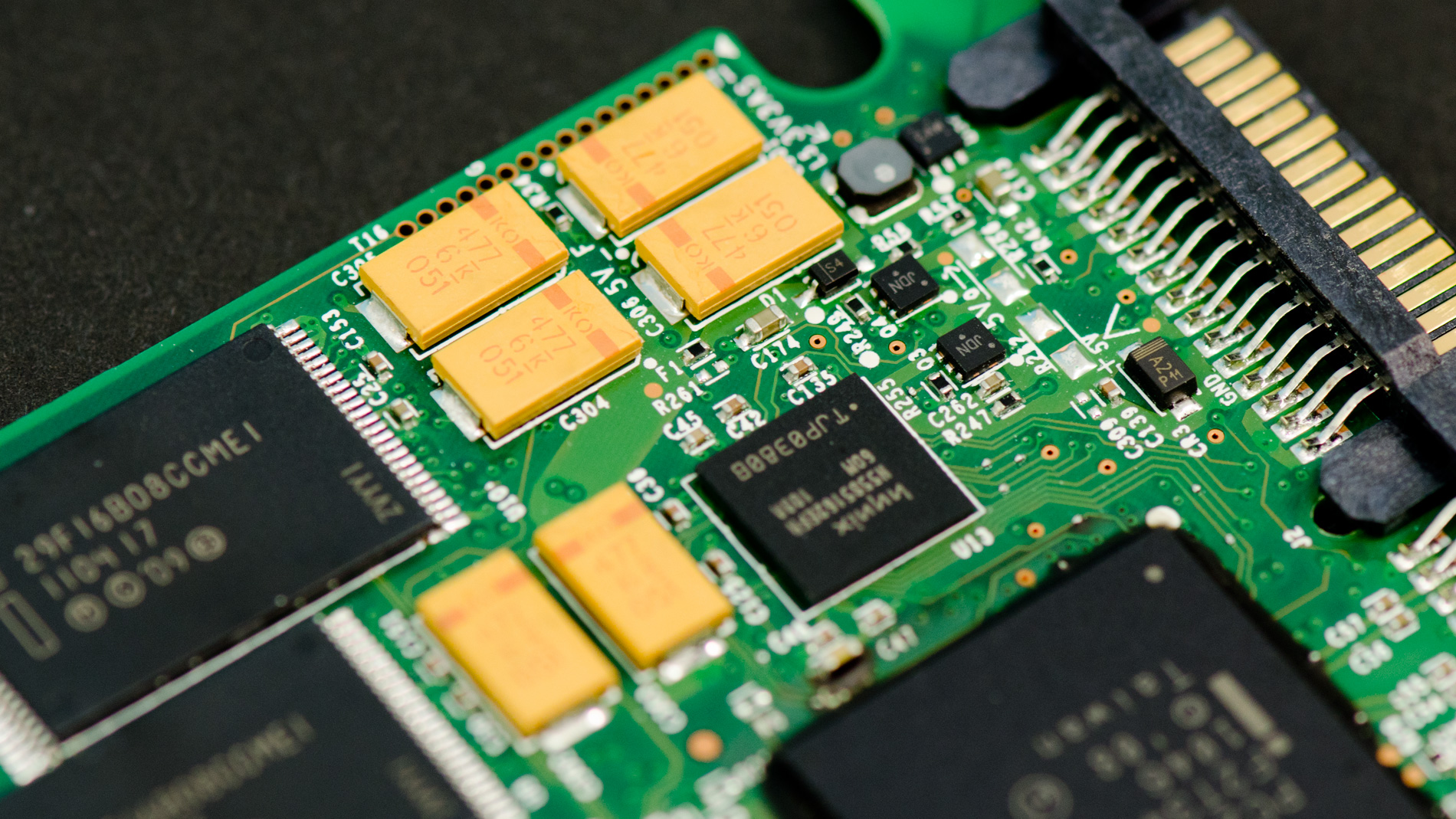
We've seen large capacitors on SSDs before, primarily the enterprise SandForce drives that boast a 0.09F supercap. Intel claims that for its design a single large capacitor isn't necessary given the minimal amount of data that's cached. It further claims that an array of multiple capacitors in parallel allows for much better reliability - if one capacitor fails the array is still useful (vs. a single point of failure in the case of the supercap).


 Facebook
 Twitter
 RSS
RSS


194 Comments
View All Comments
bji - Tuesday, March 29, 2011 - link
I think that garbage collection refers to a process of deferring block erases to a later time to be done when the drive is otherwise idle. I.e., if you need to rewrite a block you don't re-write it in place, you write it to a block from the spare area that is already cleared thus saving yourself the time of having to erase the old block before rewriting it. You still mark the old block as needing to be cleared and put into the spare area (to replace the block that was taken out of the spare area during this process), and you do that later during 'garbage collection'.There may also be some aspects to which individual blocks from an erase region (my understanding of the terminology is a bit off but I am pretty sure that flash memory can write to smaller regions than it can erase) are moved around during 'garbage collection' to consolidate them into single blocks; this takes blocks that are interspersed with dead area and collapses them down to a smaller fully populated region, then takes all of the now-free blocks and then erases them and puts them in the spare area.
Having TRIM makes both of these processes more efficient because it tells the drive that it can just mark blocks as ready-for-erase-and-put-into-the-spare-area immediately rather than having to be tracked and managed, and also increases the overall spare area available which means that more already-erased blocks are ready to be used for writes. Having to erase a block before writing it is the performance killer of SSDs and TRIM, along with intelligent algorithms listed above, in addition to things I haven't even thought of most likely, are what allow SSDs to get around the erase block performance penalty and to have such killer performance.
randomlinh - Monday, March 28, 2011 - link
I was excited to see this back when it was "announced." I was hoping we'd be closer to $1/GB for the mainstream performance around now, but looks like I've still got to wait.Hoping the 2011 round of controllers push intel to compete with pricing. I'm happy with the performance honestly, but need pricing.
Or maybe this will drive the x25-Ms down in price and I'll just RAID-0 a pair of 80GB's...
Ushio01 - Monday, March 28, 2011 - link
So all we get from Marvel and Intel are there old controllers working as they should of from the beginning with only Sandforce actually innovating, pathetic.darckhart - Monday, March 28, 2011 - link
"should have been" maybe. but we all know that's not how business works. sell it, revise it, sell it, revise it, ad nauseum. in any case, know this: they are getting comparable SF-12xx performance WITHOUT realtime compression and dedup which is mighty impressive in my book.darckhart - Monday, March 28, 2011 - link
oh i forgot to mention they're doing this on 25nm.Vlad T. - Monday, March 28, 2011 - link
Planned obsolescence or built-in obsolescence.http://en.wikipedia.org/wiki/Planned_obsolescence
That is even more obvious considering how Intel trashes G2 with the same controller.
thudo - Monday, March 28, 2011 - link
My gawd how the mighty have fallen? Doesn't remotely hold its own against the mighty Vertex 3 (SATA3). 120Gb Vertex 3 as now showing up in Canada for ~$290 -- a frick'n steal considering my boot drives have always been ~100-150Gb+ (all you need) and the performance increase is so well worth it. Shame Intel.. shame..davepermen - Monday, March 28, 2011 - link
you know that intel has the 520 ssds, too? those are to fight vertex3.not that i would ever consider ocz an ssd worth buying anyways, but lets not discuss that. anand loves them after he hated them. i still can't (as even after anand has forgiven them, they continue the same crap they did before).
so for a sata3 system, it's 520. for a sata2 system, the 320 is fine, actually nearly perfect.
sean.crees - Tuesday, March 29, 2011 - link
Say what you will of OCZ, at least they listen to their consumers, and attempt to make legitimate changes in their business practices to satisfy their existing customer base.Intel has it's advantages, but appeasing it's current customers are not one of them. Ask the numerous amounts of people that jumped on Intel's 1st gen SSD bandwagon to then be shunned from TRIM support forever, which would require nothing but a firmware upgrade. 2x 80gb for $500 each, and no TRIM support. These things have slowed to almost HDD performance.
shatteredx - Monday, March 28, 2011 - link
Performance is fine, but Intel isn't pricing these drives cheaply enough.Whatever happened to the prediction that 25nm drives would cost half as much as their 34nm siblings?